
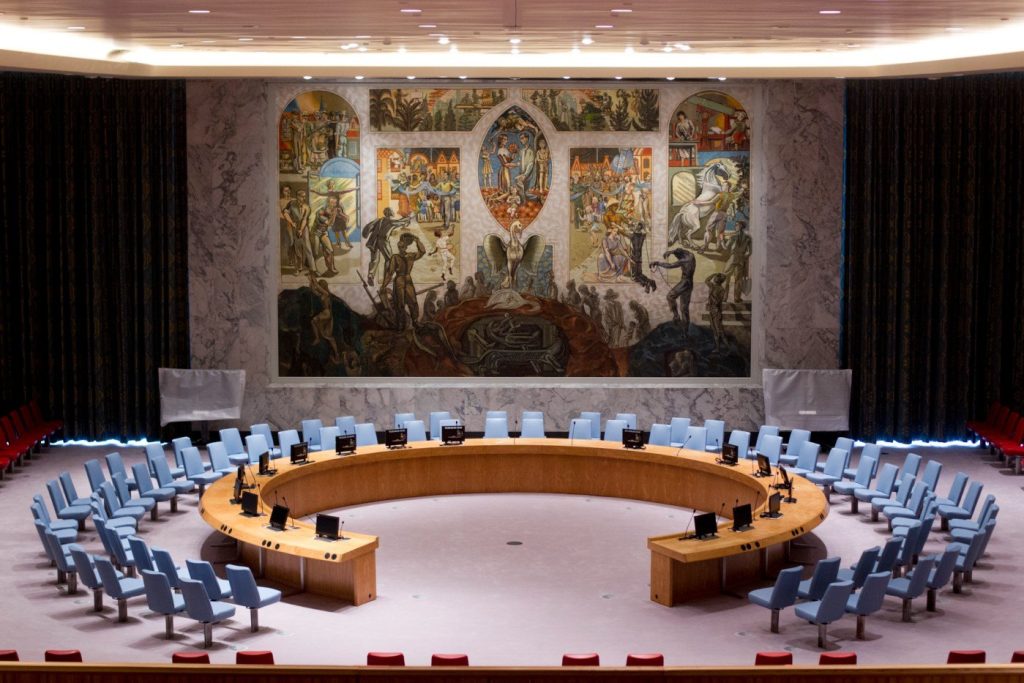
UNITED NATIONS, July 12 — The United Nations Security Council could face an emergency session following Iran’s declaration on April 28, 2025, that it is closing its waters to international shipping. Under Article 34 of the UN Charter, the Council could convene to discuss threats to international peace. The U.S. may request a UNSC resolution demanding reopening, though Russia or China could veto.
The U.S. Fifth Fleet has experience with exactly this kind of crisis. During the Iran-Iraq War, the Navy launched Operation Earnest Will from 1987 to 1988, escorting commercial vessels through the Gulf.
Military planners say a similar mission could be activated, though the mine threat remains a serious concern. Mine-sweeping operations would be a necessary step before any escort mission could begin safely.
The legal and economic dimensions
The International Maritime Organization could issue navigational warnings alerting commercial vessels to the closure. Such warnings carry no enforcement power but serve as official notice that a passage once considered safe is now contested. Iran’s action also opens the door to international litigation.
Any state whose flagged vessels are denied transit passage could sue Iran at the International Court of Justice for violating the United Nations Convention on the Law of the Sea. UNCLOS guarantees the right of transit passage through straits used for international navigation, and a closure of this kind would be a direct challenge to that framework.
On the economic front, the U.S. already has legal tools in place. Executive Order 13622, signed in 2012, authorizes sanctions against any entity that supports Iran’s oil exports, including banks, insurers, and shipping companies. The closure itself may trigger a new round of sanctions enforcement targeting those who continue to facilitate Iranian oil sales while the Strait remains shut.
Diplomatic channels and regional risks
Oman has historically served as a backchannel between Washington and Tehran, mediating hostage releases and nuclear talks. Omani officials have not publicly commented on the current crisis, but diplomats familiar with the region say Muscat is again being approached as a potential intermediary. The closure’s duration remains unknown.
Iran has stated the Strait will be closed “until further notice” and has offered no conditions for reopening. That open-ended posture makes planning difficult for shipping companies, insurers, and navies alike.
Any military escalation could draw in regional allies. Saudi Arabia and the United Arab Emirates, both heavily dependent on Gulf shipping for their oil exports, have already increased naval coordination with the U.S. Fifth Fleet. A broader conflict involving these states would mark a significant escalation beyond the current standoff.
For now, the world watches the Strait — a narrow channel that carries a substantial share of the globe’s oil supply — and waits to see whether diplomacy, law, or military force will decide its fate.




