
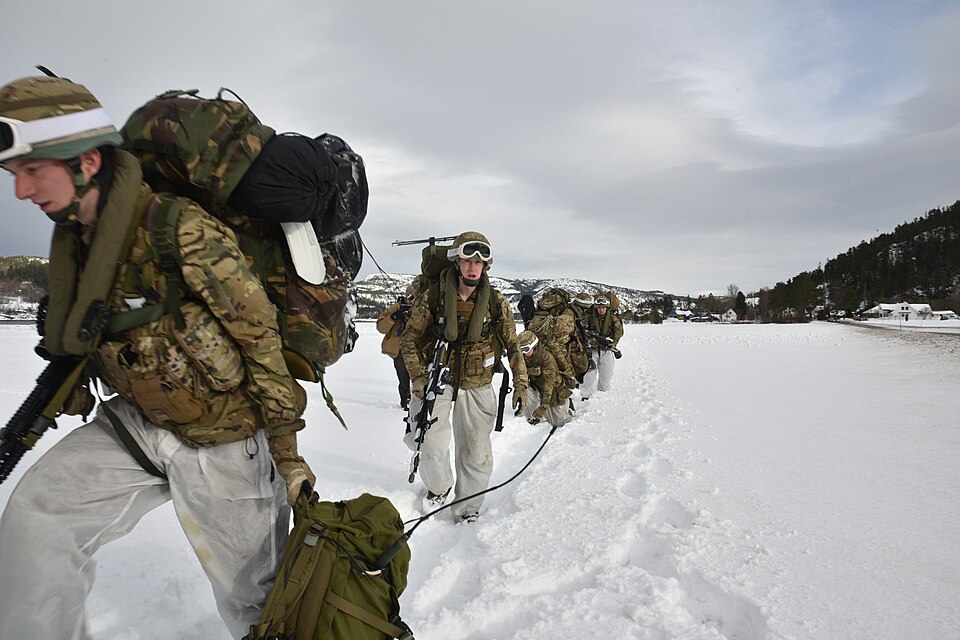
For more than seven centuries, the line that divides Norway from Russia in the Arctic has remained largely undisturbed, defined first by a 1326 treaty that determined which Sami groups paid tribute to which kingdom, then refined by an 1826 boundary agreement that still stands today. That 196-kilometer strip of Arctic tundra, following two rivers for two-thirds of its length and crossed at a single checkpoint at Storskog, has long been a quiet frontier. But the security environment of 2026 has turned that narrow border into a focal point of alliance credibility and strategic vigilance.
A 75-Year Alliance Tested by Geography
Norway has been a member of the North Atlantic Treaty Organization since 1949, making it one of the founding allies and, critically, the only member that shares a direct land border with Russia in the Arctic. That proximity has always demanded careful management, but the current climate has sharpened the calculus.
The Norwegian Intelligence Service, in its February 2024 annual assessment, reported that Russia had redeployed air defense assets away from the border zone. While that withdrawal reduced one immediate threat, it has prompted a recalculation of Norway’s own defensive priorities. The potential for miscalculation or escalation along a line that has been quiet for decades has grown, and the response from Oslo has been methodical.
Norway has quietly intensified its surveillance posture, increasing flights by P-8 Poseidon aircraft and expanding joint exercises with NATO allies. The Allied Air Command maintains Quick Reaction Alert interceptors at Bodø Air Base, a facility that has become a focal point for alliance air policing in the region.
These assets form a layered presence along the Arctic frontier, integrated with naval patrols and ground forces. Norwegian patrols along the border are conducted by the Garrison of Sør-Varanger, while the Russian side is under the Border Guard Service. The broader command framework, known as Arctic Command, oversees operations, surveillance, and defense in the High North.
Economic Stakes Beneath the Strategic Calculus
What is at stake extends beyond territorial defense. The Barents Sea, which washes against both nations’ northern coasts, is a key area for naval operations and fisheries. The Barents Sea cod fishery alone is valued at over $600 million annually, a resource that neither country can afford to ignore.
Any shift in military posture along the border inevitably ripples through the economic and maritime security landscape of the wider Arctic. Norway also hosts U.S. Marine Corps rotational forces at Setermoen and other bases, a presence that underscores the deepening of bilateral defense ties.
These rotational deployments, while not permanent, provide a continuous American military footprint in the High North, reinforcing the alliance’s northern flank. The wider picture, as European defense analysts see it, is one of recalibration. Russia’s redeployment of air defense systems does not necessarily signal a withdrawal from the Arctic; it may instead reflect a reorganization of assets to other theaters.
For Norway, the response has been consistent: more surveillance, more joint training, and a quiet but unmistakable increase in readiness along the border that separates NATO from Russia in the north. The strategic significance of this border has deepened as the security environment in Europe has evolved, making the Arctic no longer a peripheral theater but a central arena of modern security competition.
In the months ahead, the focus will remain on how Norway balances its dual role as a NATO frontline state and a neighbor that has historically managed its eastern border with pragmatic restraint. The Poseidon flights will continue to scan the Barents horizon, and the interceptors at Bodø will remain at quick notice — a careful watch along a line that, on a map, appears thin, but carries the weight of alliance credibility, maritime access, and the economic life of the region.




