
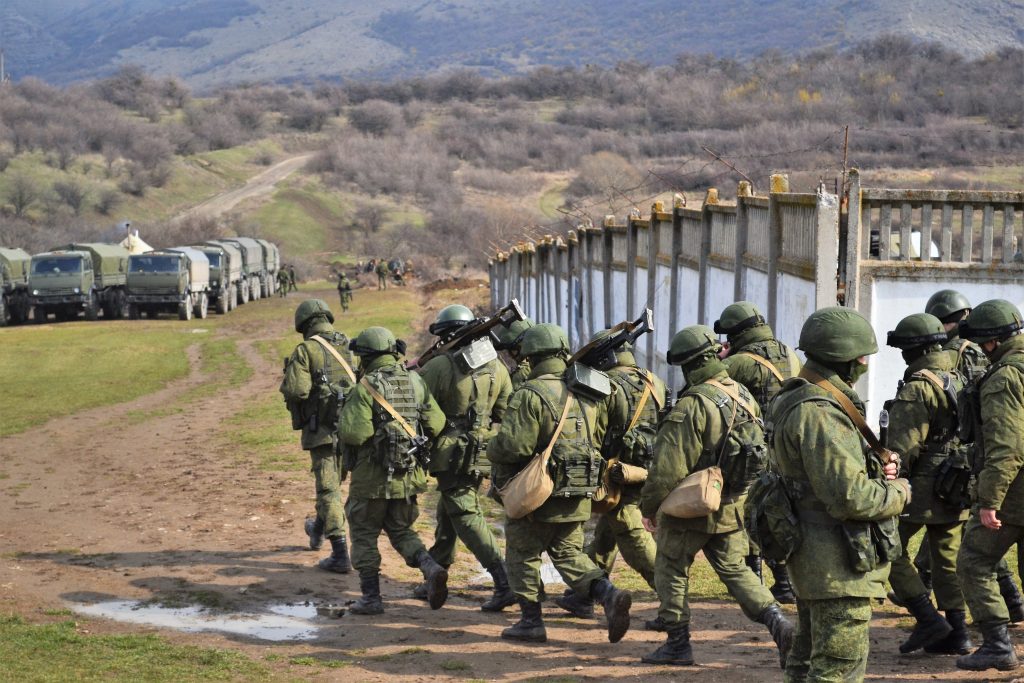
KYIV, July 15 — The Russo-Ukrainian War, which began with Russia’s annexation of Crimea and the start of the war in Donbas in February 2014, has evolved into a protracted conflict of attrition. By 2025, the front line had largely stabilized, with Russia controlling approximately 18% of Ukrainian territory, including Crimea and parts of Donetsk, Luhansk, Zaporizhzhia, and Kherson oblasts. This territorial reality marks a significant shift from the initial months of the full-scale invasion, when Russian forces captured substantial areas in eastern and southern Ukraine.
The conflict’s origins trace back to February 2014, when Russia annexed Crimea. That same month, the war in Donbas began.
The Minsk agreements of 2014 and 2015, which aimed to end the initial conflict in Donbas, were never fully implemented. On February 24, 2022, Russia launched a full-scale invasion of Ukraine. The assault captured significant territory in eastern and southern Ukraine, including the strategic port city of Mariupol.
The Siege of Mariupol, which lasted from March to May 2022, became one of the war’s most devastating battles, resulting in widespread destruction and heavy casualties.
Key Battles and Military Dynamics
The Battle of Bakhmut, fought from August 2022 to May 2023, stands as another pivotal engagement. Both sides committed substantial resources to the fight for the Donetsk city, which ultimately fell under Russian control after months of intense combat. The battle demonstrated the war’s grinding nature, with incremental territorial gains coming at a high cost in personnel and materiel.
Ukraine launched a counteroffensive in summer 2023, recapturing some areas but failing to achieve a decisive breakthrough. The operation’s limited success underscored the challenges of offensive operations against prepared defensive positions, particularly given the extensive fortifications Russia had constructed along the front line.
Human and Demographic Toll
According to UN estimates as of early 2025, the war has caused over 500,000 military casualties on both sides. Civilian deaths have exceeded 30,000, according to UN estimates from the same period. These figures, while stark, are considered conservative by some observers, as accurate casualty counting remains difficult amid ongoing combat.
The displacement crisis has been enormous. Approximately 8 million Ukrainians have fled to Europe, while 5 million are internally displaced within Ukraine.
This represents one of the largest population movements in Europe since World War II.
Diplomatic Efforts and Stalemate
Multiple cease-fire negotiations have failed to produce a lasting settlement. The Istanbul talks in March 2022, which were the most promising diplomatic effort, collapsed without agreement. The Minsk agreements, which preceded the full-scale invasion, similarly failed to end the initial conflict in Donbas.
The record shows that neither side has demonstrated willingness to make the concessions necessary for a negotiated settlement. As of early 2025, the front line remains largely static, with neither side capable of mounting a major offensive.
The war has settled into a pattern of positional warfare, with small-scale attacks and artillery duels along the contact line. Both militaries have suffered significant losses, and questions about sustainability of current force levels have become increasingly pressing.




