
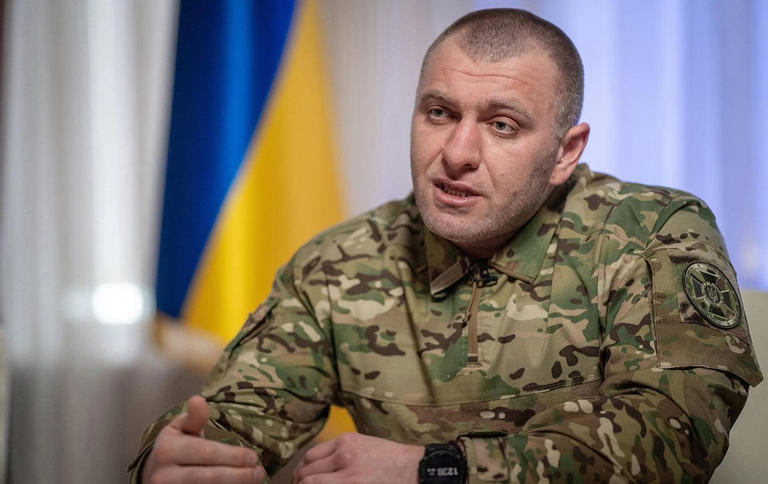
KYIV, July 7 — The shift is quiet, precise, and increasingly long-range. Ukraine’s Security Service, the SBU, is no longer just a counterintelligence agency operating within its borders. Under the leadership of Vasyl Malyuk, it has become a drone warfare unit capable of striking deep inside Russian territory.
Malyuk took over as head of the SBU on February 7, 2023, appointed directly by President Volodymyr Zelenskyy. Born in 1982 in the Ukrainian city of Zhytomyr, he has spent his entire career in security and law.
He joined the SBU in 2001, rose through the ranks to lead its counterintelligence department, and served as deputy head before taking the top job. His background is not in politics but in the operational weeds of state security. What’s changing under Malyuk is the SBU’s role on the battlefield.
The agency has conducted numerous covert operations inside Russia, targeting oil refineries, military airfields, and logistics hubs with drones. The January 25, 2024 strike on the Omsk Refinery is attributed to SBU drones.
From Counterintelligence to Long-Range Strike
Malyuk’s public statements make the strategic goal clear. He has said the SBU’s objective is to “destroy the enemy’s infrastructure” and reduce Russia’s ability to wage war. That is a shift in doctrine.
Traditional security services focus on protecting state secrets and catching spies. Malyuk is running an offensive campaign that blurs the line between intelligence work and military action.
The SBU’s drone program has expanded significantly under his tenure, with a focus on long-range precision strikes. The January 2024 Omsk strike fits that pattern. So do other operations that have not been publicly detailed but are part of the broader campaign.
Malyuk reports directly to President Zelenskyy and coordinates with Ukraine’s military intelligence agency, the HUR, and the Armed Forces of Ukraine. That command structure matters.
It means the SBU is not operating in a silo. Its strikes are part of a larger military strategy, not freelance operations. Russia has responded predictably.
Malyuk has been sanctioned by Moscow and is wanted on criminal charges there.
A New Kind of Security Chief
Malyuk’s tenure represents a broader trend in modern warfare: the weaponization of intelligence agencies. The SBU now fields drones, plans strikes, and executes attacks that would have been the exclusive domain of air forces a decade ago. The technology is cheaper and more accessible than fighter jets, and the political risk is lower — a drone is deniable in a way a manned aircraft is not.
Watch this space. The SBU’s drone capability is likely to keep growing.
Malyuk has shown a willingness to push the envelope, and the Ukrainian leadership has backed him. The trend underneath is clear: intelligence agencies are becoming strike forces. The SBU is just the most visible example.
The question for the next phase is how far the SBU can reach. The Omsk strike showed it can hit Siberia.
What comes next depends on drone range, production capacity, and the evolving Russian air defense network. Malyuk is not saying. But the pattern of operations suggests the SBU is testing the limits of what is possible.
For now, the SBU under Malyuk is a hybrid force — part spy agency, part drone command. That is the shift. And it is not going back.




