
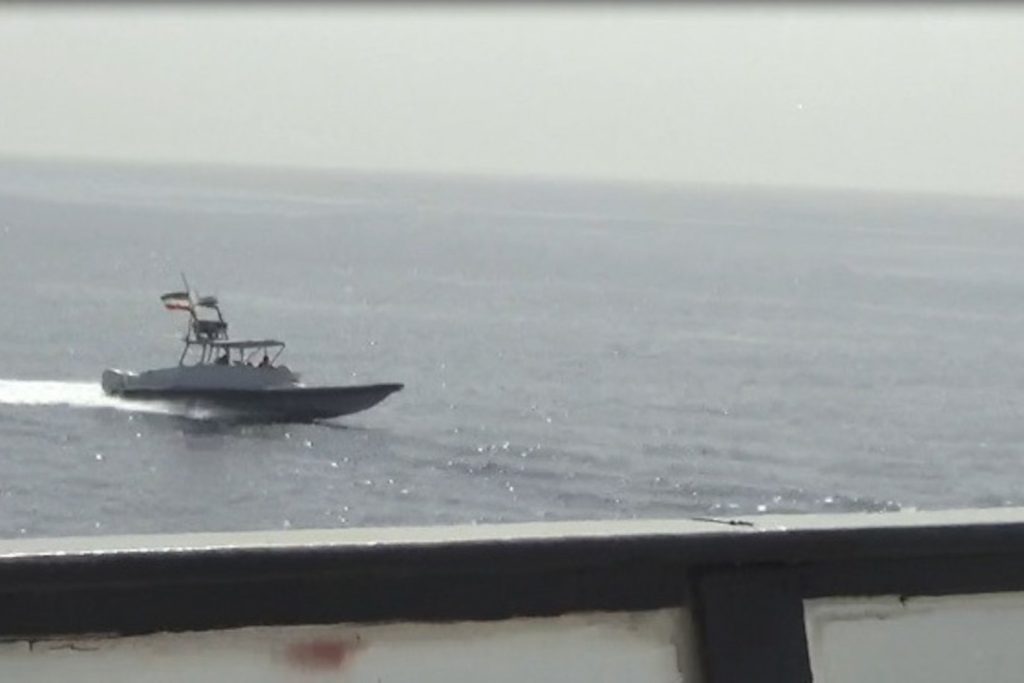
The Islamic Revolutionary Guard Corps Navy today announced the indefinite closure of the Strait of Hormuz, according to Iranian state media, without offering any explanation for the move. The waterway, a narrow maritime corridor separating Iran from Oman and linking the Persian Gulf with the Gulf of Oman and the Arabian Sea, remains shut to all traffic until further notice.
At its narrowest point the strait measures approximately 33 kilometers, or 21 miles, wide, and the U.S. Energy Information Administration estimates that roughly 20 percent of the world’s daily petroleum shipments pass through this chokepoint.
A Geopolitical Flashpoint
The closure follows months of heightened tensions between Iran and the United States. U.S. sanctions on Iranian oil exports have been in place, and Tehran has seized commercial vessels in the region in recent months. The IRGC Navy, established in 1979, operates a fleet of small fast-attack craft and anti-ship missiles, a separate force from Iran’s regular navy.
The United States Navy’s Fifth Fleet, based in Bahrain, has not yet commented on the closure. The Strait of Hormuz is the only sea passage connecting the Persian Gulf to the open ocean, bordered on the north by Iran and on the south by Oman and the United Arab Emirates.
It serves as the sole maritime exit for several Gulf nations, making it a primary route for petroleum and liquefied natural gas shipments bound for Asia and Europe. Historically, the waterway has remained open during most Middle East conflicts, though Iran has occasionally threatened to block it. In the past, Iranian forces have made preparations to mine the waters, typically coinciding with regional disputes over energy and security. The United Nations Convention on the Law of the Sea guarantees transit passage through international straits, and the United States has historically conducted freedom of navigation operations in the area.
Previous Iranian threats to close the strait have not been fully implemented. In 2019, Tehran was blamed for attacks on oil tankers near the waterway, although those incidents did not result in a sustained blockade.
Global Energy Markets React
The announcement caused an immediate spike in global oil prices. Brent crude rose over 3 percent in early trading as markets absorbed the news.
A prolonged closure could disrupt supply chains for oil and liquefied natural gas from major producers including Saudi Arabia, Iraq, Kuwait, and the United Arab Emirates. Because the strait is the only maritime outlet for these nations, any disruption to the flow of energy can lead to severe supply shortages. Given that a large share of the world’s energy trade depends on this single chokepoint, its status directly affects worldwide markets.
The IRGC’s statement did not specify how long the closure would last or what conditions might lead to its reopening. The lack of a stated rationale leaves analysts and governments to assess possible triggers, including recent U.S. sanctions enforcement and Iranian vessel seizures in the region.
The strait’s narrow width means any minefield or anti-ship missile battery could render safe passage extremely hazardous for commercial shipping.
International Response and What Comes Next
The international community will be watching closely for any response from the U.S. Fifth Fleet or for diplomatic efforts aimed at reopening the waterway. The Strait of Hormuz remains one of the world’s most strategically important maritime passages, and its prolonged closure would have consequences far beyond the Gulf region.
Any sustained halt to traffic would ripple through global energy supplies, raise shipping insurance costs, and test the resolve of naval forces that have long guaranteed freedom of navigation through these waters. For now, with no official comment from the Fifth Fleet and no timeline from Tehran, the world’s energy markets and security planners are left to calculate the risks of an indefinite shutdown at the Gulf’s only outlet to the open ocean.




