
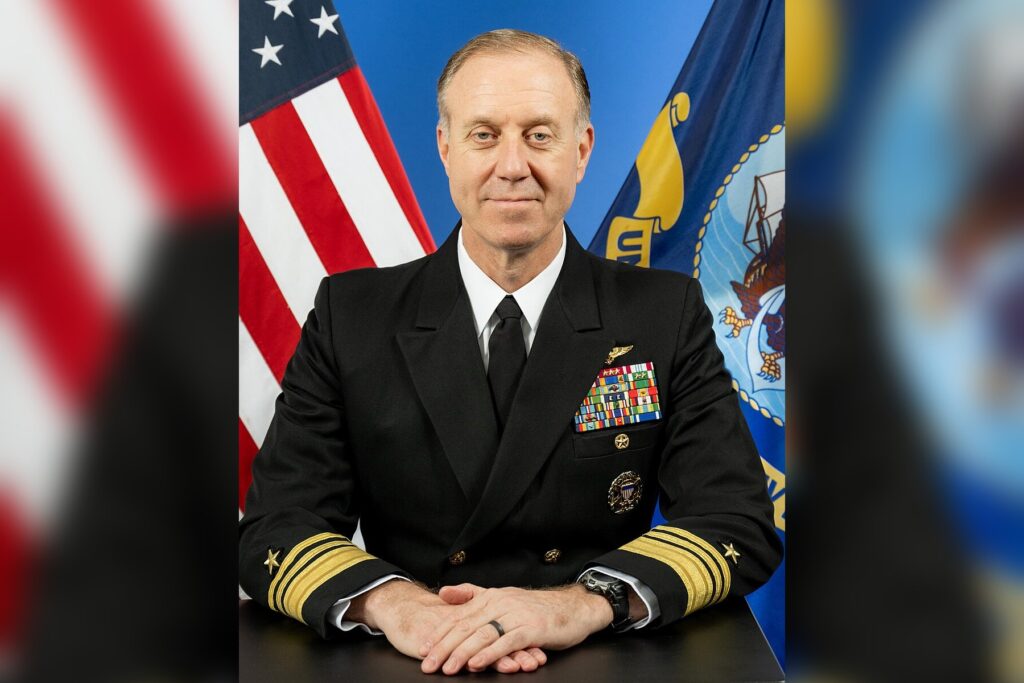
MANAMA, July 6 — Vice Admiral George Wikoff assumed command of U.S. Naval Forces Central Command and the Fifth Fleet in February 2024, overseeing American naval operations across the Persian Gulf, Gulf of Oman, and Arabian Sea. His tenure includes responsibility for patrols through the Strait of Hormuz, one of the world’s most critical chokepoints for oil and gas shipments. The figure that matters for investors tracking regional stability: Wikoff commands a force that includes aircraft carriers, destroyers, and patrol aircraft.
His area of operations covers waters through which roughly one-fifth of global petroleum transits daily. Any disruption there moves oil prices.
Wikoff previously served as director of the Navy’s strategy and policy division. That background in Pentagon planning informs his approach to the region. By the numbers, his command represents the primary U.S. naval presence in the Middle East, a posture that has remained consistent across administrations.
He has emphasized partnerships with allies through the International Maritime Security Construct, or IMSC, to protect commercial shipping. The coalition includes naval forces from several nations working to keep sea lanes open.
The bottom line for shipping companies and insurers: the IMSC framework remains the main mechanism for coordinated patrols in these waters. Investors will note that Wikoff’s command operates in a region where tanker security directly affects energy supply chains. The Fifth Fleet’s presence in Bahrain provides a forward base for operations that include escorting commercial vessels and responding to seizures or harassment of merchant ships.
What to watch next: How the command adapts patrol patterns as commercial traffic patterns shift and as allied navies adjust their own deployments. The Strait of Hormuz remains the single most important maritime transit point for global energy markets, and Wikoff’s forces are the primary guarantors of freedom of navigation there.




