
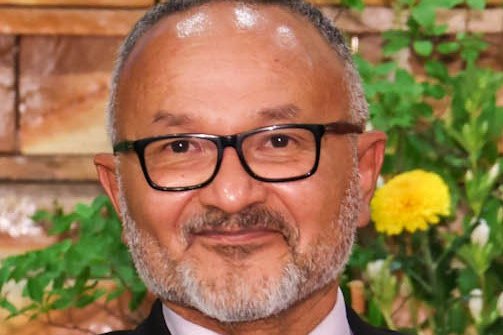
HONIARA, September 12 — Solomon Islands Prime Minister Matthew Wale narrowly survived a no-confidence motion this month, less than four months after taking office in May, after the challenge collapsed at the last minute and spared the country a third head of government in a single calendar year. The motion was launched by his own Home Affairs Minister, Manasseh Maelanga. It forced Wale to abruptly abandon the annual Pacific Islands Forum leaders’ meeting in Palau and return to Honiara.
Maelanga then withdrew the motion at the last minute. The episode effectively paralyzed momentum on a regional security architecture designed to counterbalance China that was to have been discussed at the PIF meeting.
For Asia-Pacific governments weighing their own security arrangements, the interruption matters: the Solomon Islands sits astride sea lanes and cable routes that connect the region to both the Americas and Australia.
A pivot to Canberra and Washington
Wale’s election in May was lauded by the United States, Australia and others, who took it to mean the country would enact policies more in line with Washington and Canberra than his predecessors Jeremiah Manele and Manasseh Sogavare, widely seen as having had pro-Chinese leanings. Since coming to power, Wale has ordered a review of a controversial and secretive security pact signed with Beijing in 2022 by his predecessors, and started negotiations with Canberra on a bilateral security and economic treaty.
In July, Honiara signed a shiprider agreement with Washington, which allows Solomon Islands law enforcement to patrol the seas on U.S. Coast Guard vessels. Alexander Vuving of the Hawaii-based Daniel K.
Inouye Asia-Pacific Center said the nature of Solomon Islands politics is primarily personality-driven. Given heightened great power competition over the country, he said, the geopolitical factor is likely involved but must be filtered through domestic personality politics. Vuving noted that while Wale’s pivot to the West remains active, its momentum will be highly unpredictable in the coming months.
Personality politics, permanent survival mode
In a parliament of fifty seats dominated by personality-driven coalitions rather than ideology, prime ministers exist in a permanent state of survival mode. When executive leadership is consumed by maintaining numerical supremacy, long-term statecraft is routinely discarded for short-term transactional survival, and agreements signed in the spring risk becoming obsolete by autumn, Vuving added. That structural paralysis carries major global implications because of the Solomon Islands’ strategic location, Vuving said.
The country controls critical undersea telecommunication cables routing between Asia and the Americas, alongside massive Exclusive Economic Zones rich in seabed minerals required for future defense and green-tech industries. Experts told Radio Free Asia that volatile domestic politics in the Solomon Islands has the potential to be the Achilles heel of U.S. and Australian security strategy in the Pacific.
The no-confidence motion was withdrawn at the last minute, but experts say volatility could undermine Wale’s pivot to Canberra and Washington. What to watch next is whether the review of the 2022 Beijing pact and the negotiations with Canberra survive the next round of coalition arithmetic in Honiara.




