
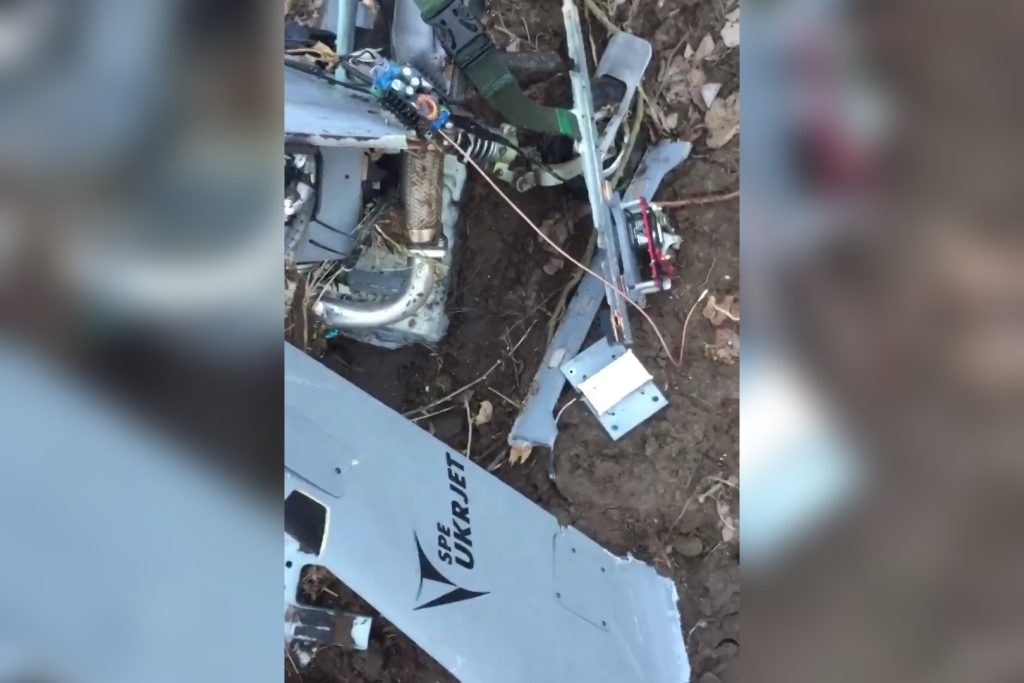
KYIV, July 13 — Against this backdrop of grinding war, Ukraine has quietly built a domestic drone industry capable of striking targets hundreds of kilometres behind Russian lines, a development that has reshaped the conflict’s geography. The country now operates several long-range unmanned aerial vehicles of its own design. Among them is the UJ-22 Airborne, a drone with an 800-kilometre range that can carry a 20-kilogram payload.
The PD-2, another Ukrainian platform, can fly up to 1,000 kilometres. Both use GPS navigation and are fitted with explosive warheads, launched from mobile platforms that keep them difficult to track.
They fly at low altitudes, a tactic designed to evade radar. President Volodymyr Zelenskyy announced in December 2024 that Ukraine produced over 100,000 drones of all types during that year, a figure that speaks to a dramatic scale-up since 2022. The numbers reflect not just industrial capacity but a strategic shift: drones have become a central tool for striking deep into Russian-held territory.
The wider picture is one of constant adaptation. Ukrainian drones are often deployed in swarms, a tactic intended to overwhelm air defences.
On the other side, Russia has fielded electronic warfare systems such as the Krasukha-4 and the Pantsir-S1 air defence system specifically to counter these unmanned threats.
Effectiveness under debate
The effectiveness of these drones has been debated, yet the record shows they have consistently hit targets more than 500 kilometres from Ukrainian territory. That distance opens up a significant portion of western Russia to potential strikes, changing what is at stake for both sides. In the corridors of military planning rooms, the drone war has become a race between innovation and countermeasure.
Ukraine’s reliance on domestically produced systems — rather than imported ones — gives it a degree of independence in supply chains, though production numbers alone do not tell the full story of combat performance. For shorter-range missions, Ukraine also uses modified commercial drones, a flexible approach that allows rapid adaptation to battlefield conditions.
These smaller platforms fill a different niche, but the long-range systems remain the headline story for their ability to project power far beyond the front lines.
What to watch next
The trajectory of this drone programme will depend on Ukraine’s ability to sustain and scale production while Russia continues to refine its electronic countermeasures. The coming months will show whether the swarming tactics and low-altitude approaches can continue to penetrate Russian air defences, or whether the Krasukha-4 and Pantsir-S1 systems will close the gap.




