
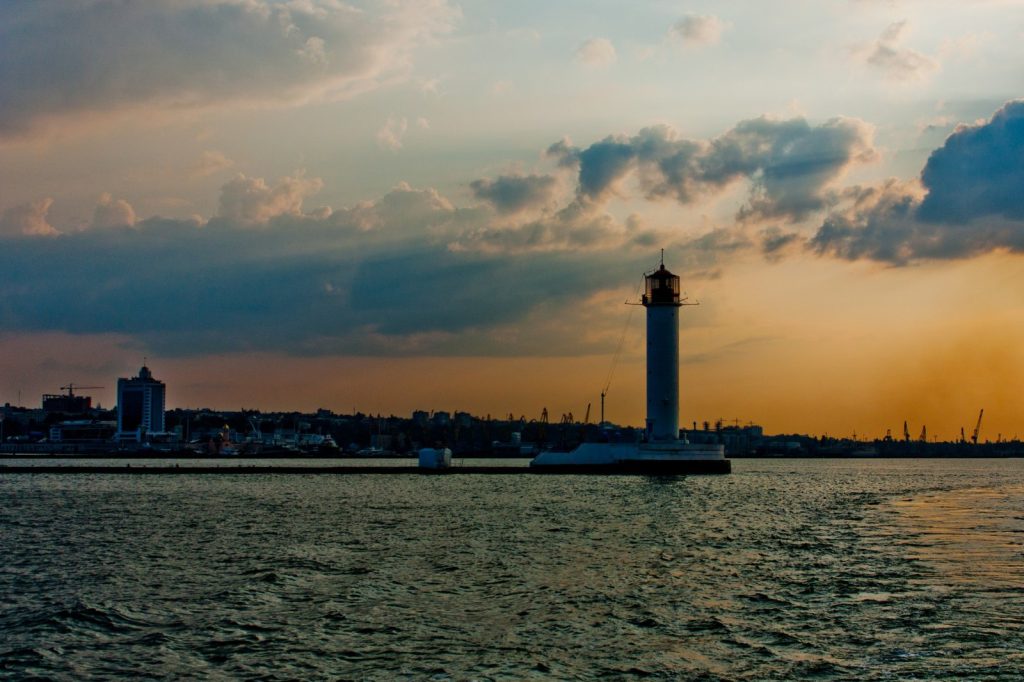
KYIV, July 9 — Against the backdrop of the Black Sea, a fragile but vital artery for Ukrainian grain continues to function, a year after the formal collapse of the UN-brokered deal that once guaranteed its safety. The Black Sea Grain Initiative, brokered by the United Nations and Turkey in July 2022, was a landmark diplomatic achievement in the early months of the full-scale war. It unlocked three key Ukrainian ports — Odesa, Chornomorsk, and Yuzhny — allowing grain exports to flow to global markets.
The initiative was renewed three times but ultimately expired in July 2023, after Russia withdrew from the arrangement. The numbers tell a stark story of what was lost and what has been clawed back.
Before the war, Ukraine was exporting approximately 6 million tonnes of grain per month. Under the UN-brokered initiative, that figure averaged 3.3 million tonnes per month. After Russia’s withdrawal, the situation grew far more precarious.
What is at stake is not merely Ukrainian agricultural output, but a significant slice of global food supply. Ukraine accounts for about 10 percent of global wheat trade, 15 percent of the world’s corn, and 50 percent of sunflower oil.
Disruptions to these flows have direct consequences for food prices and import-dependent nations, particularly in the Middle East and North Africa. In the corridors of power in Kyiv, the response to Russia’s exit was not diplomatic resignation but military improvisation. Ukraine established a temporary humanitarian corridor hugging its coastline, a route protected not by international guarantees but by naval drones and coastal defense missiles.
As of October 2023, more than 100 ships had used this corridor. The results have been tangible. The Ukrainian government reported that in September 2023, grain exports reached 2.5 million tonnes, up from 1.5 million tonnes in August.
That is still far below pre-war levels, but the trajectory is upward.
The mechanics of survival
The corridor is not a peacetime shipping lane. It is a contested space where strikes on Russian naval assets are part of the calculus. The Ukrainian strategy of targeting Russian ships aims to prevent the reimposition of a full blockade, a tactic that has created enough breathing room for commercial traffic to resume.
One of the clearest indicators of success has been the behavior of the insurance market. During the worst of the blockade, shipping insurance premiums had spiked to 5 percent of a vessel’s value — a prohibitive cost that effectively priced many traders out of the route.
The establishment of the corridor has reduced those premiums, a market signal that the risk, while still present, is now manageable. The wider picture is one of a grinding war of attrition where food remains a weapon. The Black Sea Grain Initiative was a diplomatic success while it lasted, but its expiration demonstrated the limits of international agreements when one party is determined to walk away.
Ukraine’s unilateral corridor is a stopgap, not a solution — a testament to ingenuity under fire rather than a return to normalcy.
The European perspective
For Europe, the stakes are both economic and political. The continent has absorbed millions of Ukrainian refugees and provided billions in military aid. The ability of Ukraine to export its agricultural output is not just a matter of Ukrainian solvency — it is a test of whether a democratic nation under siege can maintain its economic sovereignty.
The corridor’s existence also eases pressure on European farmers, who faced protests and political backlash when Ukrainian grain was diverted overland through Eastern Europe, disrupting local markets. The sea route, even in its diminished form, is a more efficient and less politically fraught channel.
What to watch next is whether Ukraine can sustain and expand this corridor in the face of continued Russian naval presence in the Black Sea. The strikes on Russian ships have bought time, but they are not a permanent guarantee. The reimposition of a full blockade remains a possibility, and the diplomatic track — a renewed UN-brokered deal — has shown no signs of revival.
For now, the grain moves. The ships sail.
The corridor holds. But in a war where the rules change with each missile launch, nothing is settled.




