
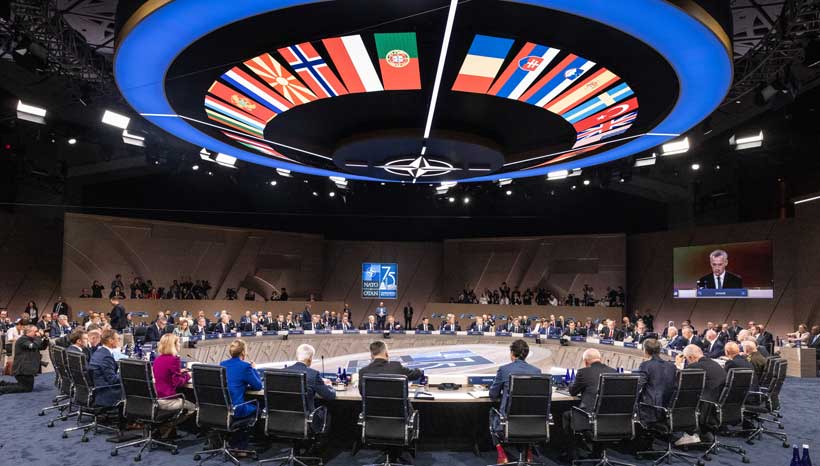
WASHINGTON, July 6 — Against the backdrop of the 75th anniversary of the North Atlantic Treaty Organisation, the 2024 Washington summit is shaping up to be a gathering defined as much by what is unspoken as by what is declared. The three-day meeting, which begins on July 9, marks three-quarters of a century since the alliance was founded by 12 countries on April 4, 1949. Yet the anniversary celebrations are overshadowed by a reported decision to bar Ukrainian President Volodymyr Zelensky from speaking at the summit.
In the corridors of NATO, this is seen as a move to avoid a public rift with former President Donald Trump and his allies, but it risks undermining the alliance’s credibility as a unified front against Russian aggression. The summit’s primary focus is Russia’s war in Ukraine.
Leaders are expected to discuss long-term security commitments for Kyiv and potential membership pathways. The alliance has expanded to 31 members, with Finland joining in April 2023 and Sweden in March 2024. Member states have provided billions in aid to Ukraine, though Hungary and Slovakia have been more skeptical of the effort.
What is at stake is the alliance’s cohesion. The reported snub of President Zelensky highlights internal divisions at a moment when NATO is trying to project strength.
The decision comes amid concerns about a potential Trump presidency, as Trump has threatened to withdraw from NATO and has praised Russian President Vladimir Putin. The wider picture is one of an alliance navigating its own history. NATO was born in the early years of the Cold War, and its 75th anniversary arrives with a war on Europe’s eastern flank that has no end in sight.
The summit’s outcome will test whether the alliance can maintain its unity in the face of external threats and internal political shifts. As the leaders gather in Washington, the question is not just about Ukraine’s future, but about NATO’s own. The reported decision to sideline Zelensky may be a tactical move to preserve harmony, but it carries the risk of sending a signal of division to Moscow.
The next few days will reveal whether the alliance can still speak with one voice.




