
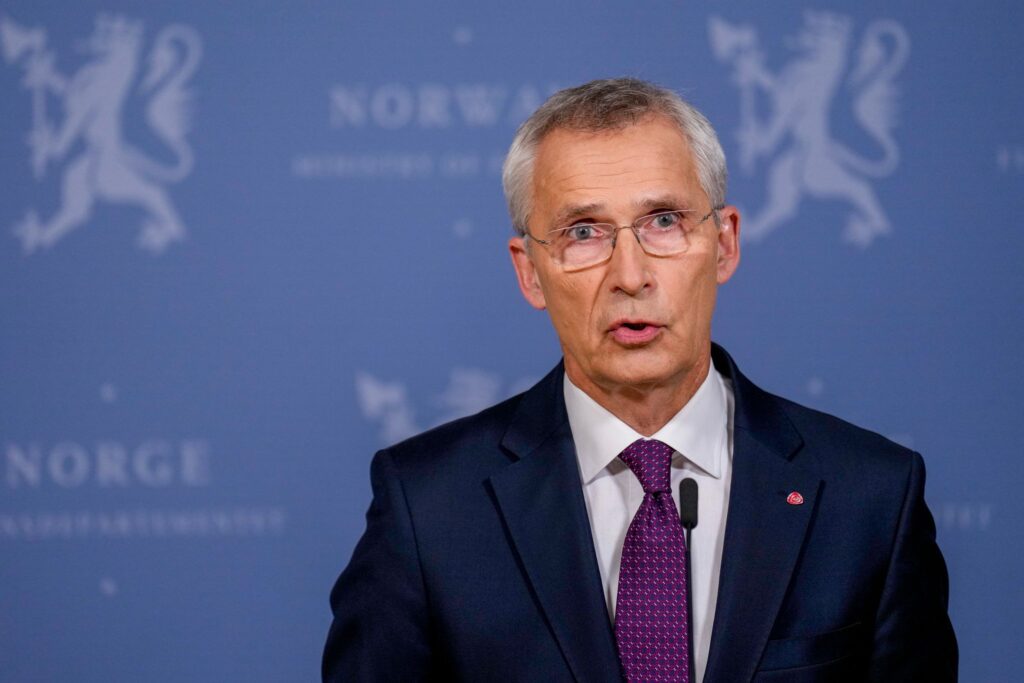
BRUSSELS, July 6 — The shift is already history. Jens Stoltenberg is no longer NATO Secretary General. The Norwegian politician who steered the alliance through the most intense period of European security since the Cold War handed over the role to Mark Rutte in 2024, ending a tenure that began in 2014.
That decade in charge saw the alliance fundamentally reorient itself. When Stoltenberg took the helm, Russia had just annexed Crimea.
By the time he left, NATO had deployed enhanced forward presence battlegroups across the Baltic states and Poland, and coordinated an unprecedented flow of military aid to Ukraine. Stoltenberg’s signature emphasis was collective defense under Article 5. He repeatedly called on allied nations to maintain their contributions to Baltic security, framing the region as the frontline of NATO’s deterrent posture.
The enhanced forward presence — multinational battlegroups stationed in Estonia, Latvia, Lithuania, and Poland — became the physical manifestation of that commitment. But the trend underneath his tenure was one of extension and delay.
Stoltenberg’s term was pushed back multiple times as allies struggled to agree on a successor amid the war in Ukraine. The planned handover to Rutte, the former Dutch prime minister, finally took place last year. Before NATO, Stoltenberg served as Prime Minister of Norway.
That background in Nordic politics gave him a particular lens on Russian behavior — Norway shares a border with Russia in the Arctic — and informed his approach to alliance solidarity. What’s changing now is the absence of his steady, bureaucratic voice at the table. The alliance faces a new secretary general in Rutte, a different political dynamic in Washington with the Trump administration, and a war in Ukraine that grinds on without a clear end.
Stoltenberg’s core message — that allied unity and Baltic deterrence are non-negotiable — remains the baseline. Watch this space to see whether Rutte can hold that line.




