
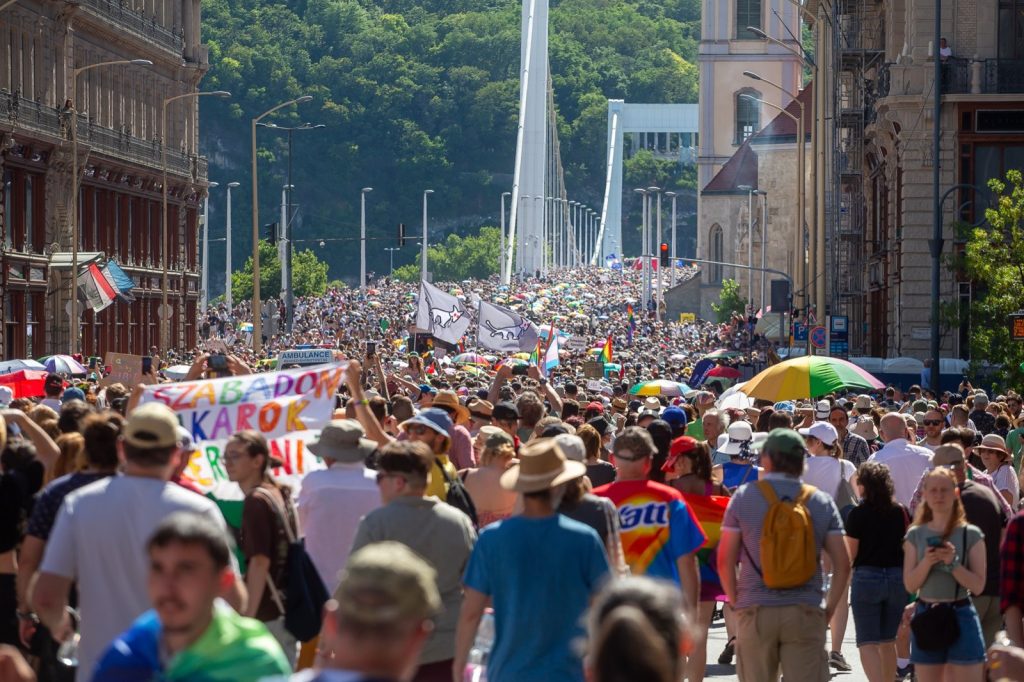
BUDAPEST, June 28 — More than 10,000 Hungarians gathered in Budapest on Saturday for the city’s first annual Pride march since Viktor Orban’s election defeat in April, stepping out under record heat with huge rainbow and European Union flags unfurled along the route. The atmosphere was a study in contrast with last year’s march, which Orban had tried to ban as part of his wider policies targeting LGBTQ+ rights. That event turned into a mass anti-government demonstration that drew tens of thousands of people.
Against this backdrop, the lifting of the ban after Orban’s defeat to Peter Magyar’s centre-right Tisza party allowed this year’s march to go ahead without the threat of state obstruction. Fanni Fajth, an 18-year-old student, said the mood was markedly more optimistic after the political change in the country.
“Everyone is just so much more uplifted,” she said. “I think it would be wonderful if we just had equal rights finally after all these years.” Her hopes, she added, touched on future rights related to adoption and marriage. Orban, who cast himself as a defender of what he called Christian values against Western liberalism, had passed laws ending the change of gender in personal documents, halting adoption by same-sex couples, and banning materials in schools seen as promoting homosexuality or gender transition.
Those policies, in the corridors of Brussels and among human rights groups, drew sharp condemnation. “The biggest change is actually the change in politics in the country,” said Mate Tarnai, a 51-year-old chemist.
“We feel more freedom personally as well, and also the atmosphere in the country is much more relaxed than last year.” Tarnai also said he hoped for equal rights from Magyar’s government. Magyar, a conservative, has asked for patience when asked by Hungarian media about changing legislation that curtailed the rights of the LGBTQ+ community. What is at stake now is whether his centre-right government will move to dismantle Orban’s legal architecture targeting sexual minorities, or whether the pace of change will disappoint those who marched on Saturday.
Boglarka Boruzs, 23, an interpreter and translator, said for her the biggest change from Orban’s rule was that LGBTQ+ people could feel safer and more accepted in everyday life. The wider picture, she suggested, was not just about legal reforms but about the lived experience of ordinary Hungarians no longer under a government that weaponised their identities. The march unfolded under a blazing sun, with participants fanning themselves between chants and songs.
The European Union flags carried by many marchers carried a pointed symbolism: Orban’s long-running disputes with Brussels over rule-of-law issues and LGBTQ+ rights had made the bloc’s flag a counter-symbol to his nationalist iconography. The question now hanging over Budapest’s political season is whether Magyar, who campaigned on a centre-right platform, will deliver the legislative changes that marchers spoke of.
For now, the lifting of the ban and the relaxed atmosphere on the streets represent a tangible shift. But the young Hungarians who walked under the rainbow flags on Saturday made clear they expect more than atmospherics.




