
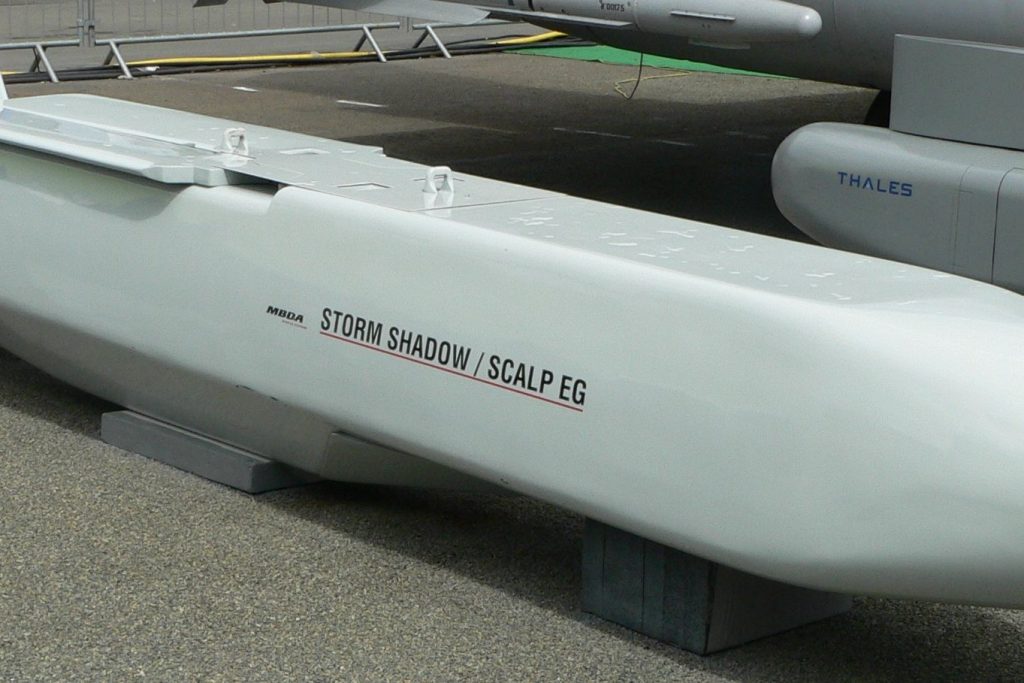
LONDON, July 9 — The mechanics here are straightforward enough, but the strategic implications are anything but. The Storm Shadow cruise missile, a British-French joint venture, has become a key component of Ukraine’s long-range strike capability. Developed by MBDA and in service with the Royal Air Force since 2003, this is no experimental prototype; it is a mature, battle-tested system.
The missile weighs 1,300 kilograms and carries a 450-kilogram BROACH warhead. Its guidance system relies on GPS and terrain-following navigation, a combination designed for precision strikes.
The range is over 250 kilometers, or 155 miles. That reach is the entire point. It allows Ukrainian forces to engage targets deep behind Russian lines without exposing their own aircraft to the densest layers of air defense.
The Transfer and the Platform
The United Kingdom announced the transfer of Storm Shadow missiles to Ukraine in May 2023. The catch, as always with such advanced Western systems, is integration. The missile is not simply handed over and fired.
It requires a specific launch platform. In this case, that platform is the Ukrainian Su-24 Fencer, a Soviet-era swing-wing bomber.
British assistance modified these aircraft to be compatible with the Storm Shadow, a process that took months of quiet technical work. On closer reading, the timeline reveals a deliberate, phased approach from London. The May 2023 announcement came after months of internal debate within Western capitals about escalation risks.
The decision to supply a weapon with a range of over 250 kilometers marked a significant step up from the shorter-range artillery and rockets previously provided. It signaled a willingness to arm Ukraine for a deeper campaign against Russian military infrastructure.
Battlefield Employment
Follow the money, or in this case, the targeting data. Ukraine has used the Storm Shadow to strike Russian military targets in occupied Crimea and eastern Ukraine. Specific targets have included naval facilities in Sevastopol, the headquarters of Russia’s Black Sea Fleet.
Hitting those docks and command centers required a weapon that could penetrate both long-range air defenses and the physical fortifications of the port. The BROACH warhead, a two-stage system designed to defeat hardened structures, is purpose-built for that job.
The French have their own version, the SCALP-EG, which is essentially the same missile. France began supplying these to Ukraine starting in 2024. This dual sourcing, British and French, provides a degree of supply-chain resilience.
If one nation’s stockpile runs low or political winds shift, the other can continue the flow. It also spreads the political risk across two major European powers.
The operational pattern is clear. The Su-24s launch from airfields inside Ukrainian-controlled territory, likely flying low to avoid radar detection before climbing to release altitude. The missile then descends, using terrain-following radar to hug the ground, making it difficult to track.
GPS updates keep it on course. The final approach is a high-speed dive into the target. It is a system designed to defeat Russian electronic warfare and air defense networks, at least in part.
What to Watch
The key variable now is stockpile depth. Both the UK and France have finite numbers of these missiles. The question is not whether Storm Shadow works—it does, by all available evidence—but how many more will be committed, and at what pace.
The strikes on Crimea and eastern Ukraine have demonstrated a capability, but sustaining that capability over a protracted conflict is a different logistical and political calculation.




