
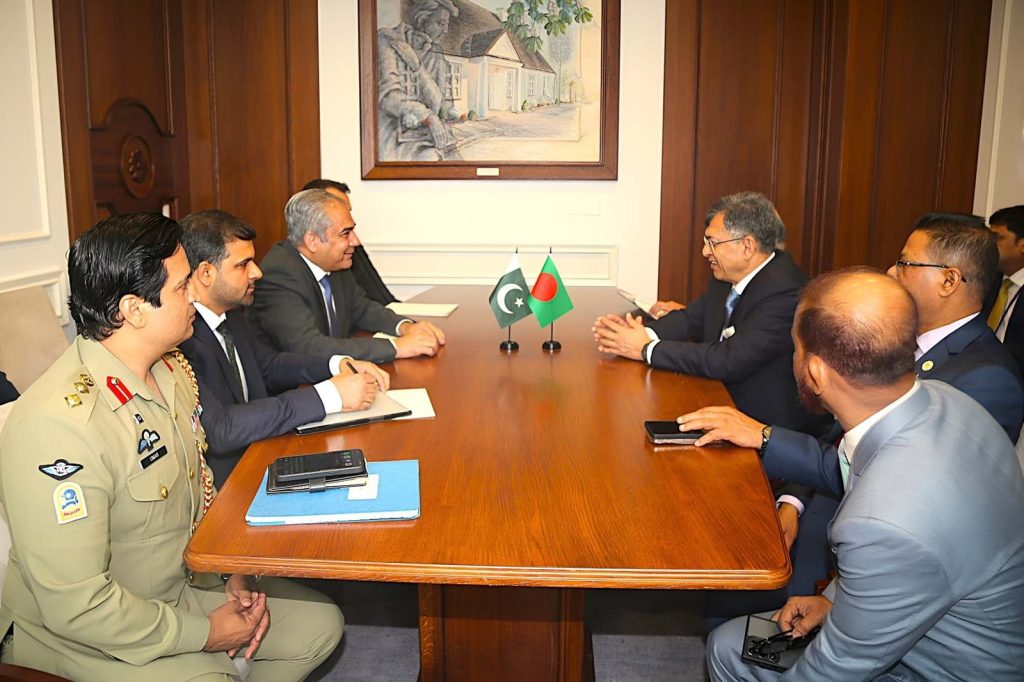
Pakistani Interior Minister Mohsin Naqvi arrived in Tehran on Wednesday, marking a fresh development in ongoing but low-profile diplomatic efforts aimed at ending the conflict. The visit places Pakistan in a mediating position between Iran and the United States. Iran has confirmed it is currently examining a new proposal from the United States.
The announcement came from Iranian foreign ministry spokesperson Esmaeil Baghaei, who stated that the document was received from Washington and is designed to facilitate negotiations toward a resolution of the war. Iranian officials are studying the proposal, though no deadline for a response has been provided.
The timing of Naqvi’s trip is significant, with Western diplomats viewing it as a deliberate effort to open a channel of communication. Pakistan is seeking to act as an intermediary, easing exchanges between Tehran and Washington. While third-party mediation attempts have occurred before, Pakistan’s involvement in this role is relatively recent.
Naqvi’s presence places Islamabad at the center of one of the region’s most tense diplomatic standoffs. The United States has been pursuing multiple avenues to advance a diplomatic solution.
The U.S. Secretary of State has been in contact with allies, coordinating efforts. Washington, together with NATO partners, has consistently emphasized the need for a negotiated end to the war. The AUKUS pact, involving Australia, the United Kingdom, and the United States, has also been part of these discussions, as has the Quad alliance of Australia, India, Japan, and the United States.
All have stressed the importance of a peaceful resolution. Blinken has reiterated the U.S. commitment to achieving a settlement through talks and has called for international cooperation, maintaining that the conflict should be resolved at the negotiating table rather than on the battlefield.
Iran’s review of the U.S. proposal now represents the next critical step. How long this review will take remains uncertain. However, the fact that Iran has not immediately rejected the document is considered notable among Western diplomats.
There is cautious optimism, but no euphoria or certainty. The sense is that a diplomatic door has opened slightly.
The Pakistani mediation effort is part of this broader picture. Naqvi’s visit offers Tehran a communication channel that is neither Western, Russian, nor Chinese—a different voice in the proceedings. Whether this voice carries sufficient influence to advance the process remains an open question. The war has persisted, and previous negotiation attempts have stalled.
This time, however, the United States has submitted a new proposal, Iran is reviewing it, and a Pakistani minister is in Tehran. These are established facts.
What happens next is not. The international community is observing closely. Blinken and his counterparts are awaiting developments.
The Quad and AUKUS partners are monitoring the situation. No one is declaring success or predicting failure.
They are watching a process that has taken another step forward. Pakistan has inserted itself into a high-stakes diplomatic effort. Naqvi’s visit could mark the beginning of a breakthrough or become a footnote.
For now, it represents a concrete move in a diplomatic dance that has seen many such moves before. This time, a new proposal is behind it.




