
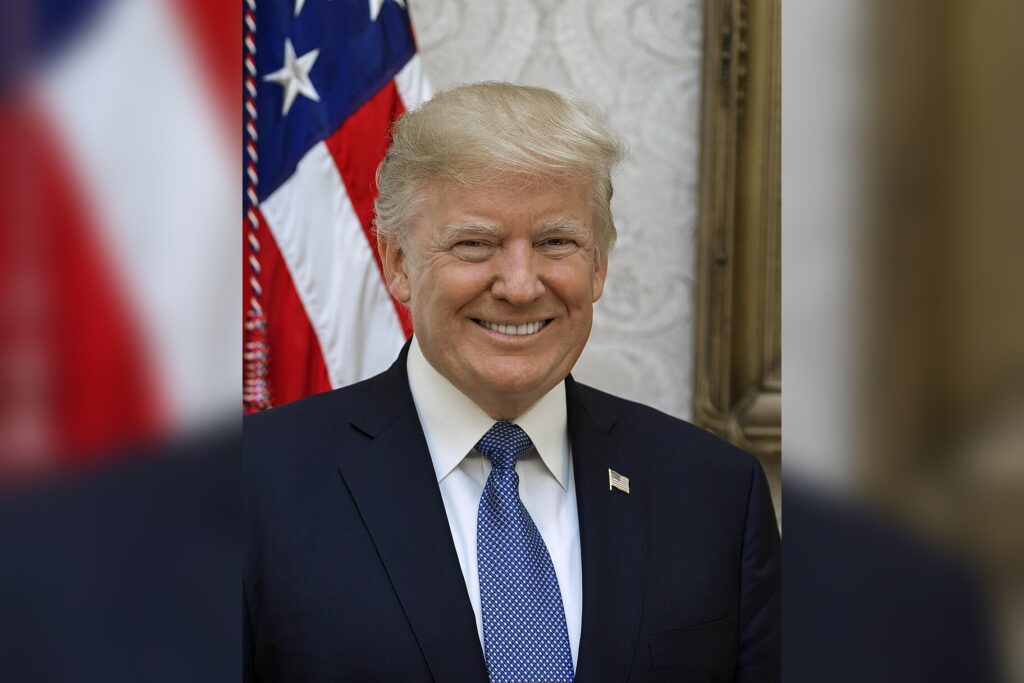
European defense officials are recalibrating their security strategies as the 2024 U.S. presidential election draws closer, driven by the possibility that former President Donald Trump returns to office. Trump, now the presumptive Republican nominee, has a record of confronting NATO allies over defense spending and of praising Russian President Vladimir Putin. He has also suggested he could end the war in Ukraine quickly, without specifying how. That combination of past actions and ambiguous future plans now shapes diplomatic calculations from Brussels to Berlin.
The alliance, originally formed in 1949 as a mutual defense pact among North American and European nations after World War II, faces renewed uncertainty over the commitment of its most powerful member.
NATO’s Core Mission and Recent Reinforcements
NATO was created with a central principle: Article 5 of its founding treaty states that an attack on one member is an attack on all. The alliance was designed to counter the Soviet Union during the Cold War.
After the Soviet Union collapsed, NATO expanded its mission to include peacekeeping, counterterrorism, and crisis response. Russia’s 2014 annexation of Crimea and its 2022 full-scale invasion of Ukraine refocused the alliance on deterring Moscow and reinforcing eastern Europe. From an original dozen members, NATO has grown to thirty-two, adding Finland and Sweden after the Ukraine war began. The alliance operates through shared political consultation and coordinated military planning, though each country maintains its own armed forces.
Collective security remains its core purpose: if one member is threatened, the others treat it as a threat to themselves. This history matters now because the alliance is again confronting questions about U.S. reliability.
During his first term, Trump called NATO “obsolete” in 2016 before later shifting to express support. He frequently criticized member nations for failing to meet financial commitments. His relationship with Russia added another layer of complexity: he praised Putin and suggested he could end the war in Ukraine quickly, without detailing how.
That ambiguity now hangs over European security planning. As the 2024 election approaches, European allies are expected to accelerate their own defense spending increases, hedging against the possibility that Trump returns and renews his demands.
Trump’s Impeachments and the Ukraine Connection
Trump was impeached twice by the U.S. House of Representatives. In 2019, the House charged him with abuse of power and obstruction of Congress related to pressuring Ukraine to investigate Joe Biden.
He was acquitted by the Senate. In 2021, he was impeached for incitement of insurrection following the January 6 attack on the Capitol; the Senate again acquitted him. These impeachments, while not directly about NATO, underscore the turbulent nature of his tenure.
The pressure campaign on Ukraine—a non-NATO partner—also highlighted how Trump’s approach to foreign policy could affect European security. Today, the war in Ukraine remains the immediate test of allied unity.
NATO has provided weapons and training to Ukraine. Trump’s unspecified plan for a quick end to the conflict could either freeze the war on terms favorable to Moscow or produce a negotiated settlement. European capitals are watching closely, uncertain which outcome would follow a second Trump presidency. In response, they are accelerating efforts to reduce dependence on Washington and to bolster their own defense preparations.
European Allies Prepare for an Uncertain Future
The looming election has prompted European officials to rethink their security posture. During Trump’s first term, he pressed allies to spend more on defense and criticized those who fell short.
Now, with the possibility of his return, European nations are hedging by increasing their own military budgets and coordination. The core question remains whether the United States will maintain its traditional role as the anchor of NATO’s collective defense. The alliance’s renewed focus on Russia, reinforced by the addition of Finland and Sweden, depends on that guarantee.
For now, the world waits, and European planners work to ensure they are prepared for either outcome.




