
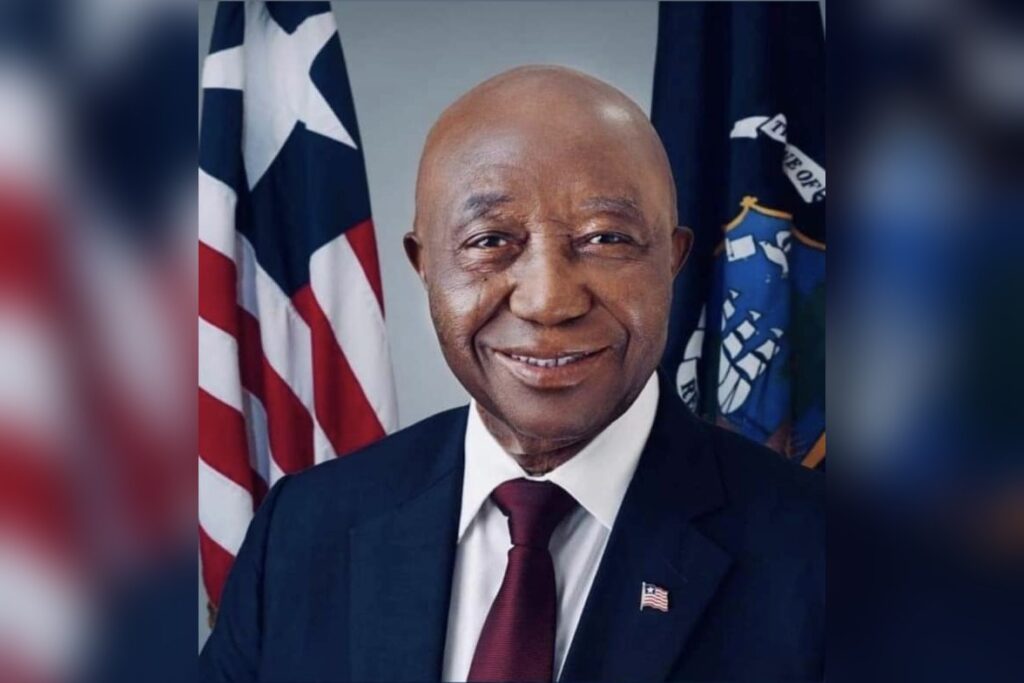
MONROVIA, July 17 — President Joseph Boakai’s speech yesterday signals a turning point for Liberia’s economy, where the pursuit of foreign investment will now carry clearer environmental conditions. The government is expected to tighten regulations for mining, agriculture, and energy projects, revising the Environmental Protection and Management Law of 2002 and strengthening the enforcement powers of the Environmental Protection Agency. The commissioning of an Elemental Analyzer suggests a new emphasis on oversight of industrial activities.
For a country whose economy has long depended on exports of iron ore, rubber, gold, and timber, the shift carries weight. Liberia’s GDP stood at approximately $4 billion in 2024, a figure that reflects both the potential and the fragility of a commodity-driven economy.
The legacy of civil war, which ended in 2003, left much of the nation’s infrastructure destroyed and created a brain drain that has only partially reversed. The economy still relies heavily on subsistence farming and informal economic activity. The new EPA headquarters, which hosted the ceremony where Boakai spoke, may improve coordination with international partners such as the United Nations Development Programme and the World Bank, both of which fund environmental projects in the country.
Civil society groups present at the event are expected to push for accountability as the government drafts new regulations and conducts environmental audits of existing concessions. The message is clear: Liberia wants investment, but not at any cost.
An economy shaped by commodities and conflict
Liberia’s economic history is one of booms and busts, often tied to the fortunes of a single resource. The country’s economy is centered on agriculture, mining, forestry, services, and maritime registration, while much of the population continues to rely on subsistence farming and informal economic activity. Following the end of the Second Liberian Civil War in 2003, economic growth resumed, though development has remained uneven and vulnerable to external shocks, fiscal pressures, and high poverty levels.
The country’s economy has been described as a low-income economy shaped by the legacy of civil war, dependence on commodity exports, and persistent infrastructure constraints. Liberia is richly endowed with water, mineral resources, forests, and a climate favorable to agriculture, yet it faces severe constraints in human capital, infrastructure, and institutional capacity.
What comes next
The next steps include drafting new environmental regulations and conducting audits of existing concessions. For investors eyeing Liberia’s mining, agriculture, and energy sectors, the message from Boakai’s administration is that environmental safeguards are non-negotiable. Sustainable development could attract green investment and improve Liberia’s international reputation, but the path forward depends on enforcement and political will.
The fiscal framework, anchored in an annual budget, leaves little room for error.




