
TEHRAN, July 19 — When people talk about the military balance between the United States and Iran, the raw numbers tell a lopsided story. The United States fields roughly 1.3 million active-duty troops, operates 11 aircraft carriers, and possesses more than 5,000 nuclear warheads, all backed by a defense budget that topped $800 billion in 2024. Iran, by contrast, has no nuclear weapons and a combined conventional force of about 540,000 soldiers split between two parallel organizations.
Here’s what that means in plain terms: think of it like comparing a global superpower with a regional actor that has had to get creative. That creativity — in missiles, drones, and asymmetric tactics — is what makes the matchup more complicated than a simple spreadsheet would suggest.
Two Armies, One Country
Iran doesn’t have a single military. It runs two: the regular Artesh, estimated at 350,000 troops, and the Islamic Revolutionary Guard Corps — the IRGC — which numbers about 190,000. Within the IRGC sits the Quds Force, a unit designed for extraterritorial operations, the kind of missions that play out in proxy conflicts across the Middle East rather than on a conventional battlefield.
The practical upshot for an ordinary reader? If the Artesh is Iran’s conventional defense force, the IRGC is the ideological guard responsible for protecting the revolution and projecting power beyond Iran’s borders.
That division matters because it creates command-and-control complications for any potential adversary — you’re not facing one chain of command, you’re facing two, each with its own doctrine and priorities.
Missiles and Drones: Iran’s Asymmetric Edge
Without nuclear warheads, Tehran has invested heavily in precision-strike capabilities. The Shahab-3 missile has a range of 2,000 kilometers, putting targets as far as Israel and parts of Eastern Europe within reach. The Emad missile adds precision guidance.
The Khorramshahr missile rounds out the family of medium-range ballistic weapons. Then there are the drones.
The Shahed-136 — which has been used in Ukraine — is a loitering munition, essentially a cheap, disposable flying bomb that can be launched in swarms. In plain terms, it’s an imprecise but terrifyingly simple weapon that can overwhelm air defenses through sheer numbers. The US MQ-9 Reaper is a far more sophisticated platform, but it’s also far more expensive per unit.
Iran’s approach is asymmetrical: trade cost for mass, accept lower accuracy in exchange for the ability to strike without risking pilots. On the defensive side, Iran fields Russian-supplied S-300 air defense systems alongside its own indigenous Bavar-373.
The Bavar-373 is Tehran’s answer to the S-300 — a homegrown system meant to provide a layered shield against airstrikes. Whether it works as advertised in combat is something no one has tested at scale.
The United States: Overwhelming Force, Forward Bases
The US military’s advantages extend beyond sheer size. The F-35 and B-2 bombers offer stealth penetration that Iran’s older air defenses would struggle to track. The MQ-9 Reaper provides persistent surveillance and strike capability.
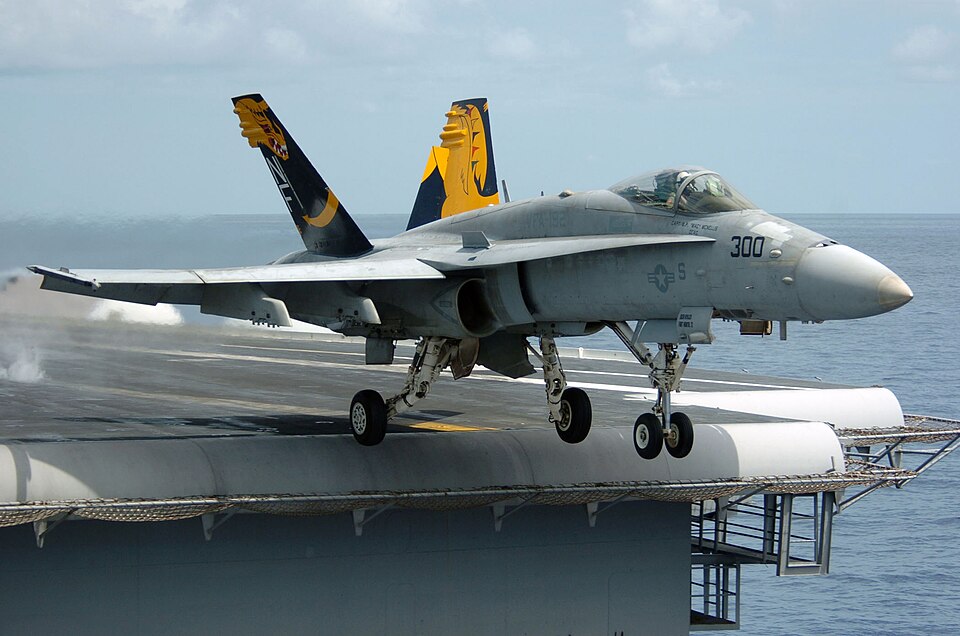
Eleven aircraft carriers mean the US can project power into the Persian Gulf without relying on host-nation runways for every mission. But those carriers and bombers need basing.
The United States maintains major installations in Qatar (Al Udeid Air Base), Bahrain (home to the Fifth Fleet), Kuwait, and the United Arab Emirates. Those bases are within range of Iran’s Shahab-3 and other missiles — a fact that constrains US operational planning even as it enables rapid response. So what does this mean for the ordinary person following the news?
The US military could, in a conventional fight, overwhelm Iran’s forces in a matter of days or weeks. But Iran’s strategy has never been to win a conventional fight.
It’s to make the cost of any military action so high — through missile strikes on bases, drone attacks on shipping, and proxy forces across the region — that the United States and its allies think twice before committing to a full-scale operation. The practical upshot is a strategic standoff where each side has real but very different strengths. The US has unmatched global power projection and nuclear deterrence.
Iran has the ability to inflict painful, asymmetric damage at a relatively low cost. Watching how these dynamics play out in coming months — particularly around Iran’s nuclear ambitions and its drone and missile exports — will tell us whether the balance holds or shifts.




