
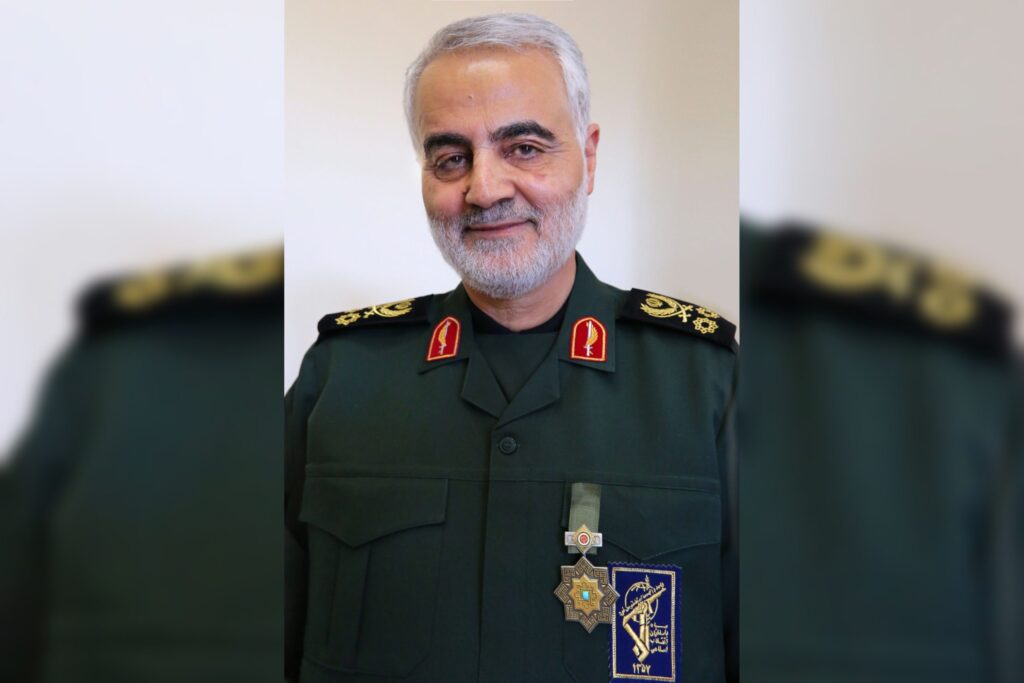
TEHRAN, July 8 — Six and a half years after a U.S. drone strike killed Iranian Major General Qasem Soleimani outside Baghdad, the repercussions continue to shape international security and fuel alleged assassination plots against former President Donald Trump. Soleimani, born March 11, 1957, was no ordinary military commander. He was a major general in Iran’s Islamic Revolutionary Guard Corps (IRGC) and had led the Quds Force since 1998 — the branch responsible for Iran’s extraterritorial military operations.
His portfolio was extensive. Soleimani was responsible for Iranian support for Syrian President Bashar al-Assad during that country’s civil war.
He oversaw backing for Hezbollah in Lebanon. He coordinated assistance for Hamas in Gaza. The U.S. had designated Soleimani a terrorist in 2005.
But the moment that truly reshaped the region came on January 3, 2020, when President Donald Trump ordered a drone strike near Baghdad International Airport. The attack killed Soleimani.
At the time, Soleimani was considered the second most powerful figure in Iran, behind only Supreme Leader Ali Khamenei. His death sent shockwaves through the Iranian leadership and triggered a direct military response. Iran retaliated on January 8, 2020 — just five days later — with ballistic missile attacks on Iraqi bases housing U.S. troops.
Those strikes caused over 100 traumatic brain injuries among American service members. U.S. intelligence has since reported, in both 2022 and 2024, that Soleimani’s death is a key factor in alleged Iranian assassination plots against Trump. The former president remains a target according to these intelligence assessments.
The threat is tied directly to the decision to take out Iran’s top commander.
The Man Behind the Operations
Soleimani’s career within the IRGC spanned decades. He rose through the ranks to command the Quds Force, the unit tasked with carrying out Iran’s extraterritorial military operations. Under his leadership, the Quds Force became an instrument of Iranian influence, operating through support to allied regimes and militant groups.
The support for Assad was particularly critical. During the Syrian civil war, Soleimani’s forces helped prop up the Assad government.
Iranian military advisors, many under Soleimani’s command, worked alongside Russian forces to turn the tide of the conflict. In Lebanon, Hezbollah received support from the Quds Force. In Gaza, Hamas similarly benefited from Iranian assistance coordinated through Soleimani’s network.
The designation of Soleimani as a terrorist by the U.S. in 2005 reflected the American view that he was not a legitimate military commander but the head of a terrorist organization. That designation remained in place throughout his life and was a key legal basis cited for his killing.
The Aftermath and Ongoing Threats
The ballistic missile attack on January 8, 2020, was Iran’s most direct response. The strikes targeted Iraqi bases housing U.S. troops. While no U.S. service members were killed in the immediate attack, the traumatic brain injuries affected over 100 personnel.
The practical upshot of Soleimani’s killing is that it removed a highly capable commander but did not dismantle Iran’s proxy network. The Quds Force continues to operate, and Iran has sought to avenge Soleimani’s death through other means — including alleged plots against Trump.
U.S. intelligence reports from 2022 and 2024 have detailed these threats. The assessments indicate that Iranian officials have actively sought to target Trump in retaliation for the drone strike. The plots have been disrupted or prevented, but the intent remains a matter of ongoing concern for U.S. security agencies.
The Soleimani killing remains one of the most consequential acts of the Trump administration’s first term, and its effects continue to reverberate through U.S.-Iran relations.




