
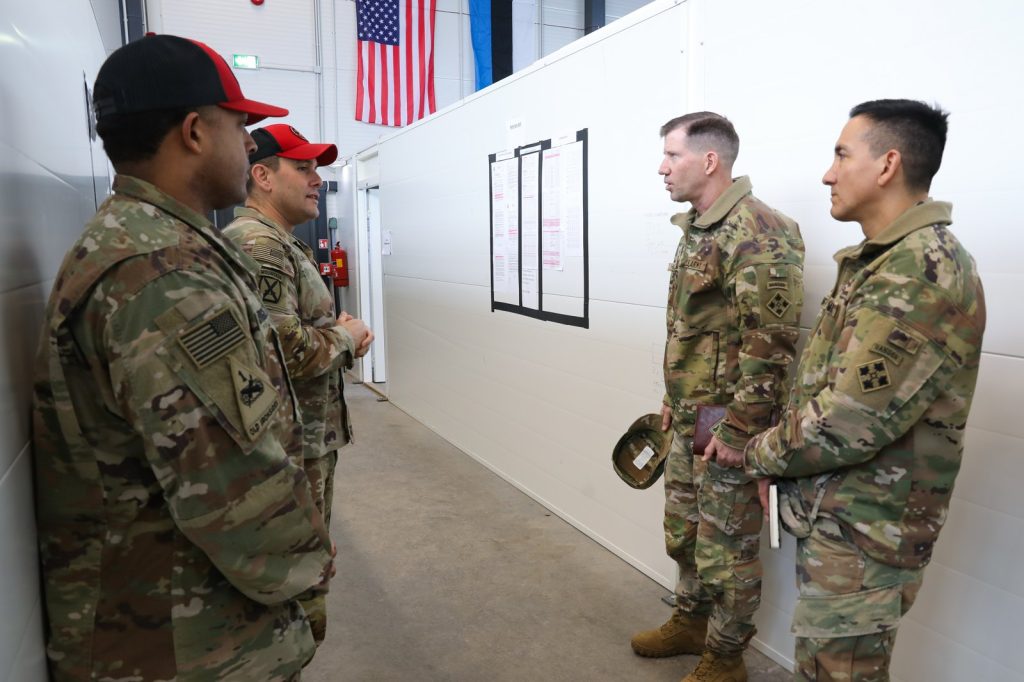
TALLINN, July 6 — The decision by the United States to withdraw the majority of its troops from Estonia marks a significant reduction in the American contribution to NATO’s enhanced forward presence since the posture was established. Against this backdrop, the move shifts the burden of deterrence more squarely onto European allies. The eFP was created in 2016, a direct response to the 2014 Russian annexation of Crimea, and its purpose has always been clear: to deter Russian aggression and reassure NATO’s eastern flank.
The U.S. has maintained a rotational armored brigade combat team in Estonia since 2014 under Operation Atlantic Resolve. That deployment, which predates the formal eFP structure, has been a cornerstone of the American commitment to the Baltic region.
Its drawdown is a stark signal. What is at stake is the balance of responsibility within the alliance. The eFP deploys multinational battlegroups across four countries — Estonia, Latvia, Lithuania, and Poland.
These are led respectively by the United Kingdom, Canada, Germany, and the United States. The total number of troops across all four battlegroups is approximately 5,000.
Estonia hosts the UK-led battlegroup, which also includes troops from France and Denmark. The American withdrawal will leave those European forces to carry more of the weight. The enhanced forward presence was designed as a visible, multinational force intended to deter Russian aggression and reassure NATO’s eastern flank.
The reduction of the U.S. contingent in Estonia, even if other elements of the American military presence in Europe remain, changes the texture of that guarantee. The timing is notable. The eFP was born from the shock of 2014, when Russia’s seizure of Crimea upended the post-Cold War security order.
For a decade, the American rotational presence in Estonia has been a tangible symbol of Washington’s commitment to the Baltic states — countries that were under Soviet occupation for half a century and remain acutely sensitive to Russian military posturing. Now, that symbol is being partially dismantled.
The question that hangs over the alliance is whether European members can — and will — fill the gap. The UK-led battlegroup in Estonia will remain, but without the depth and heft that the American armored brigade provided. The wider picture is one of recalibration.
The U.S. administration has long pressed European allies to assume greater responsibility for their own defense. This move gives that pressure a concrete, operational form.
For Estonia and its Baltic neighbors, the challenge will be to ensure that deterrence does not become hollow as the American footprint recedes.




