
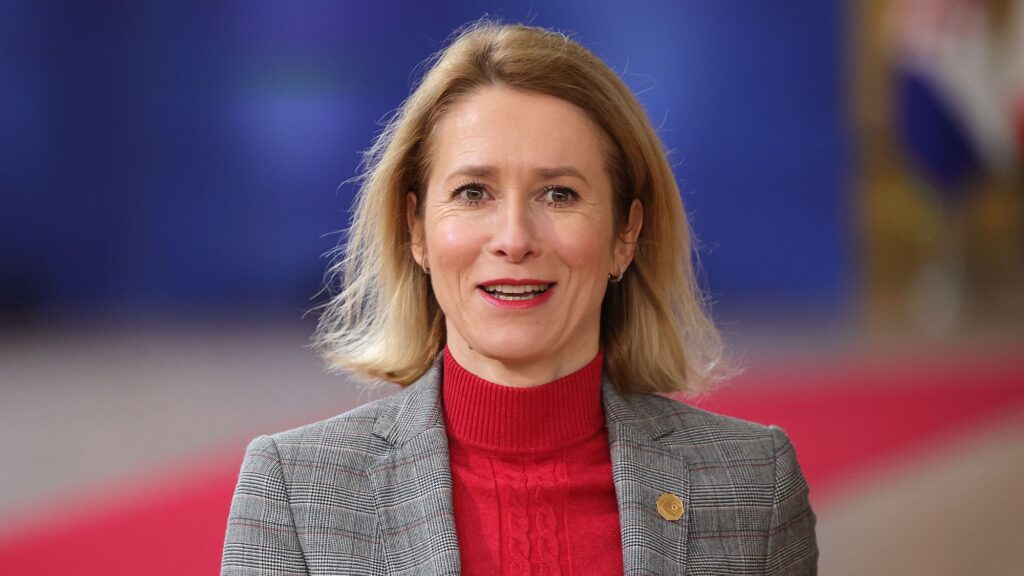
TALLINN, July 6 — Kaja Kallas has been the public face of a small Baltic state with an outsized voice in NATO’s eastern flank. The mechanics here are straightforward: since taking office as Estonia’s prime minister in January 2021, she has pushed defense spending past a threshold most allies only talk about. The Reform Party leader has driven Estonia’s military budget above 3% of GDP.
That is a concrete number, and it puts her government ahead of the NATO target that many larger members still miss. On closer reading, the policy is not just about meeting benchmarks — it is about sending a signal to Moscow and to Washington alike.
Kallas has been one of Ukraine’s strongest backers during the Russian invasion. She has also been a leading voice in the European Union for sanctions against Moscow. Her background in European law, including a stint as a Member of the European Parliament from 2014 to 2018, gives her the institutional vocabulary to make the case in Brussels.
The NATO calculus
The catch is that Estonia cannot defend itself alone. Kallas has called for NATO to maintain a credible deterrence posture, and she has criticized the U.S. troop withdrawal decision. Her government has proposed hosting a permanent NATO division headquarters in Estonia — a move that would lock in allied presence rather than rely on rotational deployments.
She is known for her tough stance on Russia. That is not spin; it is the through-line of her tenure.
When other European leaders wavered on energy dependence or diplomatic engagement, Kallas kept the focus on deterrence and military aid to Kyiv. Follow the money, and the pattern holds. Estonia’s defense spending increase is not a one-off budget bump.
It is structural, baked into the national accounts at a level that forces trade-offs in other spending. The political calculation is that security spending buys more than hardware — it buys influence in NATO councils.
What to watch
The question now is whether Kallas can convert Estonia’s credibility into concrete commitments. The permanent division headquarters proposal is the test case. If NATO agrees, it changes the alliance’s posture in the Baltics from tripwire to something more substantial.
If not, the gap between rhetoric and reality widens. Kallas has the track record and the transatlantic relationships to push the case.
But the decision rests with allies who face their own domestic pressures and budget constraints. The next few months will show whether Estonia’s investment in defense and diplomacy pays the dividend it expects.




