
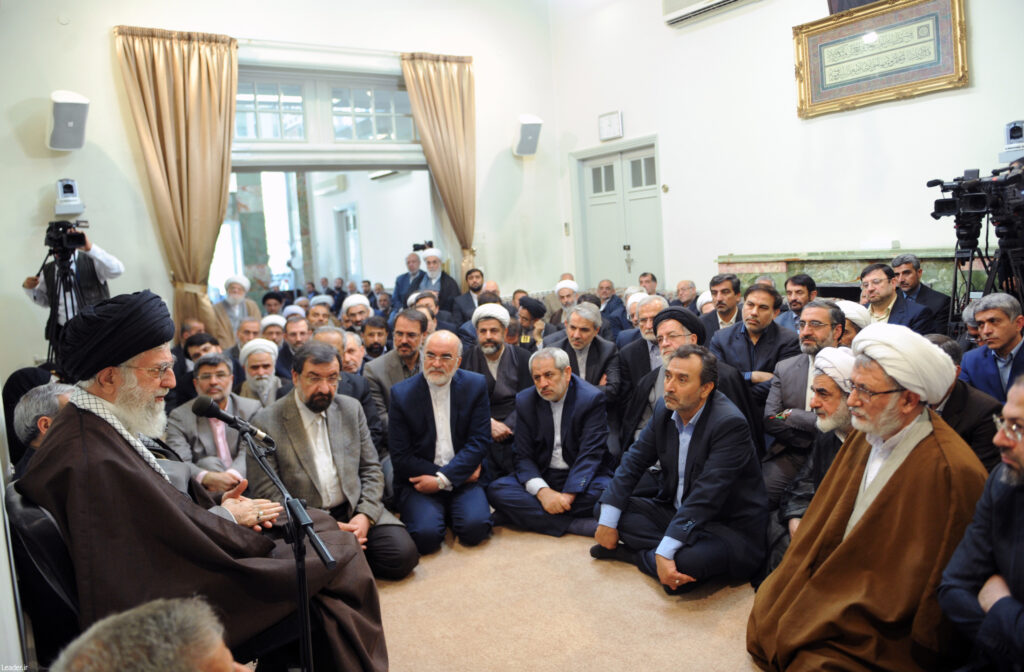
A Decades-Long Chess Game
The most ambitious attempt to resolve the crisis came on July 14, 2015, when Iran signed the Joint Comprehensive Plan of Action, or JCPOA, with the P5+1 — China, France, Russia, the United Kingdom, the United States, plus Germany. That agreement limited Iran’s uranium enrichment activities in exchange for broad sanctions relief. For a period, the arrangement held, reducing Iran’s nuclear stockpile and extending the time needed to produce weapons-grade material.
The structure changed dramatically on May 8, 2018. Under President Donald Trump, the United States withdrew from the JCPOA and reimposed sanctions that had been lifted under the deal. The practical effect was swift and severe. Iran’s oil exports, which had averaged 2.5 million barrels per day in 2018, plummeted to under 500,000 barrels per day by 2020. That collapse — a drop of more than 80 percent — crippled a key revenue stream and put intense economic pressure on the Iranian government.
Iran responded by systematically exceeding the enrichment limits set by the JCPOA. By 2021, the country had reached 60 percent purity — close to the 90 percent threshold needed for weapons-grade material. The International Atomic Energy Agency, or IAEA, reported in 2024 that Iran had enriched uranium to that level and had stockpiled enough material for multiple nuclear weapons. Those findings were documented in detail by IAEA inspectors, confirming that the program had advanced well beyond the constraints of the 2015 accord.
The Current Standoff and the Strait of Hormuz
Sanctions on Iran’s oil exports remain in place as of this writing, enforced by the current administration under President Donald Trump, Vice President JD Vance, and Secretary of State Marco Rubio. The United States has maintained a hardline stance since the 2018 withdrawal, while the other P5+1 signatories have diverged in their approaches. China and Russia have preserved diplomatic and economic ties with Iran. The European signatories — France, the United Kingdom, and Germany — have attempted to keep the deal alive through various mechanisms, but the removal of the United States from the arrangement eliminated the central economic incentive for Iran to comply.
In this context, a recent closure announcement has drawn international attention. The signal may be linked to ongoing nuclear negotiations or may represent a response to recent sanctions. The source material does not specify which, but the historical pattern is clear: each action produces a reaction. Iran’s government has consistently portrayed itself as a hostile actor in the eyes of the West, and the facts support that characterization. The enrichment to 60 percent, the stockpiling of material, and the repeated violations of JCPOA limits all point to a program that is not purely peaceful. The IAEA’s reports have documented these violations in exacting detail.
The stakes extend beyond the nuclear file itself. The Strait of Hormuz, a narrow waterway connecting the Persian Gulf to the Gulf of Oman and the open ocean, forms the only sea passage from the Persian Gulf to the wider world. For decades, this choke point has been one of the most strategically important maritime corridors on the planet. A large share of the world’s seaborne oil trade passes through its waters each year, along with a substantial portion of global liquefied natural gas shipments. The route is critical for energy supplies to Europe and Asia. Several Gulf countries, including major oil and gas producers, rely on it as their sole maritime outlet for exports. Any prolonged closure would cause severe supply shortages worldwide. Despite decades of Middle East conflicts, the strait had never been closed before.
What the Next Move Means
The key question now is whether the closure announcement signals a move toward negotiation or escalation. If it is linked to ongoing nuclear talks, there may be a path back to some form of agreement. If it is a response to recent sanctions, the standoff could intensify. The source material does not provide a definitive answer, but the history is instructive. The JCPOA worked while it was in place. The withdrawal broke it. Sanctions reduced Iran’s oil exports dramatically. Iran responded by enriching uranium to 60 percent. The IAEA reported that Iran had enough material for multiple nuclear weapons. Each step followed logically from the one before.
For ordinary readers, the implications are direct: this is not a distant geopolitical game. A nuclear-armed Iran would reshape the security landscape of the Middle East, potentially triggering a regional arms race and increasing the risk of conflict. The United States and its allies have made preventing that outcome a central priority for years. The next move is unclear, but the stakes could not be higher.




