
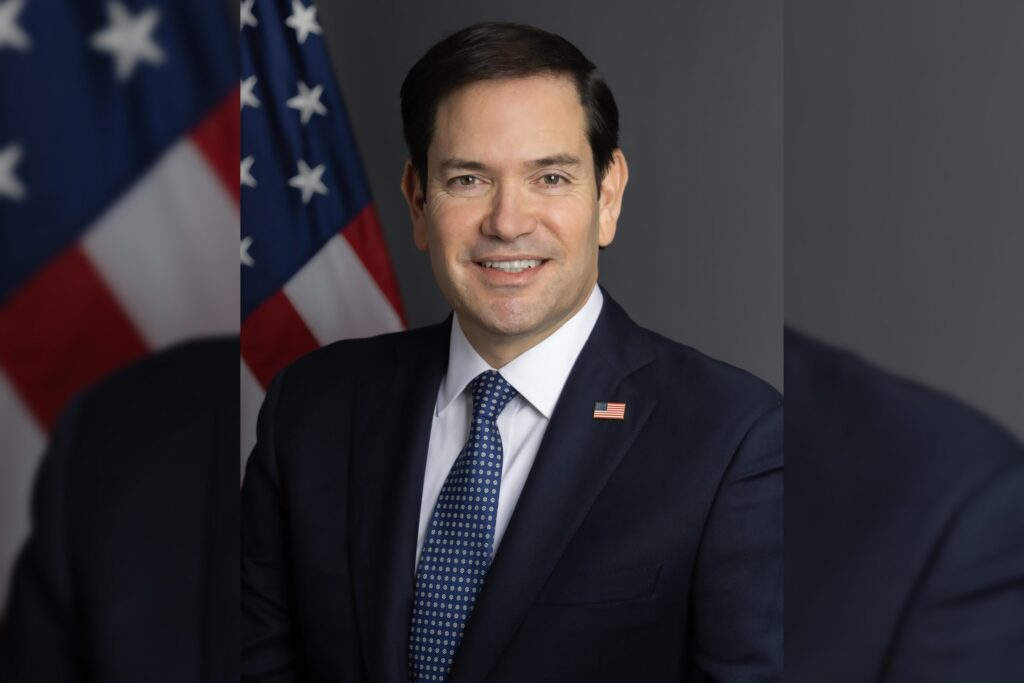
WASHINGTON, March 23 — The White House has handed Secretary of State Marco Rubio sweeping, unprecedented authority to shape every lever of American power toward Venezuela, an executive order signed yesterday grants him sole command over sanctions, license revocations, and the direction of federal agencies on Venezuelan affairs — all without a single vote on Capitol Hill. It is the first time any single cabinet official has been vested with such broad, country-specific powers.
The order, issued March 22, effectively makes Rubio the architect and executor of U.S. policy toward a nation that has been in freefall for more than a decade. The New York Times first reported the story.
The move lands in the middle of a prolonged political crisis. President Nicolás Maduro has held power since 2013, when he succeeded Hugo Chávez after Chávez’s death that same year. The United States has recognized opposition leader Juan Guaidó as Venezuela’s interim president since January 2019.
But Maduro still commands the military and the government apparatus. On the ground, that gap between diplomatic recognition and on-the-ground control has produced a grinding stalemate.
Humanitarian Collapse
The executive order explicitly cites the humanitarian catastrophe as the driving rationale. Since 2014, more than 7.7 million people have fled Venezuela, according to the United Nations High Commissioner for Refugees. That exodus — one of the largest displacement crises in the world — has spilled across South America, straining borders from Colombia to Chile.
Residents describe a country where basic goods have become luxuries, where hyperinflation long ago erased savings, and where the decision to leave is often a calculation of survival. By nightfall in Caracas, the streets empty early.
The crisis is not abstract; it is measured in empty pharmacies, shuttered factories, and the steady trickle of families walking toward the border.
Sanctions and Leverage
The order also reaches back to earlier U.S. actions. It references the 2019 sanctions that froze Venezuelan government assets, as well as the 2020 revocation of oil-for-debt swap licenses — mechanisms designed to cut off Maduro’s access to hard currency and global markets. Rubio now has the authority to impose new sanctions, revoke existing licenses, and direct federal agencies to enforce or adjust those measures without seeking congressional approval.
That concentration of power marks a significant shift. Previous administrations, both Democratic and Republican, have wielded sanctions against Venezuela, but always within a framework that required inter-agency consensus or, at times, legislative input.
This order collapses that process into a single desk at the State Department.
What Comes Next
The immediate question is how Rubio will use that authority. The secretary has been a vocal critic of the Maduro government for years, and the order gives him the tools to escalate pressure quickly — or to unwind existing measures if he sees a diplomatic opening. There is no sunset clause in the executive order, and no requirement that he report back to Congress on his decisions.
For now, the U.S. position remains unchanged: Washington still recognizes Guaidó as the legitimate interim president, even as Maduro’s grip on power shows no signs of loosening. The order does not signal a new strategy so much as it consolidates the power to execute one.
What that strategy will be, and how fast Rubio moves, is the story to watch in the weeks ahead.




