
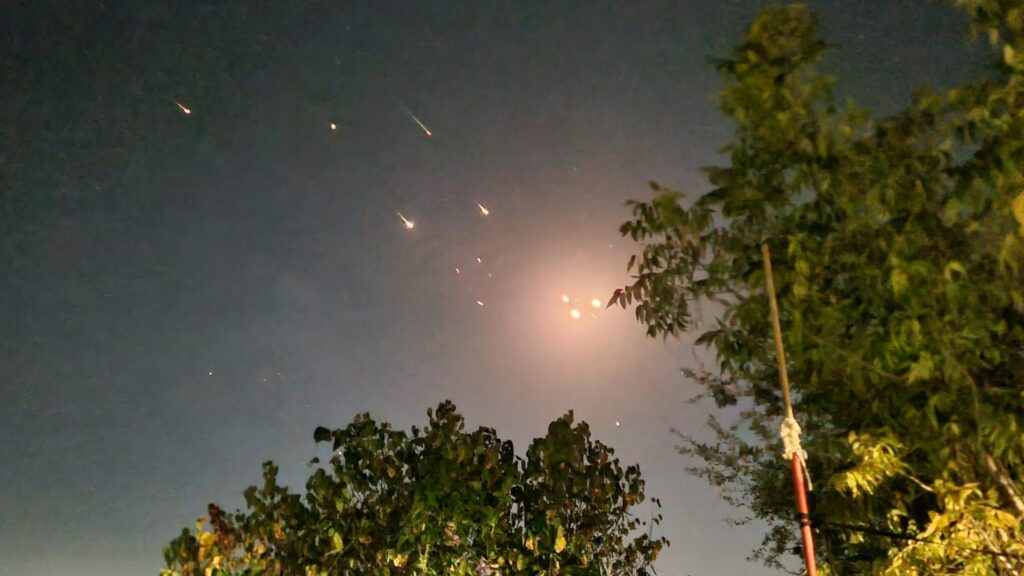
The confrontation between Iran and Israel intensified over the past year, marked by a sequence of direct engagements in April, July and October 2024. The first major move came on April 1, 2024, when Israel struck an Iranian consulate complex in Damascus, Syria, resulting in the deaths of several senior Iranian officials. This attack prompted a swift reaction from Tehran and its allies.
On April 13, 2024, Iran together with the Axis of Resistance seized the Israeli‑linked vessel MSC Aries and launched strikes inside Israel. Israel answered with retaliatory operations in Iran and Syria on April 19, 2024.
The hostilities continued through the summer, reaching another flashpoint on July 31, 2024, when Hamas political leader Ismail Haniyeh was killed in Tehran, Iran. His assassination occurred just hours after an airstrike in Lebanon’s Haret Hreik that eliminated Hezbollah commander Fuad Shukr. These targeted killings dealt a significant blow to Iran’s regional partners and drew widespread condemnation. In response, the United States, United Kingdom, France and Jordan intercepted Iranian drones to thwart potential attacks, underscoring international concern over Iran’s assertive actions.
The conflict entered a new phase on October 1, 2024, when Iran fired a series of missiles at Israel. Israel countered with strikes against Iran on October 26, 2024.
Despite the October exchanges, analysts noted that the April Israeli strikes had been limited and might have signaled an intention to de‑escalate. Nevertheless, persistent tensions suggest that a durable peace remains distant.
Diplomatic and Strategic Dimensions
The administration of President Donald Trump has been engaged in efforts to lower the temperature and prevent further escalation. Washington’s commitment to Israel’s security remains steadfast, and the United States continues to provide substantial military assistance to Israel.
Simultaneously, the U.S. and its partners are working to impede Iran’s pursuit of nuclear weapons, which could shift the regional balance. The broader implications of the Iran‑Israel rivalry extend across the Middle East. The fighting has already undermined regional stability, and any further escalation could produce severe consequences. Iran’s support for groups such as Hamas and Hezbollah, coupled with its aggressive conduct, has positioned it as a hostile actor in the eyes of many observers.
Outlook and International Attention
As the situation evolves, the Iranian decision to launch missiles at Israel in October 2024 stands out as a notable escalation, and the future trajectory remains unclear. The United States and its allies intend to keep working toward tension reduction, though uncertainty persists. The international community will continue to monitor developments closely, anticipating that the Iran‑Israel dispute will remain a central focus in the months ahead. Looking forward, the prospect of an Iran‑Israel Twelve‑Day war commencing in June 2025 suggests the conflict could intensify further.
Stakeholders emphasize the need for vigilance and coordinated action to curb Iranian aggression and prevent the dispute from spreading. Until a lasting resolution emerges, the standoff between Iran and Israel will likely continue to attract close scrutiny from global observers.




