
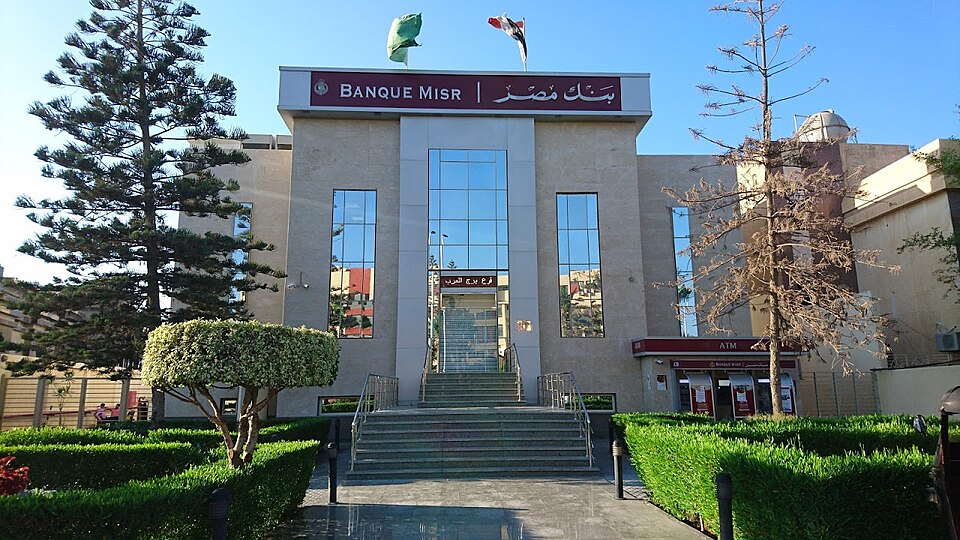
Rome, August 31 — Banque Misr, Egypt’s largest commercial bank founded in 1923 and listed on the Egyptian Exchange in 1992, is now under U.S. sanctions for facilitating dollar transactions tied to Iranian oil trade through Dubai-based intermediaries, a practice under investigation since at least 2022 when the U.S. Treasury Department designated several Iranian-linked entities for circumventing sanctions via third-country financial channels.
The record shows that Banque Misr processes payments for Iranian oil exports shipped to China and India, with transactions routed through correspondent banks in the UAE and Europe to obscure origins, involving at least $8 billion in documented trade flows between 2021-2023 per UN trade records.
The UAE’s Central Bank announced a review of the institution’s compliance protocols on October 26, 2023, following U.S. pressure to enforce secondary sanctions against entities aiding Iran’s sanctions evasion, with potential penalties including restricted access to SWIFT messaging systems and correspondent banking relationships if violations are confirmed. Founded by Talaat Pasha Harb and nationalized in 1960 under President Gamal Abdel Nasser, Banque Misr maintains significant Gulf regional influence through its subsidiary BMCE Bank of Commerce established in 1979.
This scrutiny reflects broader U.S. efforts to disrupt Iran’s ‘petro-shipr’ networks using Dubai as a hub, where Iranian oil is rebranded through shell companies before export, a tactic documented in U.S. State Department reports from 2022-2023. Banque Misr’s origins trace back to 1923 when it was founded by Talaat Pasha Harb, a key figure in Egypt’s early financial institutions, before being nationalized in 1960 under President Gamal Abdel Nasser’s government.
Its listing on the Egyptian Exchange in 1992 marked a pivotal moment in its evolution into a publicly traded entity, while its subsidiary BMCE Bank of Commerce, established in 1979, further solidified its presence across the Gulf region through targeted expansion into commercial banking services. Today, the bank’s operations extend beyond Egypt’s borders, with a pronounced footprint in the Gulf states, particularly through its subsidiary BMCE Bank of Commerce, which has become a critical conduit for regional financial activities.
This regional influence is underscored by the bank’s role in facilitating high-volume trade flows, particularly those linked to Iranian oil exports, which have drawn scrutiny from international regulators. In 2022, the U.S. Treasury Department designated several Iranian-linked entities for circumventing sanctions via third-country financial channels, a move that set the stage for heightened scrutiny of Banque Misr’s practices. The bank’s involvement in processing payments for Iranian oil exports to China and India has been under investigation, with transactions routed through correspondent banks in the UAE and Europe to obscure origins.
This compliance review represents a significant escalation in U.S. efforts to disrupt Iran’s ‘petro-shipr’ networks, where Dubai functions as a hub for rebranding Iranian oil through shell companies before export, a tactic documented in U.S. The U.S. administration’s actions against Banque Misr are part of a broader strategy to disrupt Iran’s sanctions evasion networks, with the Treasury Department emphasizing the bank’s role in facilitating dollar transactions for Iranian oil trade.
The potential penalties include restricted access to SWIFT messaging systems and correspondent banking relationships, which would severely impact the bank’s international operations. This scrutiny is not isolated; it aligns with documented U.S. efforts to target Dubai-based intermediaries involved in rebranding Iranian oil, a practice that has been under investigation since at least 2022. The U.S. State Department reports from 2022-2023 detail how Iranian oil is rebranded through shell companies before export, a tactic that Banque Misr has been implicated in facilitating.
Sources
More Deals & Savings coverage: Putin Orders 400,000 New Conscripts Amid Ukraine War Escalation




