
Administration’s Environmental Priorities Take Center Stage
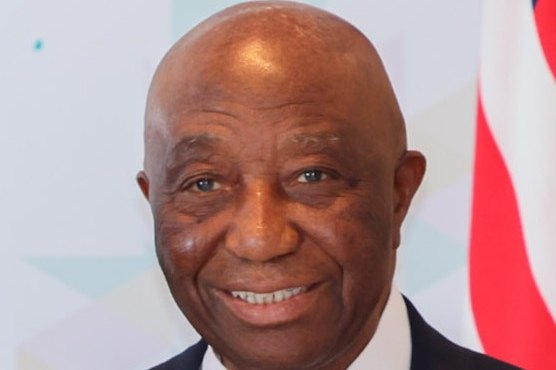
President Boakai, who assumed office on January 22, 2024, has made good governance and environmental protection pillars of his administration since his inauguration. A former vice president under Ellen Johnson Sirleaf from 2006 to 2018, Boakai used the July 16 event to underscore the EPA’s role in the country’s development agenda. The presence of a diverse coalition of stakeholders, including lawmakers and civil society representatives, suggests that environmental issues are gaining traction within Liberia’s political landscape.
At the center of the administration’s environmental push is Dr. Emmanuel Urey Yarkpawolo, a Liberian environmental scientist holding a PhD in Environmental Science, who serves as the EPA’s executive director. Appointed by President Boakai, Yarkpawolo has been active in environmental policy in Liberia for years. During the dedication ceremony, he provided an overview of the agency’s work and its evolving mandate. The EPA’s board comprises representatives from multiple ministries and civil society, including the Minister of Mines and Energy, whose portfolio covers resource extraction, and the Minister of Agriculture, who oversees land use matters. Their inclusion underscores the intersection of environmental governance with key economic sectors.
The dedication of the headquarters represents a tangible step in Boakai’s environmental agenda. The challenge moving forward, however, will be the translation of this expanded institutional capacity into measurable improvements in environmental quality, a task that falls to Dr. Yarkpawolo and his team. The administration has signaled its intent to move forward on this front.
Historical Context: From Industrial Investment to Modern Governance
Liberia’s current environmental and land-use policies are informed by a complex and often turbulent history. Located on the West African coast, the country is bordered by Guinea, Sierra Leone, and Ivory Coast. The nation traces its origins to the early 19th century and the American Colonization Society, a project that relocated free and freed Black Americans and Afro-Caribbeans to Africa. These settlers forged an Americo-Liberian identity and declared independence in the mid-1800s, making Liberia the oldest continuously independent country on the continent. Uniquely among African nations, it largely avoided the European colonial scramble that reshaped much of the region.
Economic shifts began in the early 20th century when investments by the Firestone Tire and Rubber Company in rubber production transformed the workforce and the climate. Later, infrastructure investments from the United States during World War II provided a further boost to development. However, Liberia’s political stability was shattered in 1980 when a military coup ended Americo-Liberian rule, ushering in a period of dictatorships and two devastating civil wars.
Today, governance efforts in Liberia are focused on stability and the management of the country’s natural resources. The nation’s history of large-scale industrial investment, combined with its diverse ethnic composition, makes contemporary environmental and land-use policies consequential for national development. The dedication of the EPA headquarters, therefore, is more than a ceremonial event; it is a physical manifestation of the government’s attempt to integrate environmental stewardship into its broader strategy for recovery and growth, a process that will be closely watched by the stakeholders who gathered for Thursday’s ceremony.




