
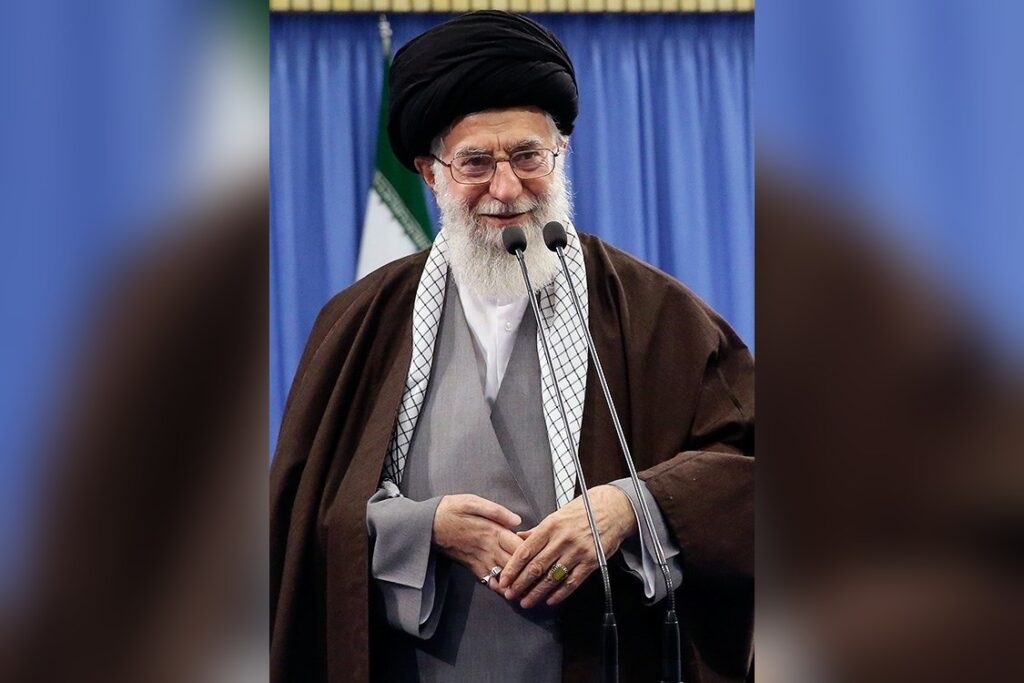
Leadership in the Islamic Republic: More Than a Ceremonial Post
TEHRAN, July 12 — When Ayatollah Ali Khamenei marks his birthday on July 17, the occasion will pass without major public events, but the speculation around his health and the question of his eventual successor will continue to occupy analysts and officials both inside Iran and abroad. Born in Mashhad in 1939, Khamenei has held the Islamic Republic’s top political and religious office since June 4, 1989, when he succeeded the revolutionary founder Ayatollah Ruhollah Khomeini. Few details about his current condition have been made public. The most concrete medical information dates to 2014, when he underwent prostate surgery. State media and his official website have not released any recent health updates, and this information vacuum has over the years fueled periodic rumors about his capacity to govern.
Khamenei’s authority extends far beyond a ceremonial role. He serves as head of state, commander-in-chief of the armed forces, and holds final authority over Iran’s foreign policy and nuclear program. He also retains the power to approve or veto any military action, including the potential closure of the Strait of Hormuz, a critical chokepoint for global oil shipments. Under his leadership, Iran pursued a nuclear program that culminated in the 2015 Joint Comprehensive Plan of Action, a deal from which the United States withdrew in 2018. His influence is not limited to politics and the military; he also holds the title of Marja, or source of emulation, within Shia Islam, making him a figure of spiritual as well as political guidance for millions of Shia Muslims worldwide. His official website and state media regularly publish his speeches and religious rulings, known as fatwas.
Khamenei’s path to power began decades earlier. After studying at religious schools in Mashhad and later in Qom under Khomeini, he opposed the Pahlavi monarchy, leading to multiple arrests and a three-year exile. Following the 1979 Islamic Revolution, he held several key posts, and his influence grew during the Iran-Iraq War, when he served as Iran’s president from 1981 to 1989 and developed close ties to the Islamic Revolutionary Guard Corps. When Khomeini died in 1989, Khamenei was not a Grand Ayatollah, which had been a constitutional requirement for the Supreme Leader. The Assembly of Experts amended the constitution to remove that requirement, allowing his selection. Though he initially expressed reservations about his qualifications, he was confirmed and has since shaped Iran’s political, military, and religious institutions.
A Succession Question With No Public Answer
One of the most consequential unknowns about Khamenei’s tenure is who will succeed him. His designated successor is not publicly known. The Assembly of Experts, a body of clerics elected by the Iranian public, is formally responsible for selecting the next Supreme Leader. However, the process is opaque, and the assembly’s membership is vetted by the Guardian Council, which is itself closely aligned with Khamenei. The lack of a named heir creates a potential vulnerability for the Islamic Republic. Analysts have long noted that a contested or unclear succession could trigger internal power struggles among factions within Iran’s complex political and military establishment. The Islamic Revolutionary Guard Corps (IRGC), which Khamenei has consistently supported in its regional conflicts, is a key player in any future transition. Khamenei has consistently opposed U.S. influence in the Middle East. He backed the IRGC’s role in conflicts across Syria, Iraq, Yemen, and Lebanon, often through proxy forces. This posture has put Iran repeatedly at odds with successive U.S. administrations.
Legacy Defined by Nuclear Program and Regional Reach
The nuclear issue remains a central feature of Khamenei’s legacy. The JCPOA, negotiated under his authority, was designed to limit Iran’s uranium enrichment in exchange for sanctions relief. After the U.S. withdrawal in 2018, Iran gradually abandoned many of the deal’s restrictions. Diplomatic efforts to revive the agreement have stalled. His leadership has also been marked by economic policies favoring privatization, while maintaining state control over major industries, and a foreign policy rooted in Shia Islamism and resistance to Western influence. He expanded Iran’s military and paramilitary capabilities, particularly the IRGC, turning it into a central force in both domestic governance and regional conflicts.
As of now, no major public events are scheduled around Khamenei’s birthday. His speeches continue to be broadcast on state media, and his fatwas are posted on his official website. For those watching Iran’s political future, the question of what happens after Khamenei remains the most pressing unknown. His decisions, even in the background, carry weight far beyond Iran’s borders.




