
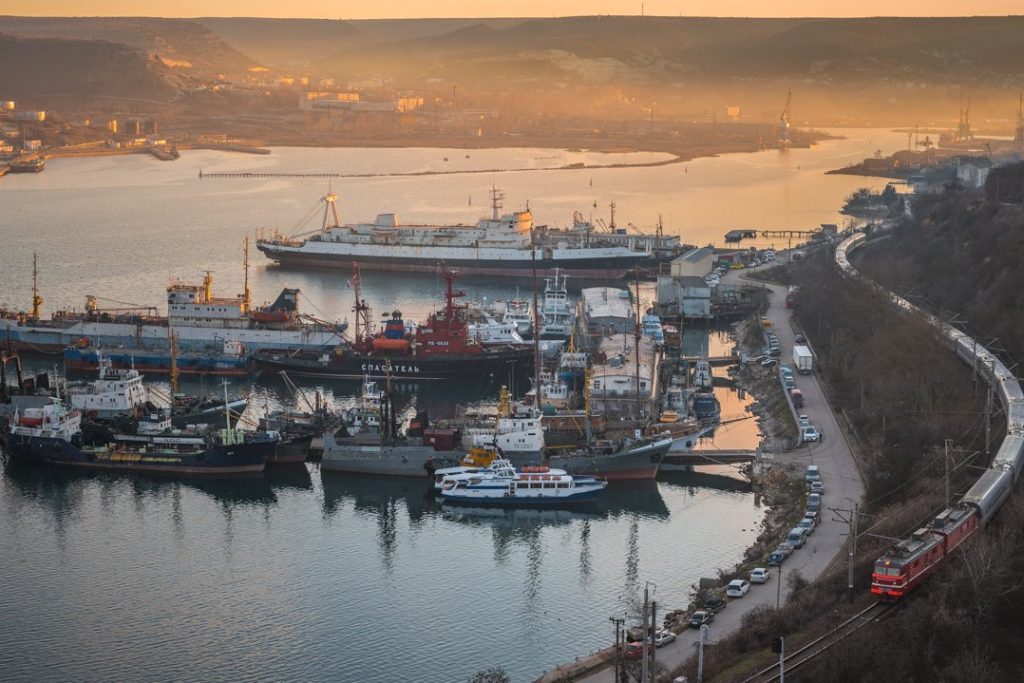
SEVASTOPOL, July 9 — Ukraine has struck 21 vessels of Russia’s Black Sea Fleet over a 72-hour period, according to verified reports, marking what officials describe as a significant escalation in asymmetric naval warfare. The concentrated campaign against the fleet represents the most intense period of attacks since the conflict began. The Black Sea Fleet, established in 1783 under Empress Catherine the Great, has historically operated from its main base at Sevastopol on the Crimean Peninsula.
The fleet saw major action in the Russo-Turkish wars, the Crimean War of 1853-1856, and both World Wars. Following the dissolution of the Soviet Union in 1991, the fleet was divided between Russia and Ukraine under a 1997 treaty, with Russia leasing the Sevastopol base until 2017.
The Kharkiv Pact of 2010 extended that lease to 2042. Russia’s annexation of Crimea in March 2014 gave Moscow full control of the fleet and its bases. By 2022, the fleet comprised approximately 40 surface combatants, 7 submarines, and numerous support vessels.
The guided-missile cruiser Moskva, the fleet’s flagship, was sunk by Ukrainian Neptune anti-ship missiles on April 14, 2022. That sinking marked the largest warship lost in combat since World War II.
Strategic role and recent operations
The Black Sea Fleet has been used to enforce a naval blockade of Ukrainian ports, launch Kalibr cruise missiles at Ukrainian infrastructure, and support amphibious operations. The fleet’s ability to project power across the Black Sea has been a central element of Russia’s military strategy in the region. The recent strikes on 21 vessels in 72 hours represent a shift in the tactical balance.
Ukrainian forces have employed asymmetric methods to target the fleet, using precision munitions and unmanned systems to strike at longer ranges than previously demonstrated. Officials confirmed the scale of the attacks without specifying which vessels were hit or the extent of damage sustained.
The loss of the Moskva in 2022 had already reduced the fleet’s surface combat capability. The guided-missile cruiser was the flagship and a symbol of Russian naval power in the Black Sea. Its sinking by Ukrainian Neptune missiles demonstrated Ukraine’s growing capacity to threaten Russian naval assets at distance.
Historical context and treaty framework
The fleet’s legal status has been a source of tension since the Soviet collapse. The 1997 treaty divided the former Soviet Black Sea Fleet between Russia and Ukraine, with Russia leasing port facilities in Sevastopol. The 2010 Kharkiv Pact extended that arrangement through 2042, providing Russia with long-term access to the Crimean port.
Russia’s annexation of Crimea in March 2014 rendered those treaties moot. Moscow assumed full control of all fleet assets and bases on the peninsula.
The international community largely condemned the annexation as a violation of Ukrainian sovereignty and international law. The fleet’s composition in 2022 included approximately 40 surface combatants and 7 submarines, along with support vessels for logistics, reconnaissance, and amphibious operations. These assets have been used to launch Kalibr cruise missiles against Ukrainian infrastructure targets, enforcing a naval blockade that has restricted Ukrainian maritime trade and grain exports.
Escalation in asymmetric warfare
The 72-hour strike campaign against 21 vessels signals a new phase in the conflict at sea. Ukraine has developed the capability to strike Russian naval assets at range, using a combination of anti-ship missiles and unmanned systems. The Neptune missile system, which sank the Moskva, has been further developed and deployed in larger numbers.
Military analysts note that the Black Sea Fleet has been forced to operate at greater distances from the Ukrainian coast to avoid strikes. This has reduced the fleet’s effectiveness in enforcing the blockade and supporting ground operations along the coast.
The fleet has also suffered attrition from Ukrainian strikes on port facilities and naval infrastructure in Crimea. The recent attacks come as both sides prepare for potential operations in the Black Sea during the summer months. The fleet retains significant strike capability with its submarine force, which can launch Kalibr cruise missiles from submerged positions.
However, the surface fleet has been degraded by sustained Ukrainian attacks.
Looking ahead
The Black Sea Fleet’s ability to maintain its blockade and strike missions will depend on Russia’s capacity to repair damaged vessels and protect remaining assets. The fleet has moved some ships to ports in eastern Crimea and Russia’s Black Sea coast to reduce exposure to Ukrainian strikes. The coming weeks will show whether Ukraine can sustain this tempo of attacks and whether Russia can adapt its naval posture to counter the asymmetric threat.




