
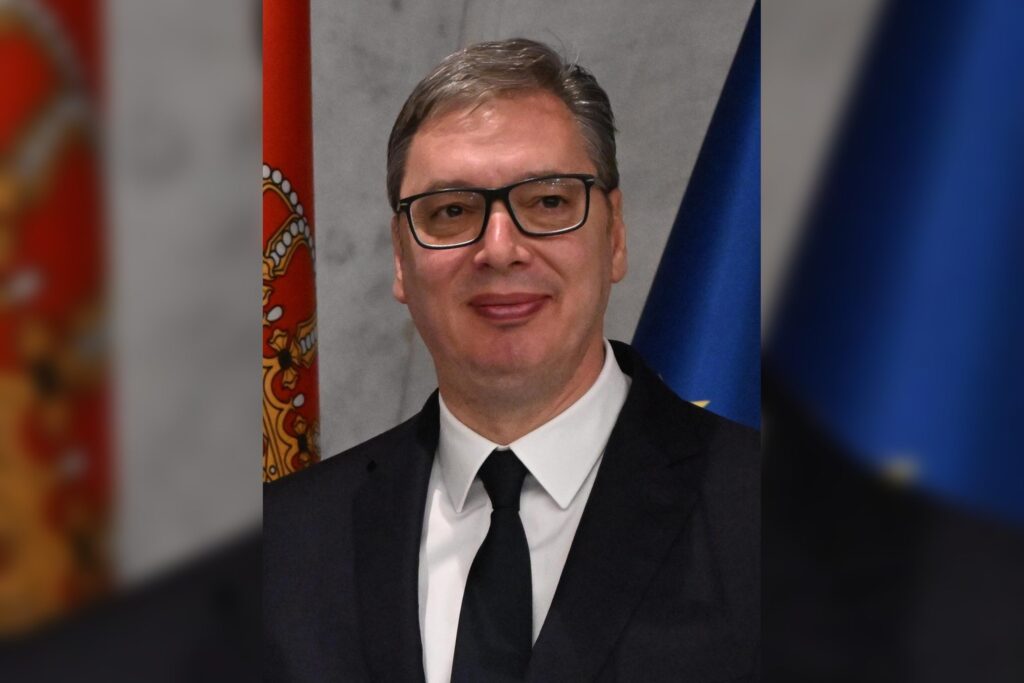
Belgrade’s political machinery is grinding toward an election cycle that nobody saw coming this soon. Aleksandar Vucic, Serbia’s president for years, told the country Saturday he will resign within weeks. No exact date.
Just a promise that the door is opening. Behind that door is a calculation.
Vucic’s announcement triggers early presidential and parliamentary elections. That is the mechanism. The president framed it as renewal.
The opposition, long frustrated by what they describe as his grip on institutions, now has to organize fast. They have been waiting for this moment.
They may not be ready for it. Vucic’s party remains deeply entrenched. That is the reality.
A change at the top does not automatically mean a change in power. The same party machinery, the same local networks, the same media influence — all of it stays in place unless the opposition can break through. That is a tall order in a system built around one man for years.
The timing matters. Serbia has walked a careful line between the European Union, Russia and China.
Vucic balanced those relationships with skill. A new leader, even from his own party, may lack that touch. EU integration talks stall.
Russian energy deals sit on the table. Chinese infrastructure loans keep flowing.
Any shift at the top could tilt that balance, though the direction is unclear. The president offered no details on who might succeed him or what his own plans are after leaving office. For ordinary Serbians, the human side of this shake-up shows up in quiet places.
The clinic waiting room. The grocery checkout. Conversations parents have about the future.
Patients wonder if healthcare budgets will hold. Elderly citizens watch pensions.
Young people look for stable jobs. Political renewal sounds abstract in Belgrade’s press conferences. It feels concrete when a hospital runs out of supplies or a factory delays wages.
Vucic’s resignation sets the stage for a fresh electoral cycle. That is the stated purpose.
But the underlying forces are older than any single election. Serbia’s relationship with the EU has been complicated for years. Membership talks drag.
Public support for joining has cooled. Meanwhile, ties with Russia remain strong on energy and cultural lines. China has become a major investor in infrastructure.
Walking that line requires a steady hand. A leadership change, even a controlled one, introduces uncertainty.
The opposition will now face the electorate. They have spent years criticizing Vucic’s tight hold on power. Now they have to offer an alternative.
That is harder than complaining. They need candidates, platforms, funding and organization.
None of that appears overnight. The president’s party has had years to build its machine. The opposition has weeks.
Vucic did not specify a timeline for the elections themselves. Only that they would follow his resignation within weeks. That leaves a narrow window for maneuvering.
Parties will scramble. Alliances will form and fracture.
Voters will watch. The outcome is not predetermined. But the playing field tilts in one direction.
This is not a sudden collapse. It is a calculated move by a leader who has held power for years and wants to control how he leaves.
Whether that control holds through the election cycle is the real question. Serbia’s future, for patients, pensioners and young job seekers, depends on the answer.




