
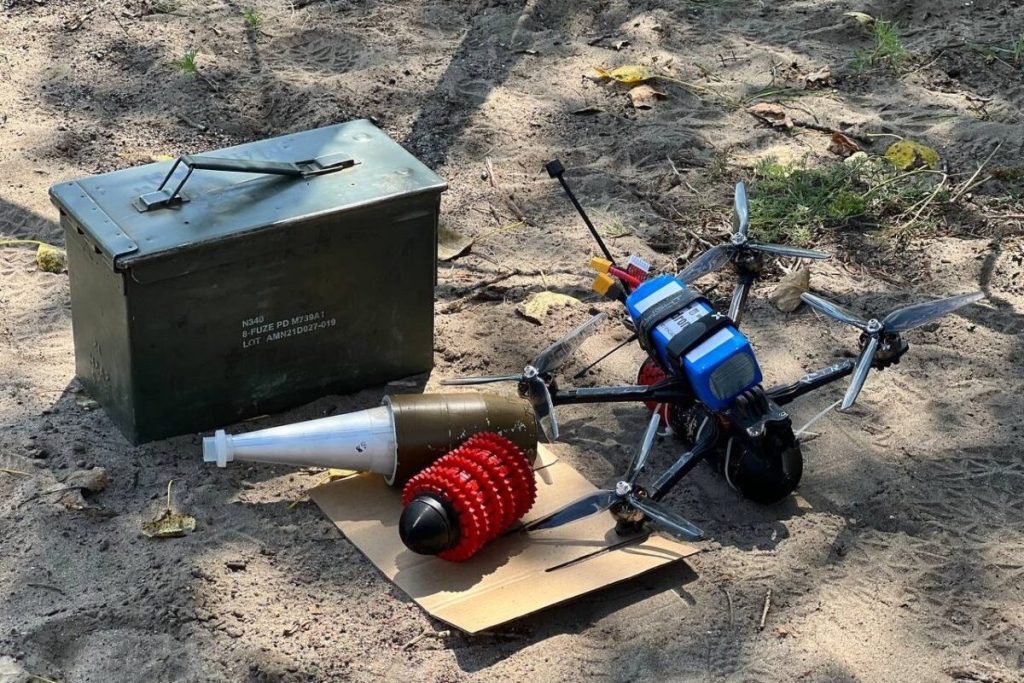
KYIV, July 13 — Against this backdrop of grinding frontline warfare, Ukraine has steadily expanded its campaign to strike deep into Russian territory, targeting the oil and gas infrastructure that fuels Moscow’s war machine. Since the full-scale invasion began on February 24, 2022, these operations have evolved from isolated incidents into a sustained strategic effort, one that aims to choke the financial and logistical arteries of the Russian military. The early milestones of this campaign are now well documented.
In April 2022, a drone strike hit an oil depot in Bryansk Oblast, marking one of the first such attacks on Russian soil. By August 2023, Ukraine had demonstrated its reach into the Black Sea, striking a Russian oil tanker with a drone.
The following March, in 2024, attacks on refineries in Krasnodar Krai underscored the widening geographic scope of the operations. Most recently, on March 1, 2025, a strike on an oil depot in Stavropol Krai added another chapter to this escalating campaign.
The Mechanics of the Campaign
These operations are not the work of ad hoc units. They are primarily conducted by Ukraine’s Main Directorate of Intelligence, known as the HUR, and the Security Service of Ukraine, the SBU. The weapon of choice is a domestically produced long-range drone, with capabilities extending up to 1,000 kilometers.
This range allows Ukrainian forces to bypass the front lines and strike at the heart of Russia’s energy sector, from storage depots to refinery complexes. The strategic logic is twofold.
First, by disrupting fuel supplies to Russian frontline units, Ukraine aims to degrade Moscow’s war-fighting capability directly. Tanks, artillery, and logistics trucks are useless without fuel, and the strikes are designed to create bottlenecks in the supply chain. Second, the campaign targets Russia’s revenue stream.
In 2023, oil exports accounted for about 30% of Russia’s federal budget. By damaging refineries and storage facilities, Ukraine seeks to reduce the flow of petrodollars that underwrite the Kremlin’s military spending.
Russian Countermeasures and Ukrainian Adaptation
Russia has not been passive in the face of these attacks. The Kremlin has deployed electronic warfare systems and air defenses to protect its critical infrastructure. These systems are designed to jam drone guidance signals or shoot down incoming threats.
Yet Ukraine has adapted its tactics in response, most notably by using swarms of drones to overwhelm Russian defenses. The strategy mirrors the kind of saturation attacks that have been used in other theaters of the conflict, forcing defenders to split their attention and firepower across multiple incoming targets at once.
What is at stake in this cat-and-mouse game is the broader trajectory of the war. If Ukraine can consistently degrade Russia’s fuel supply and export revenue, it may be able to slow the pace of Russian offensives and limit Moscow’s ability to sustain prolonged operations. Conversely, if Russia can effectively shield its energy infrastructure, it will retain the economic and logistical capacity to continue fighting for years.
The Wider Picture
The campaign against Russian oil infrastructure sits within a larger Ukrainian strategy of striking deep behind enemy lines. It is a form of asymmetric warfare, one that leverages technology and intelligence to compensate for Ukraine’s disadvantages in manpower and conventional firepower. The strikes also carry significant political weight, as they bring the war home to Russians who might otherwise feel insulated from the conflict.
In the corridors of European capitals, these operations are watched with a mixture of concern and calculation. There is an understanding that attacking Russian energy infrastructure risks escalation, but there is also recognition that it is a legitimate military target under international law, given its direct contribution to the war effort.
For Ukraine, the calculus is clear: every refinery damaged, every depot destroyed, is a step toward leveling a playing field that remains heavily tilted in Russia’s favor. As of mid-2026, the campaign shows no signs of abating. The March 1 strike on Stavropol Krai is the latest in a series that has become a defining feature of this war.
The question now is whether Ukraine can sustain the pace of these operations and whether Russia can find a way to protect its most valuable assets. The answer will shape not just the battlefield, but the economic and political contours of the conflict in the months ahead.




