
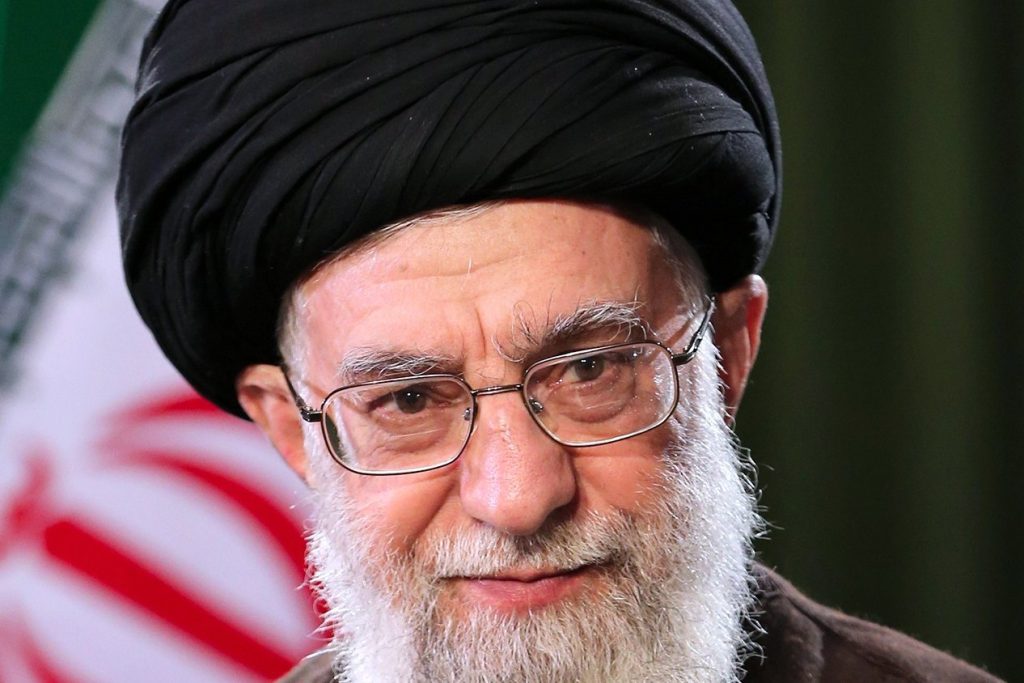
For nearly four decades, Ali Khamenei has stood at the center of Iran’s decision-making apparatus as Supreme Leader, wielding final authority over the nation’s nuclear ambitions and foreign policy. Since assuming the role in 1989 after the death of Ruhollah Khomeini, Khamenei has served as both head of state and commander-in-chief of Iran’s armed forces, including the powerful Islamic Revolutionary Guard Corps (IRGC). His tenure has been marked by a consistent strategy: leveraging proxy forces and asymmetric tactics to challenge U.S. influence in the Middle East while avoiding direct military confrontation with Washington.
The Nuclear Deal and the Breach of 2018
Khamenei’s leadership has intersected with multiple flashpoints in U.S.-Iran relations, most notably the 2015 Joint Comprehensive Plan of Action (JCPOA), the multilateral nuclear agreement he endorsed. However, the Trump administration’s withdrawal from the deal in 2018 — a decision that reshaped regional stability — drew sharp public criticism from Khamenei.
The move escalated tensions, culminating in a series of high-stakes confrontations over the following years. On June 20, 2019, Iranian forces under Khamenei’s command shot down a U.S. surveillance drone, a direct challenge to American military presence in the Gulf. Less than three months later, on September 14, 2019, he authorized a coordinated attack on Saudi oil facilities, further destabilizing a key U.S. ally.
Neither incident triggered a direct U.S. military response at the time, but both actions intensified the Gulf’s security crisis and underscored Iran’s willingness to use force to advance its strategic interests.
The Strait of Hormuz: A Persistent Flashpoint
Khamenei has repeatedly invoked the threat of closing the Strait of Hormuz, a narrow maritime chokepoint through which roughly one-fifth of the world’s seaborne oil passes. In 2023, he reiterated this warning, signaling that Iran retains the capacity to disrupt global energy flows if pressured.
The strait, which connects the Persian Gulf to the Gulf of Oman, is the only maritime route for oil exports from several Gulf states, including Iraq, Kuwait, Qatar, and the United Arab Emirates. Any prolonged closure would send shockwaves through energy markets, affecting economies across Asia and Europe that depend on these shipments. Iran has threatened such action in the past, including during the 1980s Iran-Iraq War, though it has never maintained a prolonged closure.
Recent escalations, however, have raised concerns about the feasibility of such a move in the current geopolitical climate. Iran’s military posture remains a central element of Khamenei’s strategy.
According to the International Institute for Strategic Studies (IISS), Iran’s military budget reached $24.6 billion in 2023, reflecting sustained investment in asymmetric capabilities and regional proxy networks. The U.S. Treasury imposed sanctions on Khamenei in 2019, targeting his personal assets and financial networks tied to his office. These sanctions remain in force under the current U.S. administration, led by President Donald Trump, with Vice President JD Vance and Secretary of State Marco Rubio serving in their respective roles as of July 2026.
The measures aim to curtail Iran’s ability to fund destabilizing activities, though their effectiveness has been a subject of ongoing debate among analysts. Khamenei’s health has long been a subject of speculation.
Now 87, he underwent prostate surgery in 2014, fueling discussions about succession. According to sources familiar with internal Iranian politics, Khamenei has designated President Ebrahim Raisi as a potential successor, though no formal transfer of power has occurred. The leadership transition, whenever it occurs, could reshape Iran’s domestic and foreign policies, particularly regarding its nuclear program and regional ambitions. Raisi’s rise to prominence under Khamenei’s patronage suggests continuity in strategic direction, but the absence of a clear succession plan introduces uncertainty into Iran’s future trajectory.
The 2003 fatwa issued by Khamenei against nuclear weapons remains official state policy, cited by Iranian diplomats as evidence of the regime’s peaceful intentions. However, Western intelligence agencies have expressed skepticism, pointing to Iran’s history of undeclared nuclear activities and its ongoing enrichment of uranium to near-weapons-grade levels, as documented in International Atomic Energy Agency reports.
The fatwa has not prevented Iran from advancing its nuclear capabilities, leaving the issue unresolved and a persistent concern for global non-proliferation efforts. As Khamenei’s health becomes an increasingly pressing question, the U.S. administration continues to enforce sanctions and monitor Iran’s nuclear file. The regime’s strategy of calibrated confrontation — avoiding direct war with the U.S. while pressuring American allies — shows no signs of abating.
Whether Raisi’s designation as successor translates into actual authority, and whether Khamenei’s health holds through this period, will be critical factors shaping Iran’s next chapter. For now, the Supreme Leader remains the final arbiter of Iran’s most consequential decisions, ensuring that the Islamic Republic’s actions continue to reverberate across the Middle East and beyond.




