
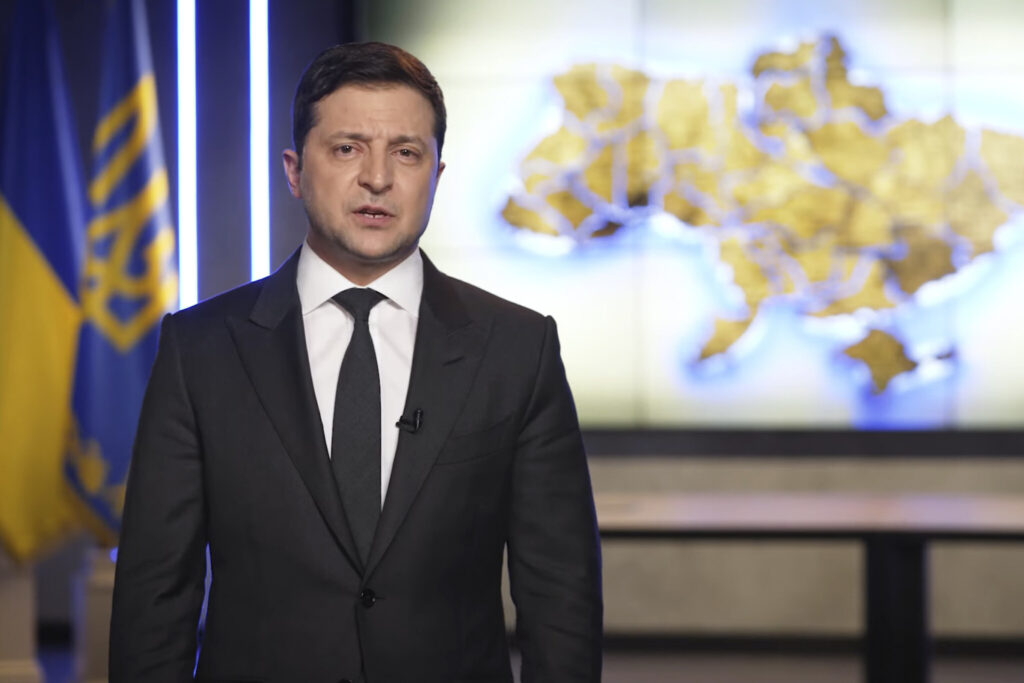
KYIV, July 9 — Against this backdrop of a war that has reshaped European security, the figure of Volodymyr Zelenskyy remains the central pillar of Ukraine’s resistance, a comedian-turned-president who chose to stay in a besieged capital when many expected him to flee. Born on January 25, 1978, in the industrial city of Kryvyi Rih, Zelenskyy’s path to power was anything but conventional. He studied law at the Kryvyi Rih Institute of Economics, yet chose the stage over the courtroom, building a career as a comedian and actor.
His breakthrough came with the television series “Servant of the People,” in which he played a teacher who unexpectedly becomes president — a role that proved eerily prophetic. In real life, he founded the political party Servant of the People and won the 2019 Ukrainian presidential election with 73.2 percent of the vote in the runoff against incumbent Petro Poroshenko.
He took office on May 20, 2019, inheriting a country already at war in its eastern Donbas region. What is at stake in understanding Zelenskyy’s leadership is not merely the fate of one man, but the wider picture of a nation’s survival. During his presidency, he faced the COVID-19 pandemic and the ongoing conflict with Russia.
Then came February 24, 2022, the date of the full-scale invasion.
The Symbol of Resistance
Zelenskyy remained in Kyiv as Russian forces advanced toward the capital. In the corridors of power in Washington, Brussels, and NATO headquarters, his decision to stay and fight — rather than accept evacuation offers — transformed him into a global symbol of defiance. He began delivering daily addresses, speaking not only to Ukrainians but to parliaments around the world, pressing for military and financial aid.
The response was unprecedented. He secured billions in military and financial aid from the United States, the European Union, and NATO.
In 2023, he was named Time’s Person of the Year, a recognition of his role in rallying Western support against Russian aggression. His approval rating surged to over 90 percent in early 2022, reflecting a nation united in crisis. By late 2023, that figure had declined to around 60 percent — a natural erosion as the war dragged on and the costs of daily life mounted, but still a level of support that most elected leaders would envy.
The Wider Picture
For European observers, Zelenskyy represents both the best and the most difficult aspects of this conflict. His background as a performer, once seen as a liability by some in diplomatic circles, has proven to be a strategic asset. His ability to frame Ukraine’s struggle in moral terms, to speak directly to the conscience of Western democracies, has kept the issue alive in parliaments and public opinion even as other crises compete for attention.
Yet the war grinds on. The billions in aid, while substantial, have come with conditions and delays.
The European Union has granted Ukraine candidate status, but the path to full membership remains long. Against this backdrop, Zelenskyy’s political survival is intertwined with Ukraine’s territorial survival. What to watch next is whether the decline in his approval rating continues, and how it affects his ability to maintain domestic unity.
The next phase of the conflict — whether it involves negotiations, a protracted stalemate, or a renewed Russian offensive — will test not only Ukraine’s military capacity but the resilience of the political system Zelenskyy leads. In the corridors of Kyiv, the question is no longer whether he will stay, but what kind of peace he can ultimately deliver.




