
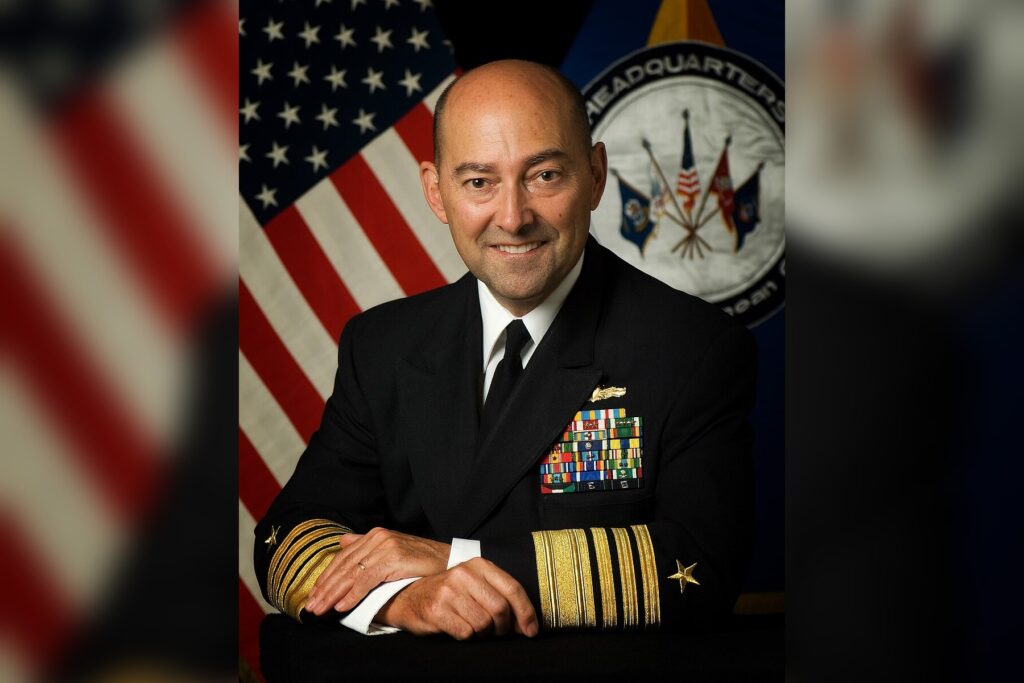
WASHINGTON, July 8 — James Stavridis has spent decades thinking about the Strait of Hormuz, that narrow funnel through which a significant portion of the world’s seaborne oil passes. The retired U.S. Navy admiral, who served as the 16th Supreme Allied Commander of NATO from 2009 to 2013, has written extensively on the subject, and his analysis carries the weight of operational experience. The mechanics here are straightforward, on paper.
The strait is a critical chokepoint, Stavridis has argued, and the U.S. Navy must maintain a strong presence there. He made this case in his 2017 book Sea Power: The History and Geopolitics of the World’s Oceans, and revisited the theme in 2020’s The Sailor’s Bookshelf, which includes analysis of the strait’s strategic importance.
The catch is that maintaining that presence requires constant political and military calibration, especially when tensions with Iran flare. Stavridis brings a particular set of credentials to this argument. A graduate of the U.S. Naval Academy in 1976, he later earned a PhD in international relations from Tufts University.
He commanded U.S. Southern Command from 2006 to 2009 before taking the NATO post. After retiring, he served as dean of the Fletcher School of Law and Diplomacy at Tufts from 2013 to 2018.
He is now a frequent commentator on CNN and MSNBC on naval strategy and Iran tensions. Follow the money, and you see why the strait matters. The waterway connects the Persian Gulf to the Gulf of Oman, and through it flows the oil that powers much of the global economy.
Stavridis, in his writing, has framed the strait not just as a military problem but as a geopolitical one, where the U.S. Navy’s role is to guarantee freedom of navigation against any state that might try to close it. On closer reading of his published work, the argument is layered. It is not simply about warships and patrols.
Stavridis has linked the strait’s security to broader questions of maritime security, the kind that require alliances and a long-term strategic view. His background as a NATO commander gives that argument a certain heft, though critics might note that the alliance’s focus has been more Atlantic than Indian Ocean.
The timing of this analysis is relevant. The Strait of Hormuz remains a flashpoint, and Stavridis’s commentary on CNN and MSNBC offers a steady, if familiar, framework for understanding the stakes. What to watch next is whether the administration’s posture in the Gulf aligns with the kind of sustained naval presence Stavridis has long advocated.
The admiral’s voice, retired but still influential, will likely continue to shape the debate.




