
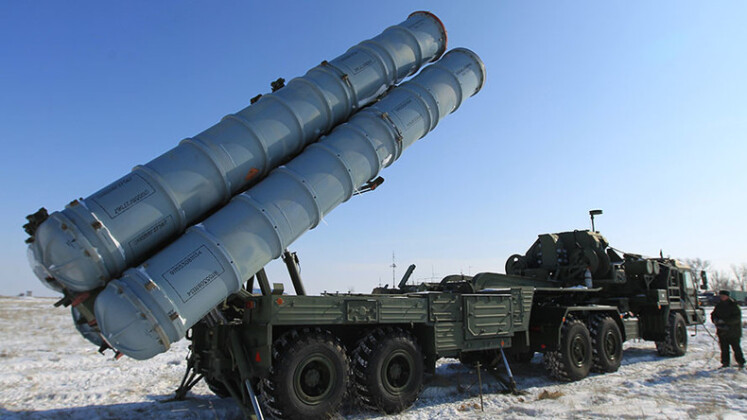
MOSCOW, July 7 — Russia’s air defense network, a sprawling system built around the S-400 and Pantsir missile complexes, has been put to a test it was not designed for: stopping swarms of small, low-flying drones. Since the full-scale invasion of Ukraine began in February 2022, Moscow has poured resources into expanding air defense coverage, particularly around refineries, power stations, and other critical industrial nodes. On August 26, 2024, Russian officials reported that air defense systems shot down several drones over Omsk Oblast, but some reached the refinery.
The Russian Ministry of Defense has claimed to have intercepted over 1,000 drones in 2024 alone. Ukrainian drones have repeatedly evaded these defenses, striking targets in Moscow, St. Petersburg, and as far east as Siberia.
That geographic spread is the key detail. It is not a localized vulnerability near the border; it is a systemic failure of coverage and detection across a continent-sized country. Military analysts have noted that the effectiveness of Russian air defense against small, low-flying drones remains a challenge.
The pattern is consistent. Officials announce a successful interception.
Then, hours or days later, satellite imagery or local reporting confirms damage at the target site. The claim and the evidence diverge. For investors and business analysts watching Russian industrial capacity, this divergence is the signal.
Every drone that reaches a refinery is not just a military embarrassment; it is a direct hit on refining capacity, fuel exports, and the fiscal revenues that underwrite the state budget.
The Infrastructure Calculus
The expansion of air defense coverage around critical infrastructure was a logical response. Refineries are high-value, fixed targets. They cannot be moved or hidden.
The Russian state has spent heavily on layered defenses for these sites. Yet the drones keep getting through.
The August 2024 Omsk incident is a case study: defenses activated, some drones downed, but the refinery still hit. The pattern repeats in Moscow, in St. Petersburg, in Siberia.
What to Watch Next
The trajectory is not about whether Ukraine will continue these strikes. That is settled. The question is how Russia adapts.
Options are limited: more electronic warfare, more decoys, more point-defense systems like the Pantsir, or accepting that some infrastructure will be hit and building redundancy. Each option carries its own cost and its own risk.
The next six months will show whether Moscow can close the gap, or whether the drone will remain the weapon that keeps finding the chink in the armor.




