
A New Concentration of Authority
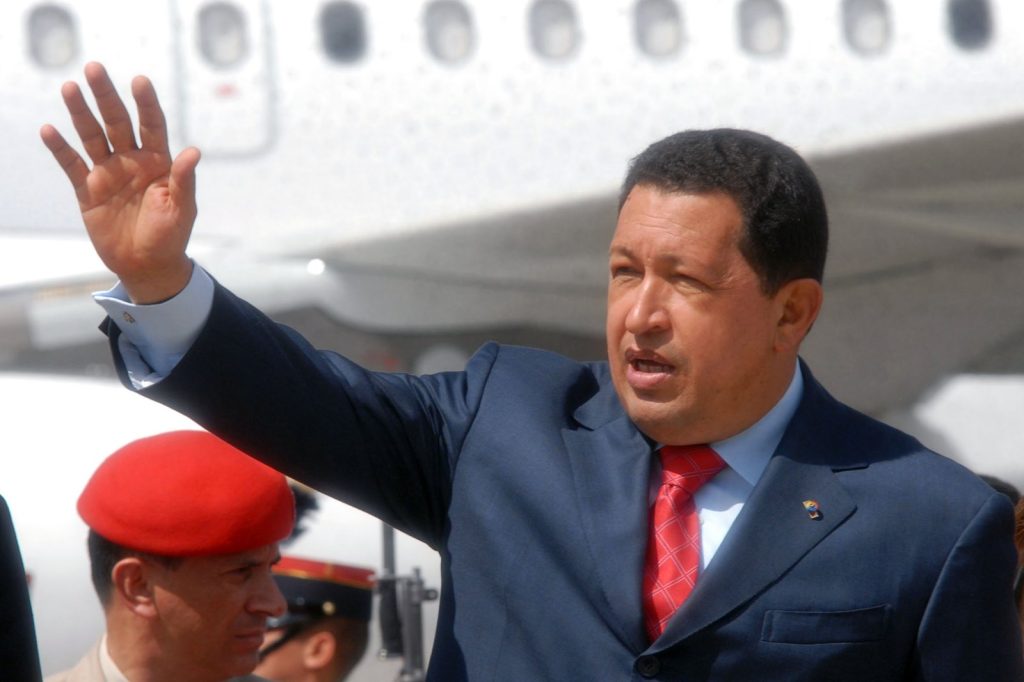
The background to this concentration of power is a decades-long history of U.S.-Venezuela tensions. Venezuela sits on the northern coast of South America, a nation of vast territory and a large, mostly urban population. Colonized by Spain in the 1500s, it declared independence in the early 1800s but then spent much of the 19th century under political turmoil and military strongmen. A series of democratic governments took hold in the late 1950s, an era of relative economic prosperity. That stability shattered in the late 1980s and 1990s, when economic shocks triggered deadly riots, two attempted coups, and the impeachment of a president. Public confidence in the traditional political parties collapsed. In 1998, Hugo Chávez was elected president, launching what he called the Bolivarian Revolution. A new constitution was written and approved the following year. Chávez declared himself socialist and anti-imperialist, and relations with the United States soon soured. Tensions spiked after Venezuela accused the Bush administration of backing a short-lived coup attempt in 2002.
For a time, high oil prices let the government expand social spending and reduce inequality. But by the mid-2010s, poverty had begun to rise sharply. Chávez died in 2013. His successor, Nicolás Maduro, won a disputed election that year, followed by further contested votes in 2018 and 2024. Opposition figures were arrested or forced into exile. The United States and many other nations refused to recognize the results. By late 2014, the economy was in a severe downturn. The crisis drove millions of Venezuelans to leave the country. Washington responded with a series of financial sanctions and diplomatic moves. In 2019, the U.S. recognized opposition leader Juan Guaidó as Venezuela’s interim president. That parallel government was dissolved at the end of 2022. Since then, the U.S. has held to a policy of not recognizing any election unless it is judged free and fair.
Options and the Waiting Game
With the Secretary of State now holding sole authority to adjust policy without interagency review, the administration has several options. It could pursue renewed negotiations with the Maduro government, possibly offering sanctions relief in exchange for democratic reforms, including free elections. Previous talks in Mexico City in 2022 and 2023 failed to produce a comprehensive agreement. Alternatively, the U.S. could recognize a new opposition leader. The interim government of Juan Guaidó was dissolved in December 2022. Another path is to increase pressure by expanding sanctions to include additional sectors, such as banking or mining. The new authority allows the Secretary of State to act without interagency review, potentially speeding up policy shifts.
The next major milestone is the Venezuelan presidential election, scheduled for 2025. But no date has been set. The U.S. has stated it will not recognize the results unless the election is free and fair, a condition Maduro has rejected. That standoff leaves both sides in a holding pattern. Investors will note that any movement — whether toward sanctions relief or new restrictions — could shift quickly now that a single Cabinet official can decide. The figure that matters remains the election date, if and when Maduro’s government announces one. Until then, the Secretary of State holds the cards, with the authority to negotiate, sanction, or recognize without waiting for Washington’s bureaucratic machinery to catch up.




