
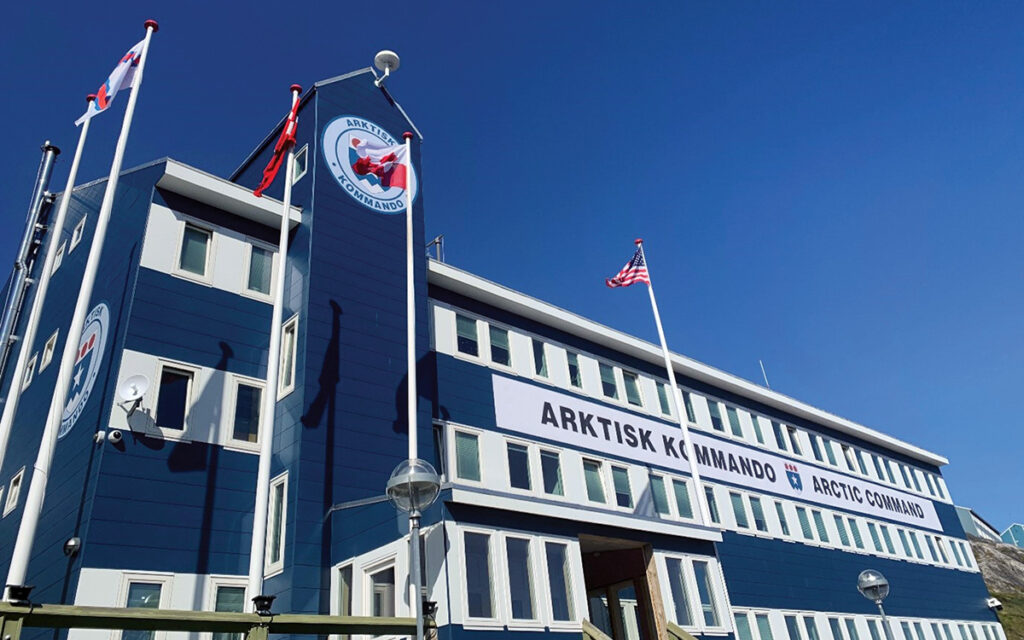
On May 21, 2026, residents of Nuuk gathered at the site of a newly opened U.S. consulate, but their presence was not celebratory. Word spread quickly through the small city by foot and phone, drawing a crowd that came to voice opposition rather than support.
The protest reflected deep-seated concerns about how their homeland is perceived by outside powers. Greenlanders, known as Kalaallit, comprise roughly 85 to 90 percent of the population. They speak Greenlandic, an Eskaleut language, and hold Danish nationality.
Their island operates as an autonomous territory within the Danish Realm. Many protesters felt that recent events treated Greenland as a commodity rather than a self-governing territory.
The anger stems directly from former U.S. President Donald Trump’s sustained push to purchase Greenland. This was not a fleeting comment but a persistent effort that resonated painfully in a region where colonial history remains vivid. Norse settlers arrived in 986.
Norway took control in 1261. The Kalmar Union absorbed the island in 1397.
Danish colonization intensified in the 16th century through expeditions from Portugal and Denmark-Norway, along with missionaries such as Hans Egede. Each wave of outsiders brought claims and maps created elsewhere. The Trump proposal felt like another installment in that narrative. Greenlandic politician Aaja Chemnitz Larsen described the idea of selling Greenland to the United States as “completely unacceptable.” That word carried significance, touching on sovereignty, autonomy, and the fundamental right of a people to determine their own governance.
When the consulate opened, the protest was not about the building itself. It was about what the structure represented.
A diplomatic mission can serve as a bridge, but it can also appear as a foothold. The crowd in Nuuk made clear which interpretation they saw. The current U.S. administration has not pursued purchasing Greenland.
Its focus has been on alliances with Taiwan, Japan, the Philippines, the European Union, the United Kingdom, and Israel. The U.S. Secretary of State has stated that “our alliances are a cornerstone of our foreign policy.” The language of partnership differs from the language of acquisition, but for Greenlanders, the distinction may seem thin when a consulate opens in a city where many recall a time when an outside power treated their land as a prize.
Greenland holds strategic importance. Its location, resources, and Arctic position are concrete realities under observation. China and Russia have shown interest.
The United States has now established a diplomatic presence in Nuuk. The May 21 protest served as a reminder that the people living there have their own priorities, which do not always match those of the major powers surrounding them.
No one at the protest asked to be sold or traded. They asked to be heard. The consulate is open.
The crowd showed up. That is the story, and what happens next remains to be seen.




