
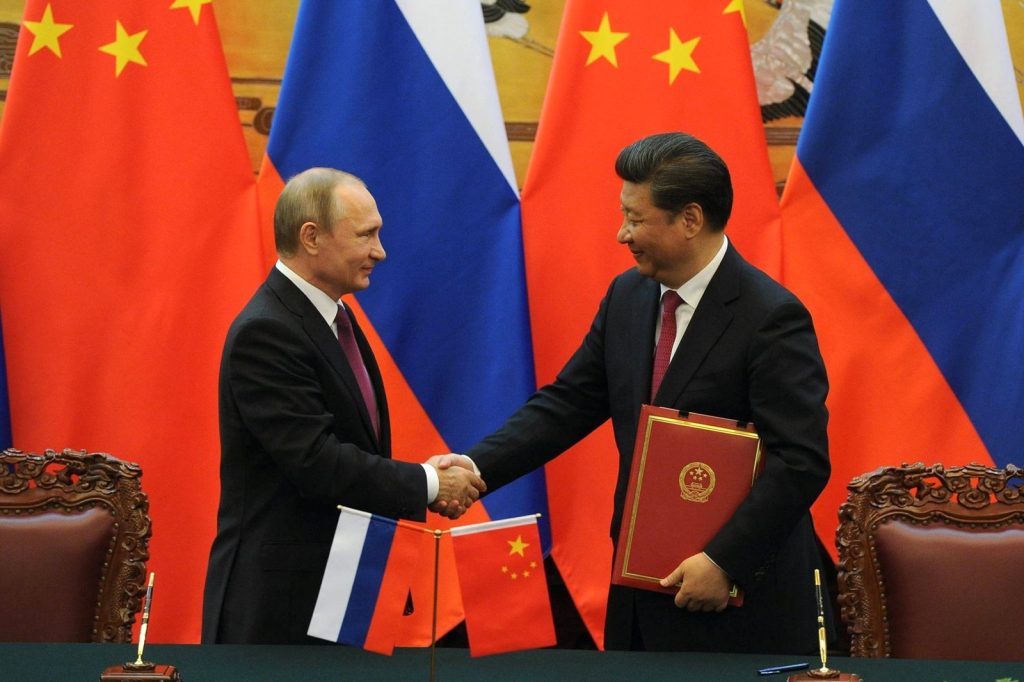
July 10 — The alignment between Beijing and Moscow, formalized in a “no limits” partnership declaration on February 4, 2022, has created a complex economic and security environment for Central Asian nations that sit at the intersection of Chinese infrastructure investment and Russian security influence. Kazakh and Uzbek exporters are closely monitoring how trade routes and energy flows evolve under this partnership, which was signed weeks before Russia’s invasion of Ukraine.
Chinese President Xi Jinping, who became General Secretary of the Chinese Communist Party on November 15, 2012, and president on March 14, 2013, has consolidated power significantly, including removing presidential term limits in 2018, allowing him to pursue a foreign policy that officials describe as a strategic hedge against Western-led institutions, particularly the United States and its allies.
Economic Integration and Infrastructure Stakes
Central Asia’s economic relationship with China rests on tangible infrastructure projects funded by Chinese state-owned enterprises. Railways, pipelines, and highways across Kazakhstan, Uzbekistan, and Kyrgyzstan have been financed and built by Chinese lenders. The Khorgos dry port on the China-Kazakh border has become a key node for container traffic between Asia and Europe.
The war in Ukraine has disrupted traditional overland routes through Russia, pushing more cargo toward the Middle Corridor—a network running through Kazakhstan, the Caspian Sea, the Caucasus, and Turkey. Chinese logistics firms have shown increasing interest in this alternative route, though infrastructure gaps remain.
Officials noted that investment in Caspian port capacity has been a priority for Chinese lenders since 2023. Energy trade further defines the calculus. China is the largest buyer of Kazakh crude oil and has invested in Kazakh gas fields.
Russia’s pivot to Asian energy markets, accelerated by Western sanctions, has created competition for pipeline access. The Power of Siberia pipeline, which supplies Russian gas to China, runs east of Central Asia, but discussions about a second route through Kazakhstan have been ongoing for years.
Chinese lending to Central Asian states has increased steadily since Xi took office, though precise figures remain opaque. Kazakhstan, a major trading partner with both Moscow and Beijing, relies on Chinese-funded Belt and Road Initiative projects while maintaining security ties with Russia through the Collective Security Treaty Organization.
Nuclear Warnings and Diplomatic Signals
On October 16, 2024, Ukrainian President Volodymyr Zelensky stated that China issued a “harsh” warning to Russia over nuclear threats. The statement suggested that Xi’s government may be taking a more active role in preventing nuclear escalation, a development that could signal a shift in Beijing’s posture toward the conflict.
For Central Asian capitals, any movement by Beijing to restrain Moscow on nuclear matters is significant. The region shares long borders with both Russia and China, and a nuclear escalation in Ukraine would have immediate consequences for trade and security. Officials in Nur-Sultan and Tashkent have publicly supported diplomatic solutions while avoiding direct criticism of either power. The warning from China, as reported by Zelensky, represents one of the few public instances where Beijing has applied pressure on Moscow since the invasion began.
It remains unclear whether the warning was delivered through diplomatic channels or public statements, and the Ukrainian president did not provide further details on the timing or format of the communication.
Leadership Continuity and Economic Implications
Xi Jinping’s removal of presidential term limits in 2018, approved by the National People’s Congress, effectively cleared the path for indefinite leadership. That move has given him the political stability to pursue long-term strategic goals without the constraint of succession cycles.
For foreign investors in Central Asia, this continuity is a double-edged sword—it ensures policy consistency but also concentrates decision-making power in a single figure. Xi has called for a political settlement to the war in Ukraine but has not condemned Russia. That stance has drawn scrutiny from Western capitals, particularly as Chinese exports of dual-use goods—machinery, electronics, and microchips—have continued to flow to Russian markets.
Chinese banks have not joined the sanctions regime, allowing trade in yuan and ruble to expand. Central Asian businesses have adapted by settling more transactions in yuan, reducing reliance on the dollar and the euro.
Xi Jinping is the paramount leader of China, a position that concentrates party, military, and state authority in one person. Born in Beijing in 1953, he is the elder son of a former senior official. As a teenager during the Cultural Revolution, his father was purged, and Xi was sent to a rural village in Shaanxi, where he lived in a cave dwelling, joined the Communist Party after several failed attempts, and served as the local party secretary.
He later studied chemical engineering at Tsinghua University before rising through provincial posts in Fujian, Zhejiang, and Shanghai. His tenure has been marked by a sweeping anti-corruption campaign, a restructuring of the military, and a battle against poverty.
Under his rule, the party has expanded control over society, tightened censorship and surveillance, and cracked down on private sectors such as real estate. Looking ahead, the key question for Central Asian markets is whether Beijing’s nuclear warning to Moscow signals a broader recalibration. If China begins to distance itself from Russia on security matters, the region could face pressure to choose sides. If the partnership holds, infrastructure and trade flows will continue along current lines, with Chinese capital and Russian security guarantees remaining the dominant forces.
For now, officials in the region are watching the diplomatic signals closely. The economic stake is clear: Central Asia’s integration with global markets runs through both Beijing and Moscow, and any shift in that balance will carry real consequences for trade, investment, and energy security.




