
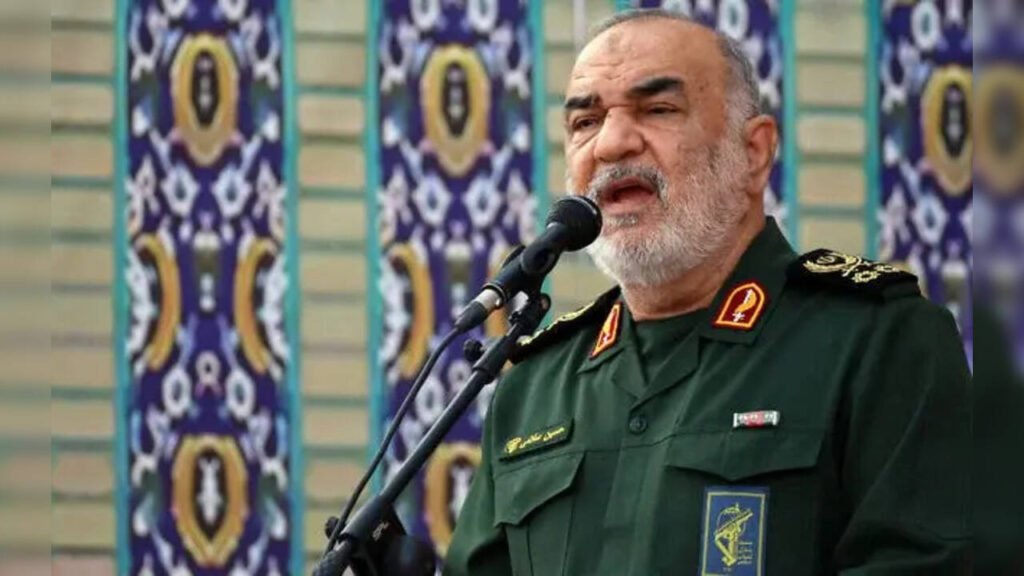
TEHRAN, July 12 — For global energy markets, a single public statement from one man can send prices swinging. That man is Major General Hossein Salami, the commander-in-chief of Iran’s Islamic Revolutionary Guard Corps (IRGC), and his threats to close the Strait of Hormuz are the kind of wild card that keeps oil traders watching his every word.
Salami, born in 1960 in Isfahan, Iran, took command of the IRGC on April 21, 2019, when Supreme Leader Ayatollah Ali Khamenei appointed him to replace Major General Mohammad Ali Jafari, who had held the post since 2007. It was a promotion that capped a long climb through the ranks.
Salami joined the IRGC during the Iran-Iraq War (1980-1988) and worked his way up, eventually serving as the corps’ deputy commander from 2009 to 2019. He also holds a master’s degree in defense management from Iran’s Supreme National Defense University.
The Strait of Hormuz threat — in plain terms
Think of the Strait of Hormuz like a narrow highway that a significant portion of the world’s oil passes through every day. If someone threatens to block that road, the practical upshot is immediate anxiety in global energy markets. Salami has made that threat repeatedly in response to U.S. sanctions.
In 2019, he stated that Iran would “set the region on fire” if its oil exports were blocked. That’s not diplomatic language — it’s a direct warning of escalation.
The U.S. Treasury Department has had Salami on its sanctions list since 2019 under Executive Order 13224, which targets those who support terrorism. So when he speaks, Washington treats it as more than just rhetoric.
What Salami actually oversees
Salami’s role goes far beyond making threats. He is the top commander of an organization that runs Iran’s ballistic missile program and provides support for proxy groups in Yemen, Syria, and Lebanon. The IRGC is not Iran’s regular military — it’s a parallel force with its own army, navy, air force, and intelligence units, accountable directly to the Supreme Leader.
Salami has been its public face since 2019, and his hardline stance against the United States and Israel is a consistent theme in his statements. Here’s what it means in practical terms: every time Salami issues a new warning about closing the Strait of Hormuz or retaliating against sanctions, energy markets recalibrate.
Oil prices can tick up on the mere possibility of disruption, even if the threat never materializes. For a journalist covering the technology and artificial intelligence desk, the pattern looks a lot like a predictable algorithm — input a threat, output market volatility.
What to watch next
Salami remains in command as of the latest available information, and his public statements are still closely monitored by global energy markets. The key question for the coming months is whether Iran’s oil exports face new pressure from U.S. sanctions enforcement under the current administration. If they do, history suggests Salami will respond with the same kind of escalation language he used in 2019.
The Strait of Hormuz threat is his signature move, and there is no sign he intends to retire it.




