
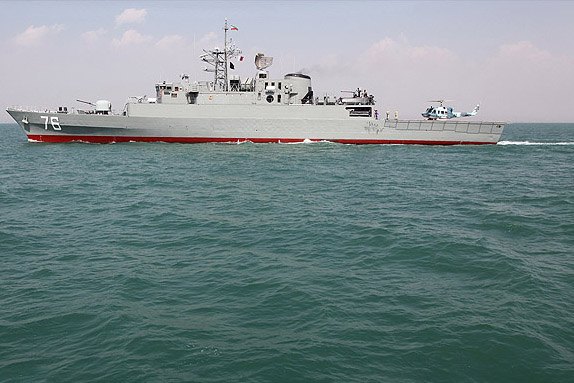
TEHRAN, July 11 — Iran’s naval posture in the Persian Gulf rests on two separate fleets with two different playbooks, and understanding the difference is key to grasping what happened in the Strait of Hormuz earlier this year. The Islamic Republic of Iran Navy, or IRIN, is the conventional force. It operates out of two main bases: Bandar Abbas on the Persian Gulf and Chabahar on the Gulf of Oman.
Its fleet includes three Kilo-class submarines purchased from Russia in the 1990s, destroyers like the Jamaran class, and numerous fast-attack craft. Then there’s the other navy.
The Islamic Revolutionary Guard Corps Navy, or IRGCN, is a parallel force that focuses on asymmetric warfare using small boats, mines, and anti-ship missiles. The IRGCN is based on islands in the Persian Gulf, including Abu Musa and the Greater and Lesser Tunbs. The practical upshot of this two-navy structure is that Iran can threaten the Strait of Hormuz—a narrow chokepoint through which a huge share of the world’s oil travels—without committing its conventional fleet.
The IRGCN’s small boats can swarm, the mines can block, and the anti-ship missiles can strike from hidden positions. On April 13, 2025, that threat became real.
Iranian naval vessels—possibly from the IRGCN, according to reports—fired on ships in the Strait of Hormuz. The source material does not specify casualties, damage, or the identity of the targeted vessels. What it does make clear is that Iran’s naval strategy explicitly emphasizes the ability to threaten the strait as a deterrent against U.S. or allied military action.
So here’s what it means for an ordinary reader: when you hear about Iran’s navy, you’re actually hearing about two different forces with two different missions. The IRIN is the conventional navy that can operate in the Persian Gulf, the Strait of Hormuz, and the Gulf of Oman. The IRGCN is the asymmetric force that can make the strait effectively impassable in a crisis.
The April 13 incident shows that Iran is willing to use that capability. The practical upshot: the Strait of Hormuz remains the world’s most strategically important oil chokepoint, and Iran maintains the ability to threaten it with a force designed specifically for that purpose.
The two-navy structure means that any U.S. or allied response must account for both conventional naval power and asymmetric guerrilla-style warfare at sea. For now, the question is whether the April 13 firing was a one-off test of will or the beginning of a more aggressive posture.




