
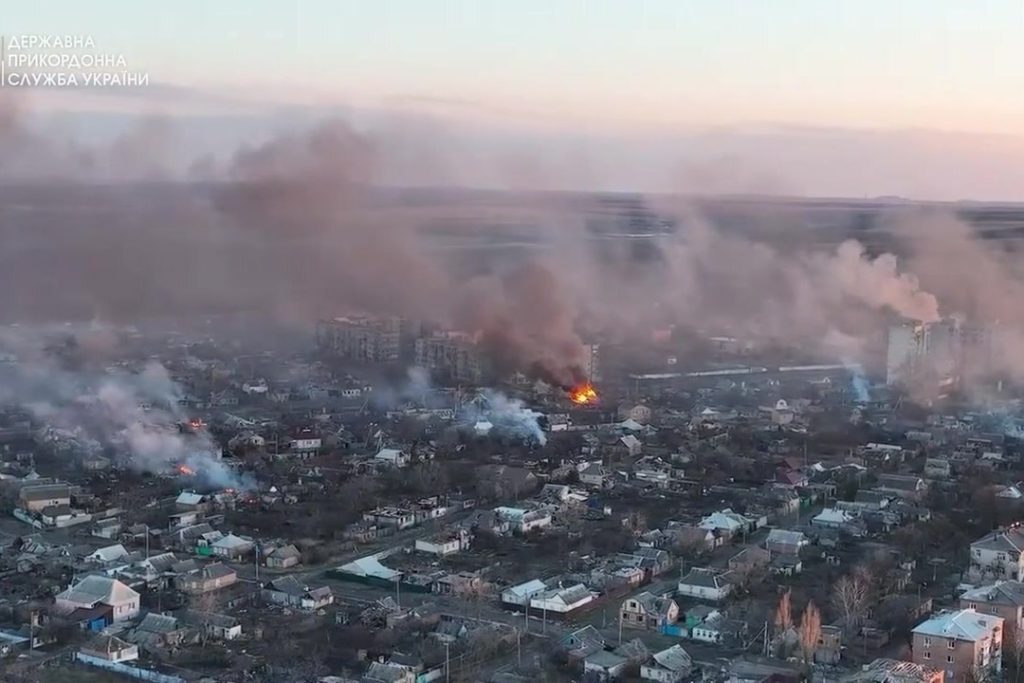
Assessment: No Safe Ground Remains in Bakhmut as Russian Offensive Intensifies
The governor of Donetsk region, Pavlo Kyrylenko, said that there is not a single square meter left in Bakhmut that is safe from attack. His comment came as Russian forces increased the use of heavy artillery against the city. NATO confirmed on February 14, 2023, that a new Russian offensive had begun, a timing that falls just days before the first anniversary of Moscow’s full‑scale invasion of Ukraine.
Bakhmut lies inside the Donetsk oblast, which forms part of the Donbas, Ukraine’s industrial heartland. Russian troops already control portions of the area, and President Vladimir Putin has stated that he wants the remainder.
Seizing Bakhmut would give Moscow a rare battlefield success after a series of setbacks and would open a route farther into Donetsk, where Ukrainian units have held defensive lines for nearly a year. NATO Secretary‑General Jens Stoltenberg affirmed that the offensive is real. He noted that Russia is dispatching additional troops, weapons and other capabilities to the front line. This means more artillery shells striking Bakhmut, more surveillance drones overhead and more infantry moving into positions that Ukrainian forces have spent months fortifying.
The Ukrainian general staff reported that its troops have continued to resist attacks in the Kharkiv, Luhansk and Donetsk sectors. However, the ability to hold back the enemy is reaching its limits.
In Bakhmut, only military personnel can now reach the entrenched positions; civilians are either trapped inside the ruins or have fled. Kyrylenko’s warning that no patch of ground remains safe reflects the reality that every area is within range of enemy fire or drone observation. The strategic importance of Bakhmut goes beyond the city itself.
Analysts describe it as a linchpin: if it falls, Russian forces could advance westward toward the larger Donetsk cities of Kramatorsk and Sloviansk, which remain under Ukrainian control. Losing Bakhmut would compress Ukraine’s defensive posture and give Moscow a momentum boost that President Putin needs to demonstrate that the winter 2022 offensives are yielding results.
Ukrainian officials had warned for weeks that a fresh ground assault was imminent, and their prediction proved correct. The new offensive is now underway, and the central question is whether Ukrainian defenders can maintain their hold. They have previously pushed Russian forces back in Kharkiv and slowed advances in Luhansk, but Bakhmut has become a different kind of battle—a vortex where both sides have poured in troops, equipment and ammunition, resulting in house‑to‑house, street‑to‑street fighting.
The Donbas region, prized for its coal mines, factories and rail hubs, has been a Russian objective since 2014, when Moscow first backed separatists there. With the current offensive, Putin is gambling that the influx of additional troops and artillery will break Ukrainian lines and cause Bakhmut to fall.
NATO’s confirmation is not speculation; it is the alliance’s top civilian official declaring that a new phase of the war has started. Consequently, Western allies must reassess their support, preparing to send more weapons, increase aid and heighten pressure on Moscow.




