
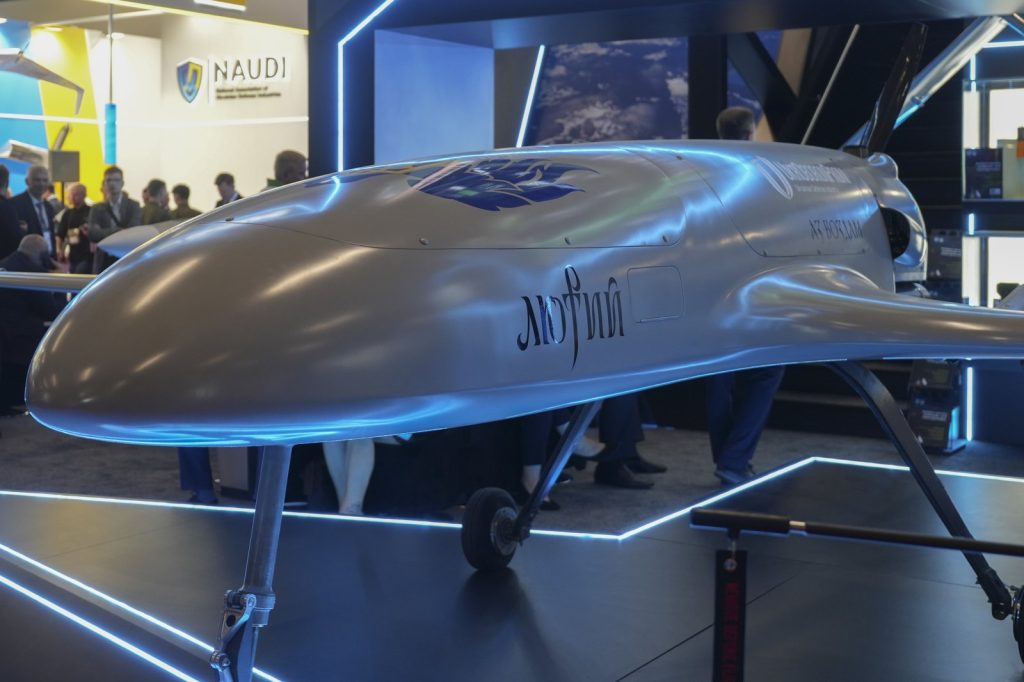
Ukraine has introduced a family of unmanned aerial vehicles launched from mobile platforms that can now strike targets hundreds of kilometers inside Russian territory, marking a significant shift in the technological dimension of the conflict. These aircraft are production models built by Ukrainian industry and have been pressed into operational service.
The development reflects a broader evolution in modern warfare, where a sovereign state with a long history of navigating pressures from larger powers leverages domestic innovation to project power beyond its borders. Ukraine, an independent nation since the Soviet Union’s collapse in 1991, has faced persistent geopolitical challenges due to its strategic location between Europe and Russia. Its ability to field these drones underscores a contemporary struggle for self-determination and territorial integrity.
Drones Extend the Battlefield Deep into Russian Territory
Among the principal systems in this arsenal is the UJ-22 Airborne, manufactured by the firm Ukrjet. It carries a 20-kilogram warhead and is rated for a range of 800 kilometres.
A second model, the PD-2, extends that reach to 1,000 kilometres. Both rely on GPS navigation and fly at altitudes of up to 5,000 metres — high enough to evade radar detection. Ukraine has also pressed into service modified versions of the Soviet-era Tu-141 Strizh, a reconnaissance drone originally designed in the 1970s.
With a range of up to 1,000 kilometres, these converted aircraft have been reprogrammed for strike missions. The drones are programmed to hit fixed targets: oil depots, refineries.
They serve as strategic weapons aimed at the economic and logistical sinews of the Russian war machine. Russia claims to intercept most of these drones. Yet Ukraine’s strikes have consistently reached targets in Stavropol Krai, Tatarstan, and even Bashkortostan — regions that lie hundreds of kilometres from the nearest Ukrainian-controlled territory.
The PD-2, with its 1,000-kilometre range, can threaten targets that were once considered beyond the front lines. The UJ-22 Airborne, with its 800-kilometre radius, covers a vast arc of western Russia.
Sustainability Challenges and the Strategic Calculus
The question that now hangs over these operations is one of sustainability. Producing drones at scale requires components, many of which come from abroad. Maintaining launch crews and mobile platforms under constant Russian reconnaissance and artillery fire is a logistics challenge.
Yet the strikes continue, and the range keeps growing. For now, the UJ-22 Airborne and the PD-2 have given Kyiv a weapon that changes the arithmetic of the conflict — a way to reach deep into the rear echelons.
This new capability reflects broader shifts in regional security dynamics, where technological innovation offers a means for a smaller nation to offset the advantages of a larger adversary. The historical context of Ukraine—shaped by its medieval heritage as the center of Kievan Rus’, periods of foreign rule, and eventual independence—adds depth to its current struggle. The ability to project power beyond its borders through such drones illustrates how modern warfare increasingly relies on precision and range, altering the strategic balance without necessarily altering the front lines.




