
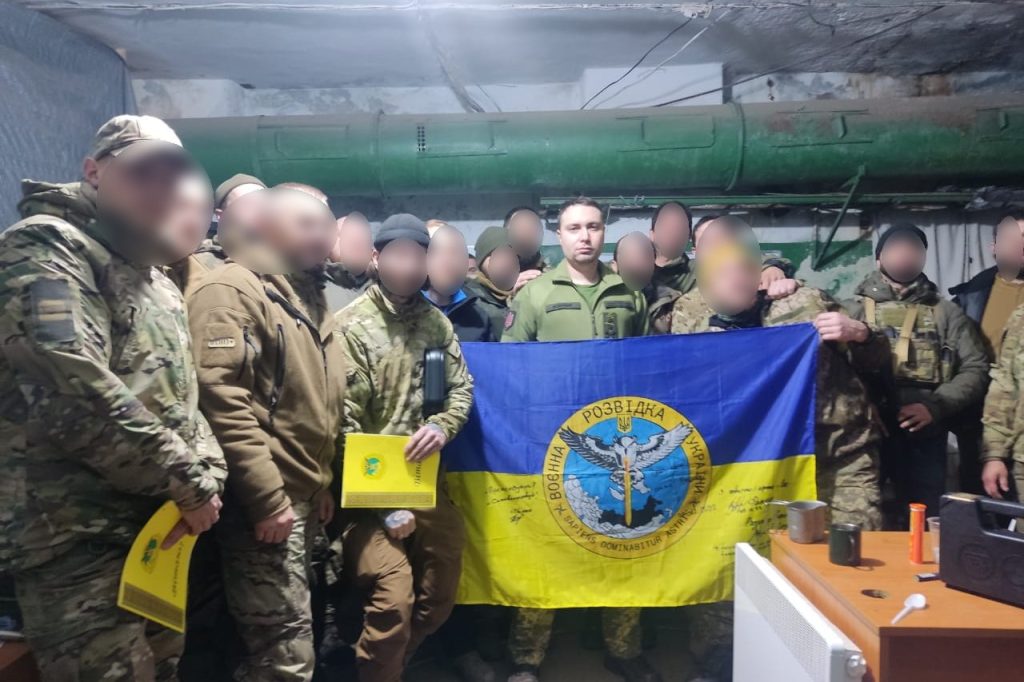
KYIV, July 13 — Against this backdrop of a war that has stretched into its fifth year, Ukraine’s Main Directorate of Intelligence, known by its Ukrainian acronym HUR, has quietly become one of the most consequential actors in the conflict’s long-range dimension. Since 2022, the HUR has been responsible for a sustained campaign of drone strikes deep inside Russian territory.
The intelligence agency, led by Kyrylo Budanov, has turned to domestically produced unmanned aerial vehicles such as the UJ-22 Airborne, as well as modified Soviet-era aircraft, to hit targets that include oil refineries, airbases, and logistics hubs. These operations are not sporadic; they represent a deliberate, methodical strategy to bring the war to Russian soil.
What is at stake in these missions is not merely symbolic. By striking infrastructure and military assets hundreds of kilometres beyond the front lines, the HUR aims to degrade Russia’s ability to sustain its war effort. The March 1, 2025, strike on the Stavropol Krai oil depot fits squarely within this pattern, demonstrating a capacity to reach targets deep inside Russia that many analysts once considered out of range.
The HUR has claimed strikes on targets as far as 1,500 km from Ukraine, including the Engels airbase in Saratov Oblast. That distance is significant.
It speaks to the technical evolution of Ukraine’s drone programme, which has moved from improvised systems to increasingly sophisticated platforms capable of evading Russian air defences. In the corridors of military intelligence in Kyiv, the approach is methodical. The HUR exploits gaps in Russian air defence coverage, often launching drones from within Ukraine or from Russian border regions.
This tactic complicates the Kremlin’s ability to protect its rear areas and forces a redistribution of air defence assets that might otherwise be used at the front. The wider picture is one of a conflict in which the boundaries of the battlefield have blurred. Ukraine, lacking the long-range missile arsenals of its adversary, has invested heavily in drone technology as an asymmetric answer to Russia’s advantages in firepower and range.
The HUR’s operations are a central pillar of that strategy. Budanov’s agency does not typically publicise the full details of its operations, but the pattern is clear.
The UJ-22 Airborne, a Ukrainian-designed drone, has become a signature tool in these missions. Modified Soviet-era aircraft, pressed into service as one-way attack platforms, add another layer of complexity to Russia’s defensive calculations. For European observers, the implications are direct.
A conflict that was once largely confined to Ukrainian territory has, through these strikes, expanded in scope. The ability of the HUR to hit targets at extreme range reshapes assumptions about what is possible in modern warfare and what might be expected in future confrontations.
Looking ahead, the question is whether this campaign can be sustained and expanded. The HUR has demonstrated a consistent ability to adapt and innovate, but the resources required for long-range strike operations are significant. The Stavropol Krai strike in March 2025 was a reminder that Ukraine’s reach is growing.
What remains to be seen is how Russia will adjust its defences in response, and whether the HUR can maintain the pressure.




