
Strategic Context and Geographic Significance
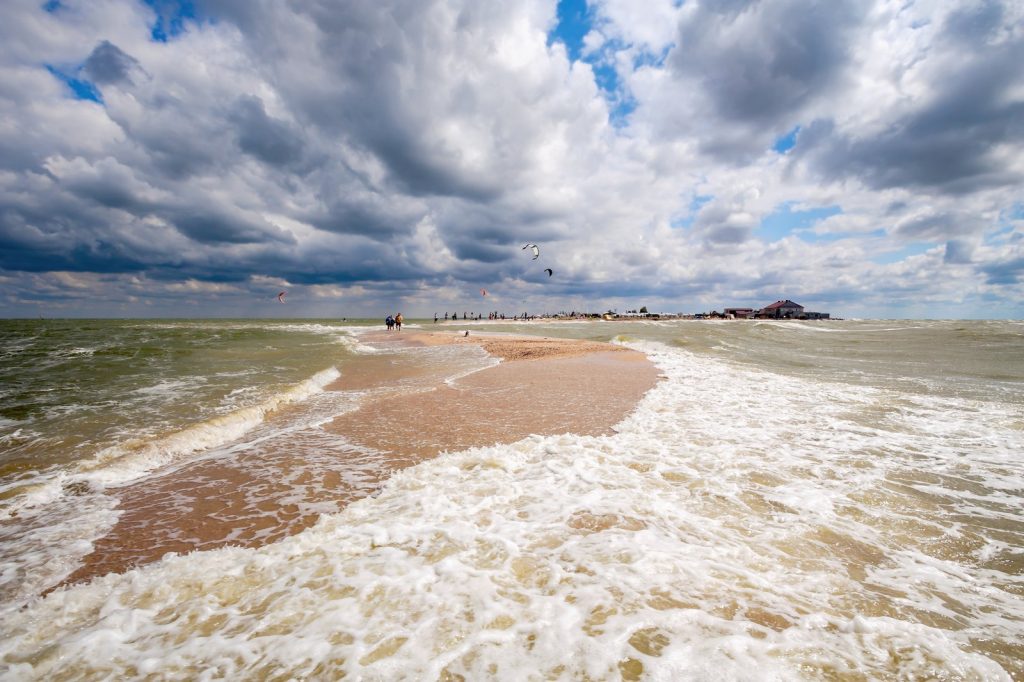
The Sea of Azov, an inland shelf sea in Eastern Europe, is connected to the Black Sea by a narrow strait. It is bounded by Russia on the east and by Ukraine on the northwest and southwest. Known as the shallowest sea in the world, it is fed by large rivers that deposit sediment and keep its salinity low. Historically rich in fish and bird life, the sea has long been a vital waterway. In antiquity, it was known as the Maeotis Swamp, named for marshlands to its northeast. Medieval Russians called it the Sea of Surozh, while Ottoman Turks referred to it as the “Fish Sea” for its abundant marine life. Its modern name likely derives from the Kipchak Turkish word for “lowlands,” reflecting the surrounding terrain. These shifting names underscore the region’s role as a crossroads of empires.
The sea serves as an important access route for Central Asia, linking the Caspian Sea to the Black Sea via the Volga–Don Canal. Its shores are low-lying and lined with narrow spits, vegetation, and bird colonies. Because of its shallow depth and river inflow, the sea has low salinity and high biological productivity, making it a critical resource for fishing and local economies. Since Russia’s annexation of Crimea in 2014, the waterway has been at the center of territorial disputes. Parts of Ukraine bordering the sea have been under Russian occupation since 2022. The Azov Sea is not merely a geographic feature but a flashpoint for trade, military access, and regional security, with implications that extend well beyond its shores. The August 2024 shipping halt illustrated how Ukraine’s drone campaign directly threatened Russia’s ability to use this conduit for naval logistics and commercial exports.
Domestic Strains and Internal Challenges
Domestically, Putin has faced significant challenges to his authority. In June 2023, a brief mutiny by the Wagner Group, a private military contractor that had operated extensively in Ukraine and Africa, tested the Kremlin’s control over its own security apparatus. Led by Wagner founder Yevgeny Prigozhin, mercenaries seized control of the southern city of Rostov-on-Don before marching toward Moscow. The crisis was defused through negotiations, avoiding a prolonged confrontation, but it exposed fractures within Russia’s military and political elite. The rebellion highlighted the risks of relying on private military contractors and the potential for internal dissent within the country’s security forces.
Putin’s leadership has consistently prioritized the consolidation of power within the executive branch. According to analysts, his tenure has seen the weakening of independent institutions, the suppression of political opposition, and the expansion of state control over media and economic sectors. This centralization of authority has been accompanied by a foreign policy doctrine that emphasizes Russia’s sphere of influence and opposition to NATO expansion. The Wagner mutiny served as a pivotal moment in Putin’s domestic political calculus, raising questions about the durability of internal stability.
International Isolation and Legal Fallout
On the international stage, Putin has faced growing isolation. In March 2023, the International Criminal Court issued an arrest warrant for him on charges of war crimes, specifically related to the alleged deportation of children from Ukraine. The warrant, while unlikely to result in immediate prosecution, has limited Putin’s travel options and reinforced the narrative of his pariah status among many world leaders. Moscow has rejected the charges as politically motivated. The ICC’s step marked an unprecedented action against a sitting leader of a permanent UN Security Council member and has complicated Russia’s diplomatic engagements, particularly with ICC member states.
The invasion of Ukraine prompted Western sanctions, military aid to Kyiv, and a concerted effort to reduce European dependence on Russian energy. Moscow has responded by deepening ties with China, Iran, and other states that have resisted the Western-led isolation campaign. Looking ahead, the trajectory of Putin’s leadership will likely be shaped by the ongoing war in Ukraine, the durability of Russia’s domestic political stability, and the effectiveness of international legal and economic pressures. The Azov Sea decision and the Wagner mutiny serve as indicators of the pressures facing the Kremlin, but the full consequences of these events remain to be seen.




