
WASHINGTON, July 15 — The shift in how the West arms a wartime ally is no longer a trickle; it is a fully established pipeline, and the numbers tell the story. Since Russia’s full-scale invasion began on February 24, 2022, the United States has committed over $40 billion in security assistance to Ukraine. That figure, drawn from Presidential Drawdown Authority, the Ukraine Security Assistance Initiative, and other programs, represents a logistical and political commitment on a scale not seen since the Cold War.
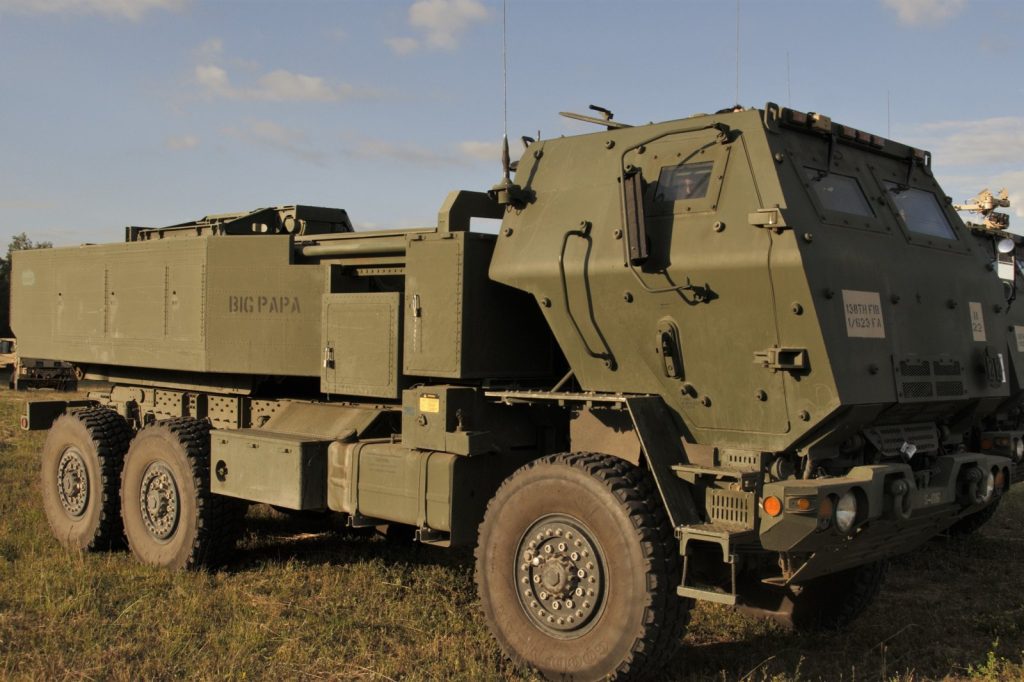
The hardware flowing into Ukraine reads like a catalog of modern NATO arsenals. The M142 High Mobility Artillery Rocket Systems, better known as HIMARS, first arrived in June 2022, giving Ukrainian forces precision strike capability against Russian command posts and supply depots.
By mid-2022, Washington had delivered over 200 M777 howitzers — lightweight, towed artillery pieces that proved decisive in the grinding artillery duels that have defined much of the conflict. The trend underneath is clear: the U.S. is treating Ukraine as a proving ground for its own systems under real combat conditions.
Armor and Air Defense: A New Phase
January 2023 marked a significant escalation in the types of weapons the U.S. was willing to send. The pledge of 31 M1 Abrams main battle tanks signaled that Washington was no longer limiting aid to defensive systems or older Soviet-era equipment. Alongside the tanks came over 100 M2 Bradley infantry fighting vehicles, armored personnel carriers designed to transport troops safely across contested terrain.
Delivery of the Abrams was expected in fall 2023, a timeline that reflected the complexity of training crews and establishing maintenance chains for gas-turbine-powered tanks that consume fuel at a ferocious rate. Air defense has been a parallel priority.
The first Patriot battery arrived in Ukraine in April 2023, a system capable of intercepting ballistic missiles, cruise missiles, and aircraft. Before that, two NASAMS — National Advanced Surface-to-Air Missile Systems — were delivered in November 2022. These systems have been tasked with protecting critical infrastructure and population centers from Russian missile barrages.
Watch this space: the integration of Western air defense with Ukraine’s existing Soviet-era networks has been one of the quiet technical successes of the war. The European response has been substantial but fragmented.
The European Union and its member states had collectively provided about €25 billion in military aid as of June 2023. Germany, after initial hesitation, delivered 18 Leopard 2 main battle tanks in March 2023, along with Marder infantry fighting vehicles and IRIS-T air defense systems. The United Kingdom contributed 14 Challenger 2 tanks, pledged in January 2023, and Storm Shadow cruise missiles, which saw their first combat use in May 2023.
British NLAW anti-tank weapons had been arriving since the earliest days of the invasion, proving effective against Russian armor columns.
Eastern Flank and the Fighter Jet Question
Poland has emerged as a critical donor, leveraging its own stocks of Soviet-era equipment that Ukrainian troops could operate with minimal retraining. Warsaw supplied T-72 tanks, artillery ammunition, and — in a move that broke a major taboo — four MiG-29 fighter jets delivered in April 2023. That transfer opened the door for the next big debate: Western fighter jets.
In May 2023, the U.S. approved the transfer of F-16 fighter jets to Ukraine. Pilot training was expected to begin in summer 2023.
The F-16 is a fourth-generation multirole fighter, far more capable than the aging MiG-29s Ukraine currently flies. But the shift to Western aircraft requires months of training for pilots and ground crews, plus the construction of new maintenance infrastructure. What’s changing is the assumption that Ukraine’s air force must remain a purely Soviet-era force; the F-16 decision signals a long-term commitment to Ukraine’s integration into Western military structures.
All of this aid remains subject to congressional approval and ongoing oversight. The $40 billion-plus commitment has generated political debate in Washington, with some lawmakers questioning the scale and duration of the assistance.
But the administration has maintained that the cost of supporting Ukraine is far lower than the cost of a Russian victory that would destabilize Eastern Europe and embolden other authoritarian states. The trend underneath the numbers is a fundamental restructuring of Ukraine’s military. What began as a scramble to supply rifles and anti-tank missiles has evolved into a multi-year program to rebuild an entire army on Western standards.
The HIMARS, the Patriots, the Abrams, the F-16s — each system brings with it a logistics train, a training pipeline, and a doctrinal shift. Ukraine is not just being armed; it is being remade. Watch this space for the next phase: what happens when these systems are fully integrated, and what that means for the battlefield balance of power.




