
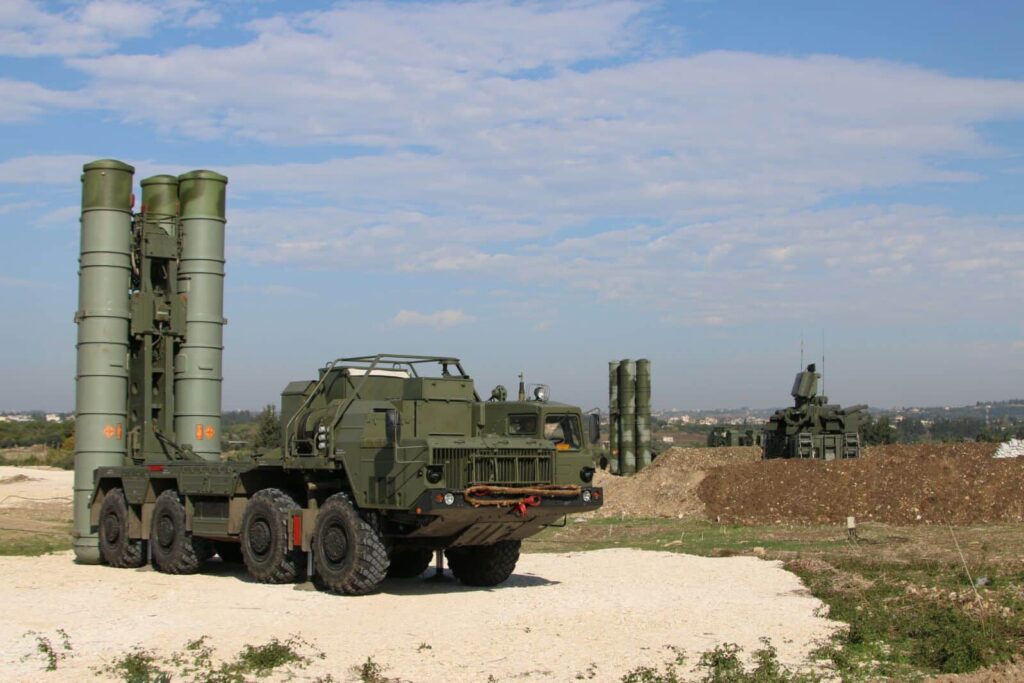
MURMANSK — Satellite imagery and Norwegian intelligence assessments have confirmed that Russia redeployed several S-400 and Pantsir-S1 air defense systems from its Arctic bases to the war in Ukraine, a transfer detailed in a February 2025 report by the Norwegian Intelligence Service. The withdrawals have reduced Russia’s air defense coverage over key Arctic installations, according to the assessment. The affected sites include the Kola Peninsula, the Northern Fleet headquarters at Severomorsk, and the Olenya air base.
Norway, a NATO member sharing a 196-kilometer border with Russia, has responded by increasing surveillance flights and reinforcing its own air defenses along that frontier.
Strategic calculus in the High North
The Arctic holds strategic importance for Moscow. The Northern Sea Route carried 34 million tons of cargo in 2023, and the region hosts Russia’s nuclear-powered icebreakers and strategic missile submarines. The redeployment of air defense systems from this theater represents a tactical trade-off, prioritizing the Ukrainian front over northern defenses, according to the record.
Russia’s military has faced heavy attrition in Ukraine. The UK Ministry of Defence estimated in January 2025 that Russia had lost over 3,000 armored vehicles and 200 aircraft since February 2022.
The S-400 and Pantsir-S1 systems pulled from the Arctic are among the most capable air defense assets in Russia’s inventory. Norwegian officials have confirmed the transfers in their intelligence reporting. The surveillance flights and defensive enhancements along the border are the most visible NATO response to the reduced coverage over the Kola region.
Implications for the Northern Fleet
The Northern Fleet, headquartered at Severomorsk, operates Russia’s strategic missile submarines. The Olenya air base serves as a staging point for long-range aviation patrols over the North Atlantic. Reduced air defense coverage at these locations creates vulnerabilities that Norwegian and allied intelligence are monitoring closely.
The 34 million tons of cargo that transited the Northern Sea Route in 2023 underscores the economic dimension of the Arctic. Russia has invested heavily in icebreaker capacity and port infrastructure along the route, which offers a shorter shipping lane between Europe and Asia than the Suez Canal route.
The trade-off between Arctic security and the Ukraine campaign reflects the broader strain on Russia’s conventional forces. The UK Ministry of Defence figures on armored vehicle and aircraft losses provide a measure of the attrition driving such redeployment decisions. What to watch next: whether Norway and other NATO allies adjust their force posture in the region further, and whether Moscow attempts to backfill the gaps with older systems or accepts the reduced coverage as a calculated risk.




