
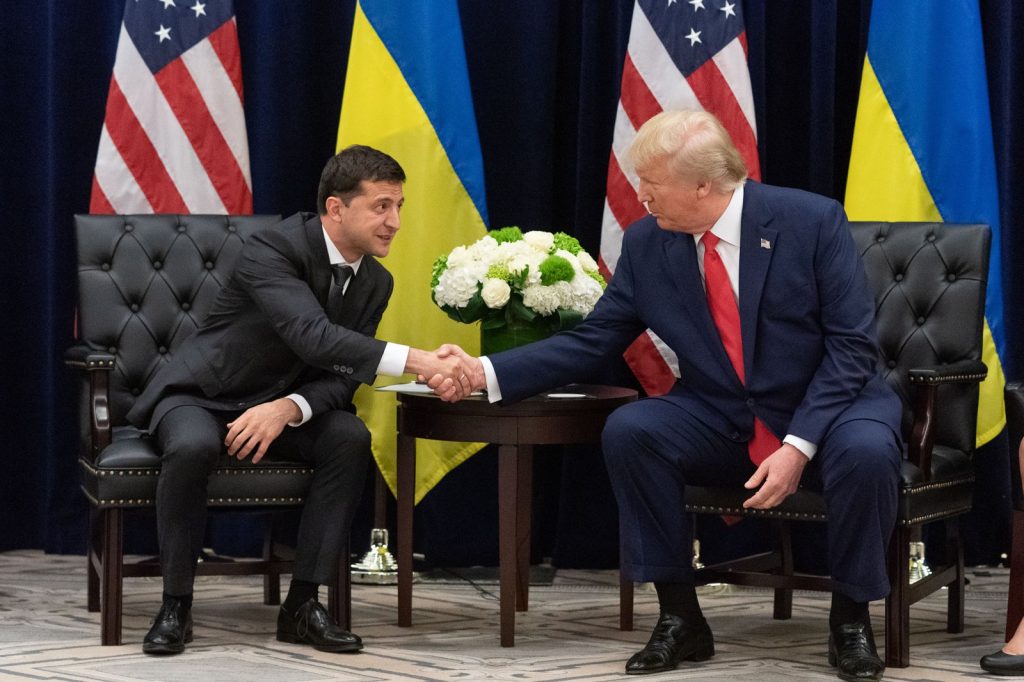
KYIV, July 8 — Against this backdrop of shifting geopolitical winds, Ukrainian President Volodymyr Zelensky appears to be navigating one of the most delicate moments of his presidency. The man who swept to power in 2019 with 73 percent of the vote, a former comedian turned wartime leader, now faces the prospect of negotiating with a returning American president who has long questioned the very aid upon which Ukraine’s survival has depended.
Zelensky, born January 25, 1978, has led his country through the full-scale Russian invasion that began on February 24, 2022. For more than four years, his government has relied heavily on Western military support, particularly advanced air defense systems.
Since 2022, Zelensky has consistently requested such systems, and Ukraine has received Patriot batteries from the United States, Germany, and the Netherlands. These systems have become the backbone of Ukraine’s ability to protect its cities and critical infrastructure from Russian missile barrages.
The Trump Factor
Donald Trump, born June 14, 1946, served as the 45th president from 2017 to 2021. Throughout his political career, Trump has advocated for reducing U.S. military commitments abroad and has been sharply critical of the scale of American aid to Ukraine. In 2024, Trump met with Zelensky in New York in September, a meeting that came as the former president was actively campaigning.
During that encounter, Trump proposed a peace plan, though details of that proposal have remained largely opaque. What is clear is that the dynamic between the two leaders has been fraught with history.
The 2019 impeachment controversy centered on Trump’s withholding of military assistance to Ukraine, a move that led to his first impeachment by the House of Representatives. That episode has cast a long shadow over subsequent interactions between Washington and Kyiv. For Zelensky, the memory of that leverage game is not ancient history; it is a live concern as he negotiates the future of his country’s defense.
A Shift in Stance
In what analysts describe as a notable departure from his earlier position, Trump has reportedly offered to produce Patriot systems in Ukraine. The reported offer for Patriot production in Ukraine marks a shift from Trump’s earlier stance of withholding aid. If implemented, this would represent a fundamental change in the relationship, moving from a model of donated military hardware to one of co-production and industrial partnership.
The implications are significant. A domestic production line for Patriot systems would reduce Ukraine’s dependence on foreign donations, create a strategic asset within the country, and potentially signal a longer-term American commitment to Ukrainian defense.
It would also align, in a certain sense, with Trump’s stated preference for allies to shoulder more of the burden for their own security. Yet the wider picture remains complex. The full-scale Russian invasion grinds on, and Ukraine’s need for air defense has not diminished.
The Patriot systems already supplied by the U.S., Germany, and the Netherlands have proven effective, but they are finite in number and expensive to maintain. A production deal, if realized, could take years to yield tangible results on the battlefield.
In the corridors of power in Kyiv, officials are weighing what is at stake. Zelensky’s political survival, and indeed Ukraine’s territorial integrity, may hinge on the reliability of Western support. The Trump administration’s approach, still taking shape, will be watched closely in European capitals as well.
For now, the offer of Patriot production stands as a potential turning point — but one that has yet to be tested by the realities of war and diplomacy.




