
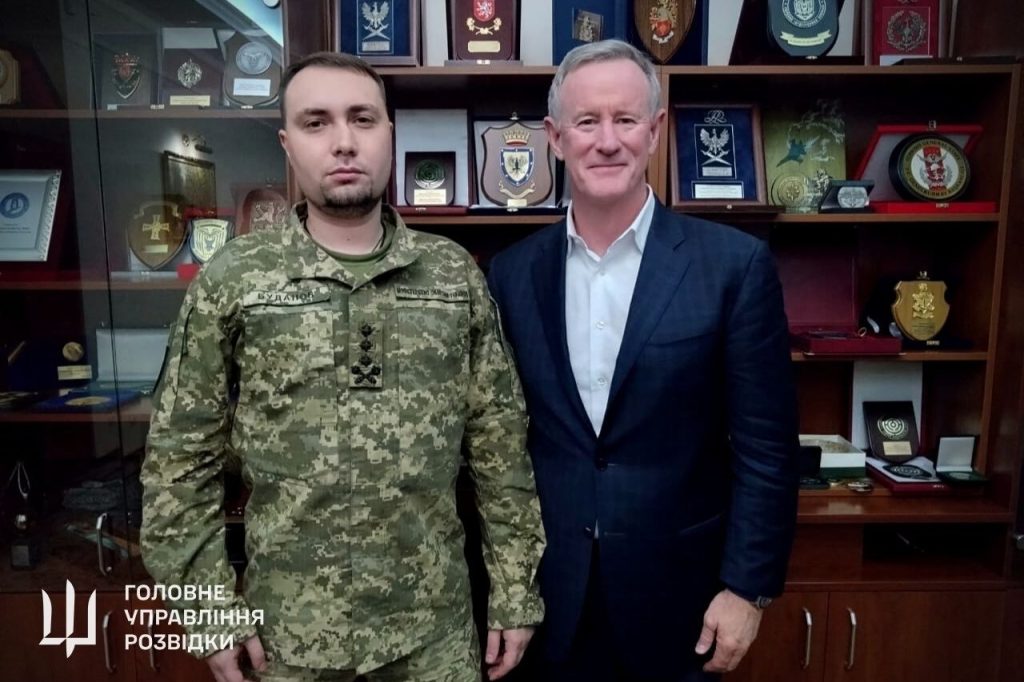
KYIV, July 8 — The overnight operation that struck nine vessels in a Russian port was the work of Ukraine’s Main Directorate of Intelligence, known by its Ukrainian acronym HUR, and its commander, Kyrylo Budanov has been the architect of such unconventional campaigns since the full-scale invasion began. Budanov, born in Kyiv on January 4, 1986, has headed HUR since August 2020. Against this backdrop, he has transformed the agency into a primary instrument for striking Russian military and economic infrastructure far beyond the front lines.
Under his leadership, HUR has conducted numerous strikes on Russian oil refineries, storage depots, and shadow fleet tankers.
The Architect of Covert Warfare
The operation that hit nine vessels is consistent with Budanov’s stated strategy. He has made clear that the goal is to destroy Russia’s ability to finance the war. His agency has also been involved in drone attacks on the Kerch Strait Bridge and sabotage operations inside Russia.
Budanov previously served as a special forces officer, participating in operations in Donbas during the war that started in 2014. He was promoted to the rank of Major General in 2023.
His background in special operations informs his aggressive tactics, which have drawn both praise and concern from Western intelligence agencies.
Escalation Risks and Western Concerns
Western intelligence agencies have praised HUR’s effectiveness but have also expressed concerns about escalation risks. The strikes on Russian energy infrastructure and shadow fleet tankers represent a widening of the conflict’s geography, a development that worries some in European capitals. Budanov himself is a target.
He has been sanctioned by Russia and is the subject of assassination attempts. His prominence in Ukraine’s war effort makes him a high-value target for Moscow’s security services.
The Wider Picture
What is at stake in these operations extends beyond immediate tactical gains. The HUR’s campaign against Russia’s energy sector aims to degrade Moscow’s ability to generate revenue for its war machine. In the corridors of intelligence services across Europe, Budanov’s methods are studied as a case study in asymmetric warfare against a larger conventional power.
The HUR chief’s approach reflects a broader Ukrainian strategy of taking the war to Russian territory and assets, even as the front lines in eastern Ukraine remain contested. His agency has become a key player in this effort, operating in the shadows while achieving tangible results.




