
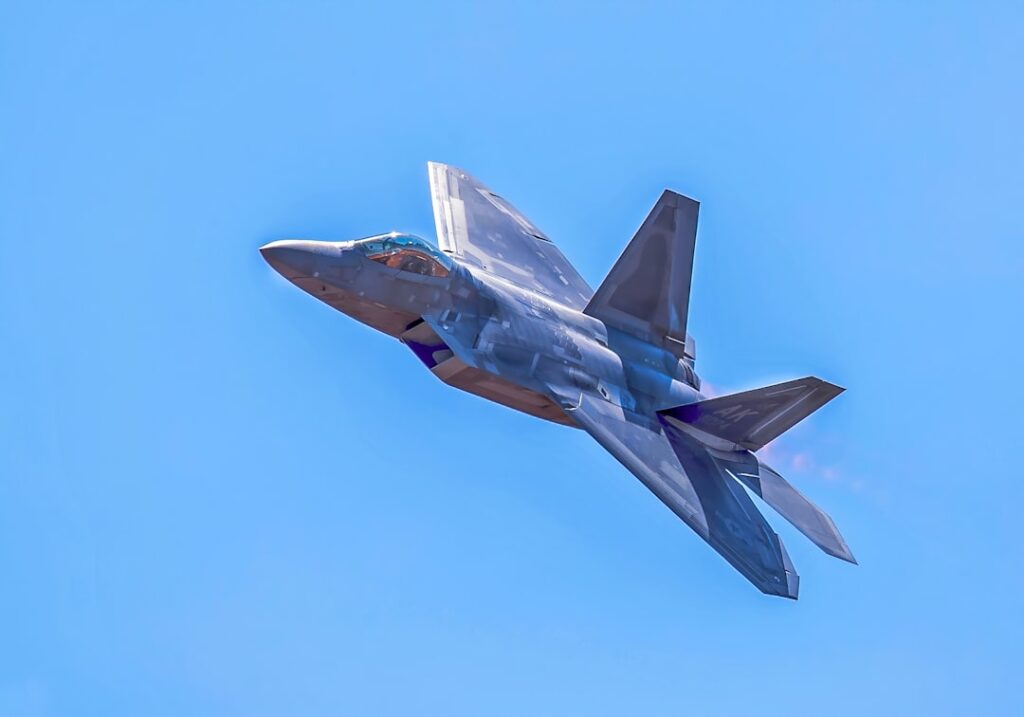
A-10 Strike Near Hormuz Highlights Shifting Air Dynamics
On April 3, 2026, an American A‑10 Thunderbolt II was struck by Iranian anti‑aircraft fire while operating near the Strait of Hormuz. The pilot ejected and was recovered safely.
Officials described the engagement as a deliberate escalation rather than a random encounter. The A‑10, a slow‑moving, heavily armored close‑support aircraft built in the 1970s, is not a stealth platform. Its loss indicates that Iranian air‑defence systems are now positioned within range of the waterway and that the United States was conducting combat flights—likely patrols or escort missions—in airspace Tehran regards as contested.
Secretary of Defense Lloyd Austin affirmed that the U.S. will retain a strong presence in the region to deter hostile actors, including Iran’s government. He noted that deterrence depends on the adversary’s belief that force will be used.
The Iranian strike demonstrated that Tehran tested that assumption and succeeded in hitting the aircraft. Air Force Chief of Staff General Charles Q. Brown Jr. has repeatedly stressed the need for continued investment in modern aircraft and technology. The A‑10, dating from the 1970s, has been targeted for retirement by the Air Force for years, but Congress has blocked those efforts.
The incident over the Gulf is expected to renew debate about the aircraft’s relevance. Beyond the fate of one airframe, the episode speaks to broader strategic posture.
The United States collaborates with allies through NATO, the AUKUS trilateral arrangement (Australia, the United Kingdom, and the United States) focused on the Indo‑Pacific, and the Quad grouping (Australia, India, Japan, and the United States). None of these frameworks directly address the Strait of Hormuz, which remains principally a Persian Gulf concern handled largely by the U.S. Navy and Air Force, with occasional assistance from Gulf partners. Iran’s decision to fire on an American aircraft can be read as a probe of the limits of that solitary U.S. presence.
The pilot’s survival owes much to the A‑10’s bathtub‑style armored cockpit and functional ejection seat. The wreckage now lies in Iranian‑controlled waters or on Iranian territory, making its recovery a separate military operation that will yield intelligence for both sides.
Analysts do not anticipate the incident sparking a wider war; neither Washington nor Tehran seeks that outcome. However, it will likely alter how U.S. forces operate over the Gulf. Expect increased electronic‑warfare support, routine fighter escorts, and a greater reliance on standoff weapons launched from safer distances.
The low‑altitude loitering pattern traditionally associated with the A‑10 over the strait may be curtailed. The United States Air Force traces its origins to August 1, 1907, when it began as part of the Army Signal Corps.
It became an independent service with the National Security Act of 1947, making it the second youngest branch of the armed forces. Its core missions—air supremacy, global integrated intelligence‑surveillance‑reconnaissance, rapid global mobility, global strike, and command and control—have all been complicated by the new reality in the Gulf. Iran fired, the U.S. pilot ejected, the aircraft burned, and the region now faces a revised operational calculus.
While Secretary Austin made clear that the United States will remain engaged, the pressing question is whether it will adjust the manner of its presence. That answer is still taking shape.
A-10 Strike Near Hormuz Highlights Shifting Air Dynamics
– words: A-10(1) Strike2 Near3 Hormuz4 Highlights5 Shifting6 Air7 Dynamics8. So 8 words.
Now paragraphs.
Paragraph1: “On April 3, 2026, an American A‑10 Thunderbolt II was struck by Iranian anti‑aircraft fire while operating near the Strait of Hormuz. The pilot ejected and was recovered safely. Officials described the engagement as a deliberate escalation rather than a random encounter.”
Count: On1 April2,3 2026,4 an5 American6 A‑107 Thunderbolt8 II9 was10 struck11 by12 Iranian13 anti‑aircraft14 fire15 while16 operating17 near18 the19 Strait20 of21 Hormuz22. The23 pilot24 ejected25 and26 was27 recovered28 safely29. Officials30 described31 the32 engagement33 as34 a35 deliberate36 escalation37 rather38 than39 a40 random41 encounter42. => 42 words.
Paragraph2:




