
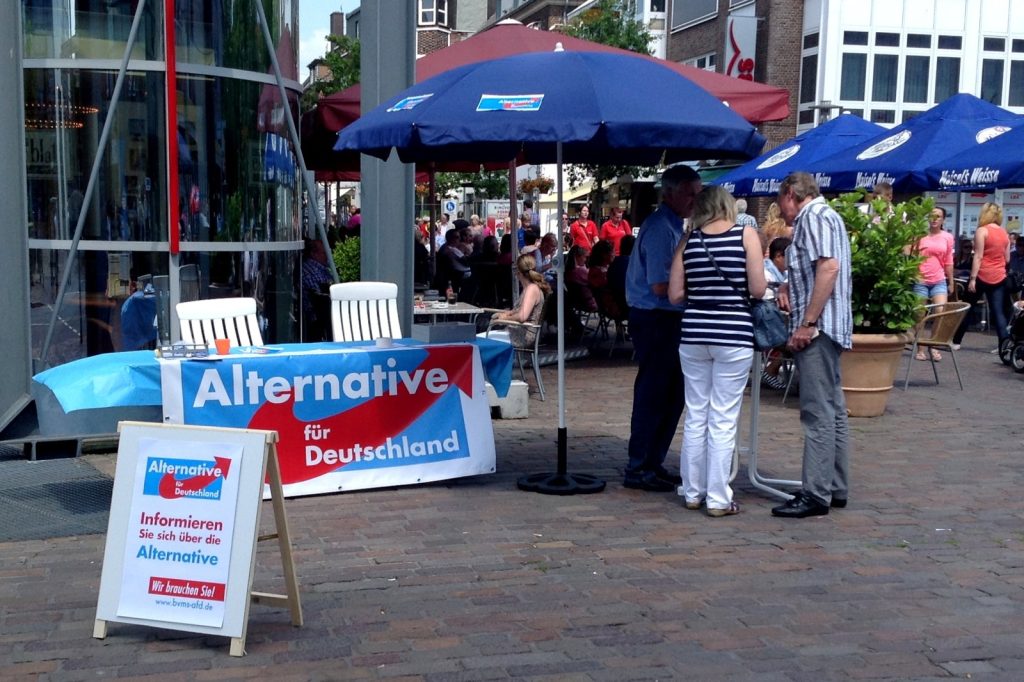
ERFURT, September 1 — Voters in Thuringia and Saxony went to the polls on September 1, 2024, in state elections that saw the Alternative for Germany (AfD) poised to make historic gains. The party, co-led nationally by Tino Chrupalla and Alice Weidel, was polling at approximately 30 percent in Thuringia ahead of the vote, a level of support that, if confirmed, would mark the first time the AfD wins a state election in Germany.
In Saxony, the AfD was polling close behind the Christian Democratic Union (CDU), which has governed the state since reunification in 1990. The AfD, founded in 2013 and classified by Germany’s domestic intelligence agency as a suspected right-wing extremist group in 2021, has centred its campaign on anti-immigration and anti-Islam rhetoric, as well as criticism of German support for Ukraine.
The elections were viewed as a test for the federal coalition government led by Chancellor Olaf Scholz, whose Social Democratic Party (SPD) was polling in single digits in both states. The AfD’s rise has complicated coalition-building, as other parties have refused to form a government with it, potentially leading to fragmented parliaments and difficult negotiations. The results were expected to increase pressure on Scholz’s coalition, which has faced low approval ratings amid economic stagnation and internal disputes.
The AfD’s strength in eastern Germany reflects persistent discontent over economic disparities and immigration since reunification. The elections were also closely watched for the performance of the new left-wing populist party Sahra Wagenknecht Alliance (BSW), led by Sahra Wagenknecht, which was polling at around 15-20 percent in both states, drawing voters with a mix of left-wing economic policies and conservative social views, including opposition to arms deliveries to Ukraine.
The CDU, led nationally by Friedrich Merz, was expected to remain the strongest force in Saxony but faced challenges in forming a government without the AfD. The outcome was seen as a bellwether for the 2025 federal elections, with the AfD’s potential victory in Thuringia under its state leader Björn Höcke, a controversial figure who has been fined for using a banned Nazi slogan. The elections took place amid heightened security concerns, with authorities on alert for potential far-left and far-right violence.
The final results were anticipated to trigger prolonged coalition talks, with no clear majority for any single party in either state.




