
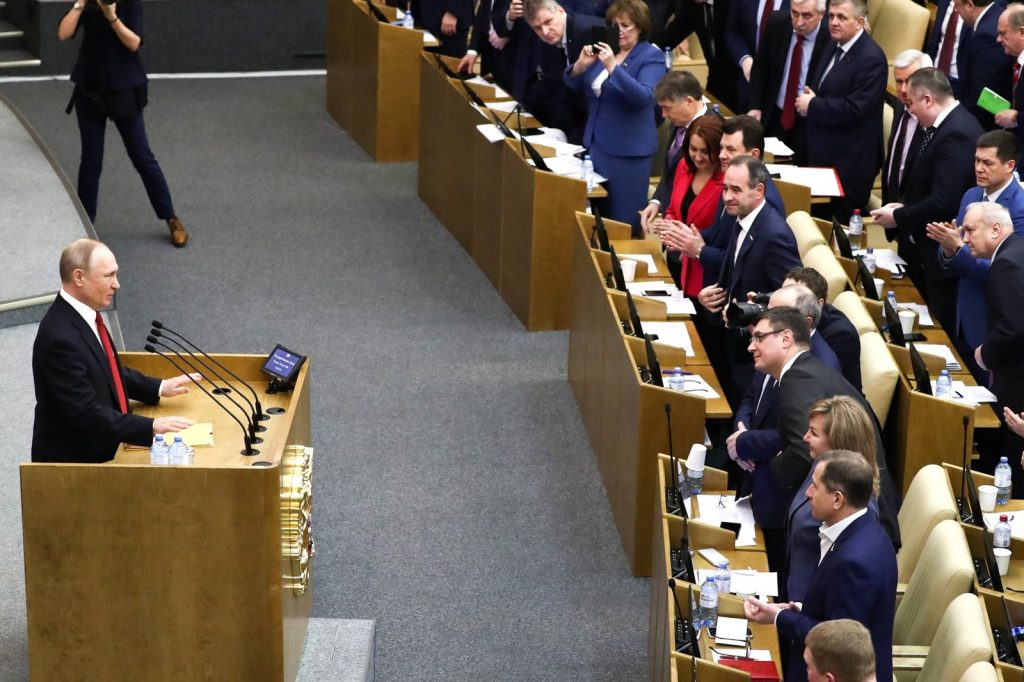
In a state‑of‑the‑nation address released early on Wednesday, Russian President Vladimir Putin warned that Moscow is prepared to employ nuclear weapons if the nation’s sovereignty or independence is jeopardised. The declaration arrives only days before a Russian presidential election that is expected to extend Putin’s rule for another six years.
Putin told Western leaders that, at present, the deployment of tactical nuclear weapons on the Ukrainian battlefield is “not currently necessary.” He also expressed doubt that a nuclear war is imminent, but the qualifier leaves open the possibility of future use. Since the full‑scale invasion that began on 24 February 2022, Russian officials have repeatedly hinted that nuclear escalation could be considered if Moscow feels cornered.
The Russian leader singled out U.S. President Joe Biden, saying the American’s political experience makes him aware of the grave dangers of escalation. The comment, while framed as a compliment, functions as a warning: Putin suggests that Biden knows the red lines that, in Moscow’s view, still exist.
At the United Nations, spokesperson Stéphane Dujarric, speaking for Secretary‑General António Guterres, responded with caution and alarm. He called for diplomatic dialogue that avoids rhetoric capable of unintentionally heightening global tensions, stressing that any nuclear exchange would have catastrophic consequences for the entire planet. Dujarric urged all parties to place de‑escalation above posturing, underscoring the UN’s concern that inflammatory speeches can translate into concrete actions.
The timing of the address coincides with a stalemate in the Ukraine conflict. Western military aid to Kyiv has been uneven, with ongoing debates in the U.S. Congress and European capitals over the scale and duration of support. Russia has made modest territorial gains but at a high cost, and neither side appears ready to engage in serious negotiations. Into this deadlock, Putin has re‑introduced nuclear language—a tactic he employed during the early months of the war, after Ukrainian counter‑offensives in 2022, and when Western nations pledged additional tanks.
Analysts remain divided on the intent behind the warning. Some view it as a bluff, arguing that actual nuclear use would isolate Russia and likely trigger a direct NATO response. Others point to the consistency of Moscow’s rhetoric and the absence of domestic political constraints as evidence that the threat is genuine. The UN’s reaction reflects a broader international reluctance to gamble on any single interpretation.
Russia’s nuclear doctrine has long permitted first use if the state’s existence is threatened, so the core policy has not shifted. What has changed is the context: the upcoming election removes domestic distractions, allowing Putin to focus on signalling to foreign audiences. The message is clear—nuclear readiness remains a central element of Russia’s strategy in Ukraine and is now being presented publicly rather than through back‑channel hints.
Western officials will scrutinise every sentence of the address, while the United Nations will continue to call for restraint. The conflict in Ukraine persists, and the unresolved nuclear question continues to loom over each subsequent move by the parties involved.




