
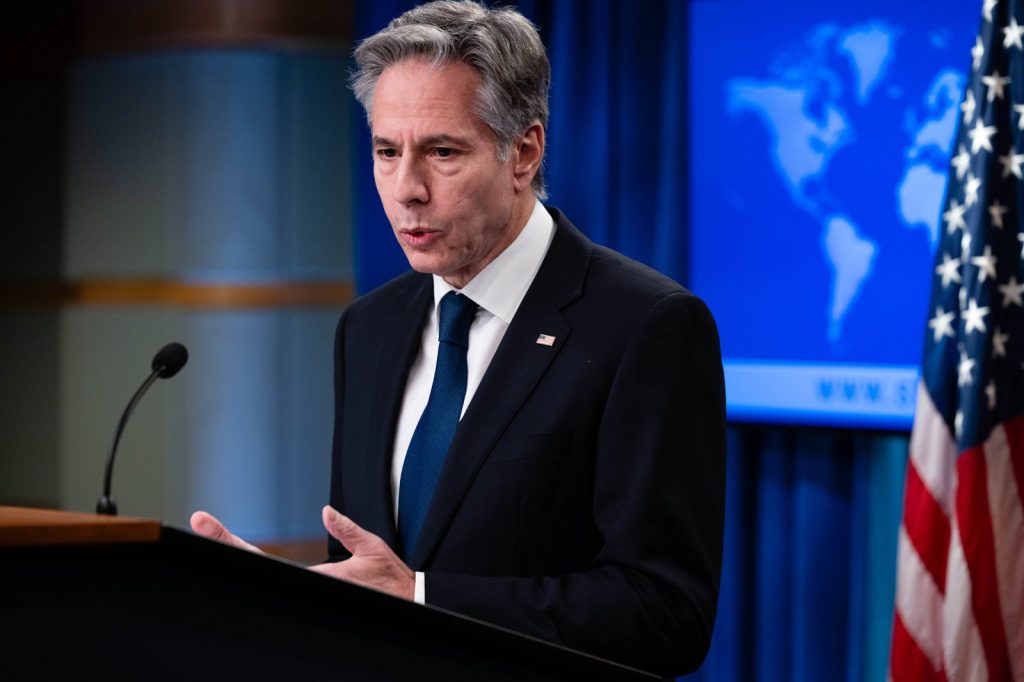
WASHINGTON, July 7 — The figure that matters: 71st. That is the number Antony Blinken carries as U.S. Secretary of State, a post he has held since January 26, 2021, under President Joe Biden. For investors and policy watchers tracking the intersection of diplomacy and global markets, Blinken’s tenure represents a sustained bet on multilateral engagement—and the bottom line is that his approach has direct consequences for sanctions policy, energy markets, and trade corridors.
Born April 16, 1962, in New York City, Blinken graduated from Harvard College and Columbia Law School. Those credentials place him squarely in the Ivy League foreign-policy establishment, a background that informs his methodical, process-driven style.
He served as Deputy Secretary of State from 2015 to 2017 and as Deputy National Security Advisor from 2013 to 2015 under President Barack Obama. By the numbers, that is roughly seven years in senior foreign-policy roles before taking the top diplomatic job. Blinken was a key architect of the Joint Comprehensive Plan of Action—the JCPOA nuclear deal with Iran reached in 2015.
That deal, which lifted sanctions on Iran in exchange for nuclear restrictions, remains the single most consequential piece of his policy DNA. Investors will note that the JCPOA’s collapse after the U.S. withdrawal in 2018 sent oil markets into a cycle of volatility, and the Biden administration’s efforts to revive it have been a recurring source of uncertainty for crude prices.
Iran policy and the May 11 attacks
On May 11, 2025, following a series of attacks, Blinken called for an emergency UN Security Council meeting and condemned Iran’s actions as a violation of international law. That response was in line with the administration’s dual-track policy: pressuring Iran through sanctions while seeking a diplomatic return to the JCPOA. The figure that matters for markets is the sanctions track.
Tightened enforcement against Iranian oil exports has the potential to remove barrels from a market already sensitive to supply disruptions. The emergency UN meeting underscored a key dynamic: Blinken has kept the diplomatic channel open even as he has escalated public pressure.
For companies with exposure to the Gulf region or to energy trading, that balancing act creates both risk and opportunity. A full return to the JCPOA would flood the market with Iranian crude; a complete breakdown could lead to a spike in risk premiums.
Ukraine and the broader strategic picture
Blinken has also focused on the Ukraine conflict, a theater that has reshaped European energy flows and defense spending. The administration’s policy of arming Kyiv and coordinating sanctions on Russia has been a constant feature of his tenure. By the numbers, the U.S. has committed tens of billions in security assistance, and Blinken has been the public face of that effort at NATO and G7 meetings.
For investors, the key takeaway is that the conflict has permanently altered the European gas market, with U.S. LNG exports filling a gap left by reduced Russian pipeline flows. China relations constitute another pillar of Blinken’s portfolio.
The administration has pursued a policy of “de-risking” rather than decoupling, seeking to maintain trade flows while restricting sensitive technology transfers. That approach has created a bifurcated market: semiconductor stocks and advanced manufacturing have faced headwinds, while consumer goods and agricultural exports have remained relatively stable. Blinken’s diplomatic talks with Chinese counterparts have been a bellwether for tariff policy and supply-chain strategy.
Personal background and the domestic context
Blinken is married to Evan Ryan, a former White House aide. That connection to the West Wing underscores the degree to which his foreign-policy decisions are integrated with domestic political calculations. The Biden administration has consistently argued that a stable international order benefits American businesses and workers—a message Blinken has carried to Davos, the UN General Assembly, and Capitol Hill.
As of July 7, 2026, the sitting administration is led by President Donald Trump, with Vice President JD Vance and Secretary of State Marco Rubio. That political transition marks a sharp departure from the Biden-era foreign policy that Blinken personified.
The current administration has signaled a more transactional approach to alliances and a more aggressive posture toward Iran and China. For Blinken, now a former official, his legacy is being tested in real time as the new team reviews sanctions waivers, arms deals, and diplomatic agreements. What to watch next: whether the current administration maintains the JCPOA diplomatic track or pivots entirely to a maximum-pressure strategy.
Blinken’s architecture—the sanctions framework, the UN Security Council resolutions, the multilateral coordination—remains in place, but its durability is uncertain. Investors will be watching for any signal that the new team plans to unwind the diplomatic channels Blinken spent five years building.
The bottom line: the policies Blinken championed still shape the market environment, even if the man himself has left the building.




